
Leonardo's Michelangelo Dome to be tested in Ukraine in 2026 — Europe's air defense remains an integration project
 Dr. Klaus Weber
Leonardo's Michelangelo Dome to be tested in Ukraine in 2026 — Europe's air defense remains an integration project
On July 31, Leonardo CEO Lorenzo Mariani reiterated a seemingly inconspicuous but strategically revealing commitment during the company's half-year presentation: Before the end of the year, the first capability of the Michelangelo Dome is to be demonstrated in Ukraine, specifically a so-called Dead-Zone-Protection against massed attacks by cheaper drones. The fact that this statement deserves more attention in Brussels than some SAFE announcements is due to an old European misunderstanding. Europe no longer has just a procurement problem. It primarily has an integration problem.
This is precisely why Leonardo's recent step is so interesting. According to Defence24, Leonardo Ukraine was registered on May 20, 2026, and first appeared in the company's half-year report at the end of July. The new company is not a symbolic mailbox. It gives Leonardo a fully local structure, allowing the company to hire personnel, enter into contracts, and expand technical activities in the country. According to publicly described activities, the field ranges from engineering research and software development to communication, navigation, and optoelectronic systems. Anyone who reads this merely as market entry underestimates the actual message: Leonardo does not just want to sell to Ukraine. Leonardo wants to learn in the Ukrainian innovation cycle.
Not another battery, but an integration layer
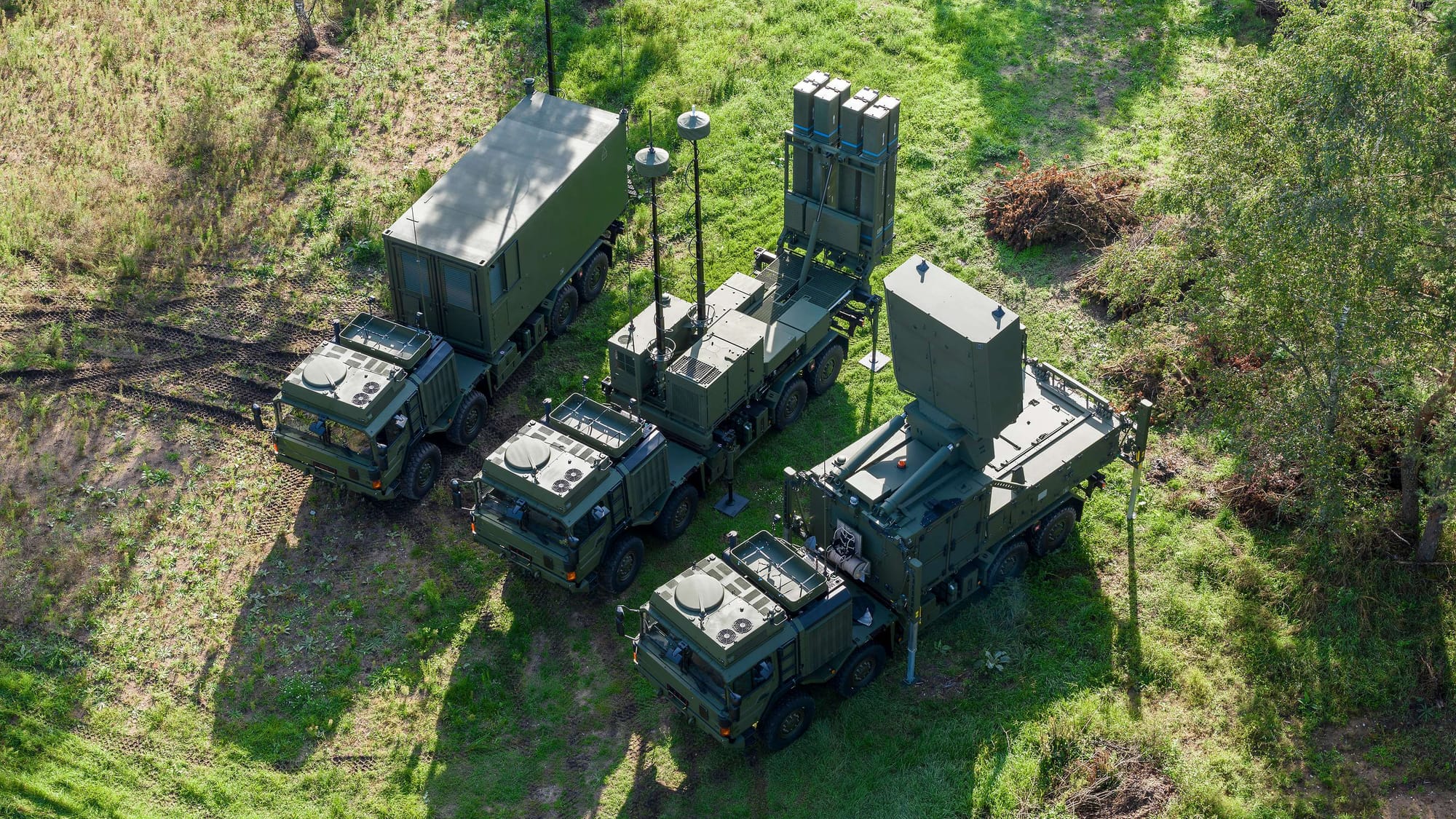
This is where the strategic difference begins compared to the usual European air defense debates. Patriot, SAMP/T, IRIS-T SLM, or CAMM-ER are weapon and effector levels. In contrast, the Michelangelo Dome is supposed to be a digital architecture that integrates sensors, command means, electronic warfare, cyber components, guns, missiles, and possibly space data into a common situational picture, according to known descriptions. Defence24 does not describe the system as a new missile battery, but as a network that is supposed to coordinate various existing and future systems. SpaceNews had already reported in March that the first field test in Ukraine is to take place by the end of 2026. Reports from Agenzia Nova and Euractiv this week now confirm that the timeline is being politically carried forward under Mariani.
This reveals an uncomfortable European finding. Since the beginning of the Russian full-scale attack, Europe has talked astonishingly much about quantities and astonishingly little about architectures. How many Patriot launchers? How many additional IRIS-T systems? How many interceptors? All of this is important, but it does not answer the crucial question of a drone war: Which sensor detects which target first, which command means prioritizes it, and which cheaper effector is allowed to engage it before an expensive guided missile is wasted? For Leonardo, Ukraine is therefore not just a sales market, but the toughest conceivable reality check for exactly this question.
Europe's air defense suffers not only from too few interceptors. It suffers from the fact that its layers are politically conjured together but still organized nationally from a technical standpoint.
Why Ukraine is a better laboratory for Europe than Brussels
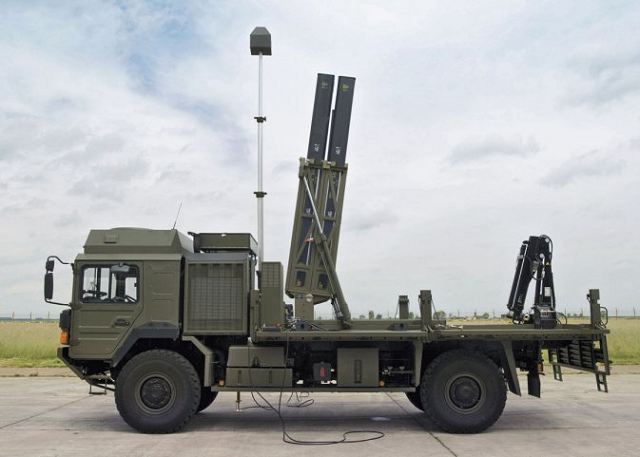
That Leonardo is setting the first test precisely in Ukraine is no coincidence. Few other war zones force defenders into such improvised and simultaneously demanding integration. Ukrainian air defense today consists of Soviet legacy systems, Western systems, improvised sensors, electronic warfare, mobile flak solutions, and ever-new countermeasures against inexpensive attack and decoy drones. Anyone who wants to succeed there needs not a perfect prospect solution, but a robust connection of unequal partial capabilities. The value of Ukraine for European companies therefore lies not primarily in production capacity, but in a brutally fast learning cycle of deployment, adaptation, and re-testing.
For Klaus Weber, one thing is particularly noteworthy: Europe is building its future air defense logic not within a coherent EU framework, but in a war zone outside the Union. This is efficient but politically revealing. For years, the EU has talked about strategic autonomy, joint procurement, and capability clusters. If the practical integration breakthrough now occurs through an Italian company in Ukraine and not through a European program in Europe itself, it shows how weak the institutional center still is. Once again, capability is being created where operational pressure exists, not where European bodies formulate declarations of intent.
The real lesson for Germany and the EU
Germany, in particular, should take this development seriously. Berlin has tried to create a political framework for European air defense with the European Sky Shield Initiative. However, Sky Shield remains primarily a procurement framework for different national decisions. The Michelangelo Dome points to something else: It is not the next individual battery that determines resilience, but the ability to interconnect very different systems in real-time and respond cost-effectively to drone swarms in the close range. This is institutionally more uncomfortable than purchasing additional launchers, as it requires data standards, command rights, common protocols, and trust in foreign systems.
This is precisely why Mariani's commitment is so consequential. If the Ukraine demonstration works, it would be less a victory for Italian industrial policy than proof that Europe's air defense is entering the phase of system integration. If it fails, it would be equally revealing, as it would show how difficult it still is for European companies to create a war-capable whole from many good components. In both cases, the political lesson is the same: More money alone does not solve the problem. Those who do not integrate sensors, effectors, and command merely buy additional fragments.
The paradox is thus clear. Europe has been talking about sovereignty for years, but its most credible innovation in the air defense sector could now consist precisely in better coordinating various dependencies, not immediately eliminating them. This sounds unheroic, but is likely more realistic. Sovereignty in a drone war is not first achieved by building everything oneself. Sovereignty is achieved by being able to decide which existing system works when, how, and at what cost. If the Michelangelo Dome is indeed tested in Ukraine by 2026, then Europe's most important air defense debate will not begin with the missile, but with the architecture.
Source basis: Defence24, August 30, 2026; SpaceNews, March 12, 2026; Google News indexed reports from Euractiv and Agenzia Nova from September 4, 2026.
Leonardo plans to demonstrate the Michelangelo Dome's capabilities against drone attacks in Ukraine by the end of 2026. This system aims to enhance air defense through integration of various military technologies. The establishment of a local structure in Ukraine allows Leonardo to expand its operations and adapt to the unique challenges posed by the ongoing conflict. This initiative highlights the need for effective integration of air defense systems in Europe, particularly in response to the evolving nature of warfare.
- Leonardo plans to demonstrate the Michelangelo Dome in Ukraine by the end of 2026.
- The system aims to provide Dead-Zone-Protection against mass drone attacks.
- Leonardo has established a local structure in Ukraine for operations.
- The Michelangelo Dome is described as a digital architecture integrating various military systems.
- The testing in Ukraine is seen as a critical evaluation of European air defense integration.