
Leopard 2 and Challenger 3 in Poland — Europe's Ukraine Mission Fails Due to Logistics
 Dr. Klaus Weber
Leopard 2 and Challenger 3 in Poland — Europe's Ukraine Mission Fails Due to Logistics
Berlin, October 18, 2026. Hundreds of British soldiers are to practice a potential Ukraine mission together with French and German forces. The planned exercise in Poland is politically significant, but primarily a test of logistics militarily. Europe's governments are discussing a troop for the time after a ceasefire; Poland will assess whether this troop could arrive at its deployment location in time, protected, and supplied.
An Exercise with Political Function
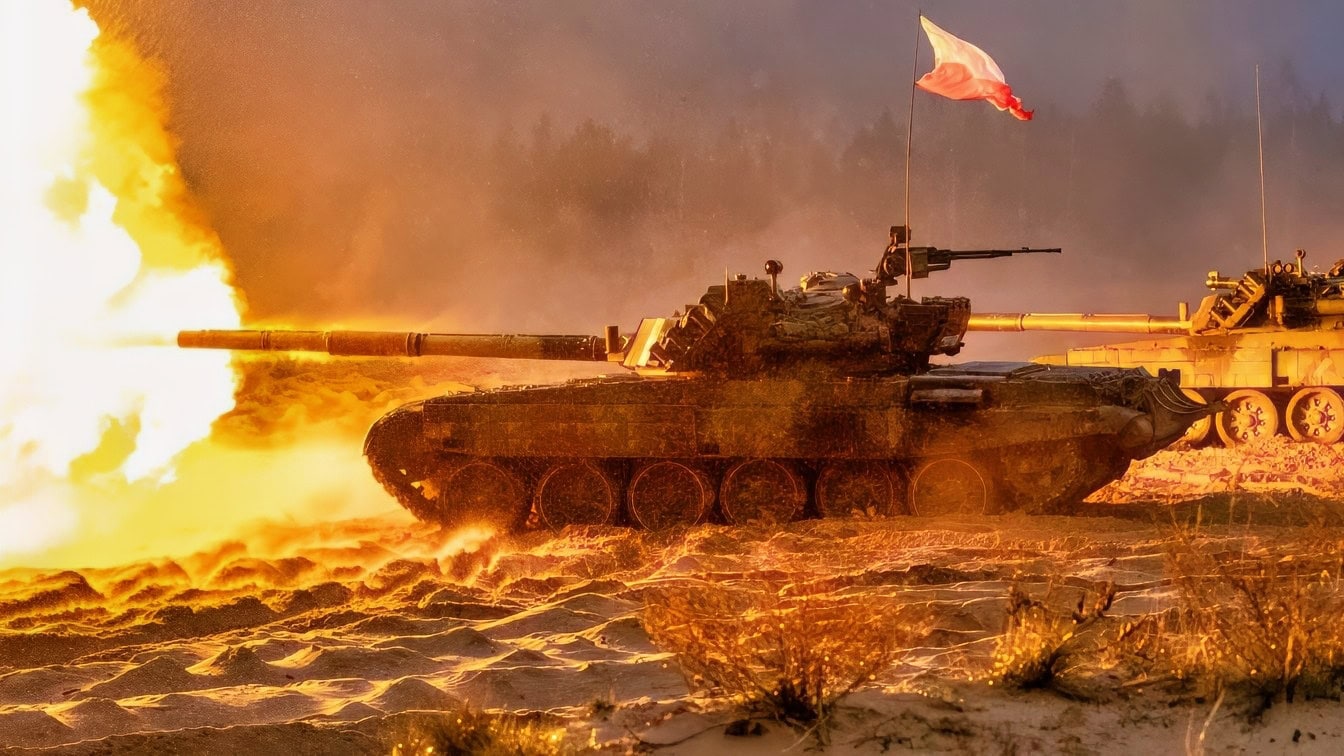
The British-French-German planning is not proof of an already decided deployment. It is primarily a political assurance. London, Paris, and Berlin want to show that a European contribution to stabilizing Ukraine exists not only in press conferences. The exercise in Poland is intended to simulate a deployment to Ukrainian territory. This geographical choice is particularly sensible. Poland is the logistical backbone of Western support, but it is also a NATO state, whose infrastructure and airspace would come under pressure in a crisis.
The British involvement lends weight to the endeavor. London has experience with multinational task forces and can make a mission more credible that might otherwise easily appear as a German-French project. France brings strategic ambition and its own leadership claims. Germany has the central transit and supply position in Europe but must prove that it can actually generate deployable capabilities from the special fund. These roles complement each other on paper. In practice, the difficulties begin precisely there.
Heavy Weapons Are Not the Mission
A European unit with Leopard 2 or British Challenger 3 can make an impression on the battlefield. However, its effectiveness depends less on the individual battle tank than on spare parts, ammunition, recovery vehicles, medical facilities, drone defense, and secure communication networks. A tank battalion without a secured supply chain is not a credible deterrent but a costly stationary target.
This is the uncomfortable lesson from the Ukraine war. Modern units need not only firepower but also a dense layer of reconnaissance, electronic warfare, and short-range air defense. A mission aimed at protecting Ukrainian cities or critical infrastructure would also need robust air defense. Kyiv's demand for Patriot missiles and the opposing assessment that Europe can initially meet winter needs already show how closely Europe's political commitment and its real stocks are misaligned. Those who send personnel but do not provide defense against drones and missiles take on risk without capability.
The American Shadow
The planning raises the older question of European strategic autonomy anew. Europe can deploy a brigade, but can it lead the entire mission? Satellite reconnaissance, target acquisition, air refueling, strategic transport, and part of missile defense remain capabilities that are difficult to replace without the United States. Recent statements from Washington about the importance of close transatlantic cooperation confirm this finding. Europe's greater self-responsibility is politically welcomed but not automatically backed by American enablers.
This creates an institutional paradox. Europeans want a mission that demonstrates their security policy capability but need exactly those American capabilities from which they want to become more independent. More troops on paper do not solve this problem. The crucial question is not whether London, Paris, and Berlin can each provide soldiers. It is whether they want to finance and operate a joint headquarters, common rules of engagement, and a resilient supply chain.
What Germany Must Decide
For Germany, the Polish exercise is a reality check of the turning point. Berlin cannot reduce its role as a logistical center to providing railway tracks and barracks. It must clarify who makes political decisions in the deployment, who bears responsibility in case of losses, and which forces are actually available in an emergency. The Bundestag, partners, and the Bundeswehr need clear answers before a deployment.
- Leadership: A multinational contingent needs a clear command structure, not three national operational logics.
- Protection: Air defense, drone defense, and electronic warfare must be available before deployment.
- Sustainability: Ammunition, spare parts, and rotation forces must be planned for months, not just for the initial phase.
- Legal Framework: A ceasefire is not a peace treaty. Rules of engagement must also apply to violations and hybrid attacks.
Europe's Credibility Will Be Decided in the Depots
The planned exercise is more than a drill but less than a guarantee. It shows that Europe is preparing political options. It does not yet prove that Europe can carry out a risky mission. The gap between the two is the real security policy message.
Europeans have often first developed the political formula and only then the military architecture. In Poland, this order can no longer be hidden. A Leopard 2 or Challenger 3 symbolizes determination; stocks of spare parts, Patriot missiles, and secure communication networks determine their value. Europe's contradiction therefore remains. It wants to take on responsibility without accepting the costs of full responsibility. An exercise can make this contradiction visible. Only the willingness to build a sustainably financed capability from a coalition of announcements can resolve it.
Sources
- Kyiv Post, October 17, 2026 — UK, France, Germany Plan Drill for Post-Truce Ukraine Mission
- The Times, October 17, 2026 — Hundreds of British troops to rehearse Ukraine mission
- Defence Industry Europe, October 17, 2026 — UK defence secretary calls for stronger defence industry and faster delivery
Hundreds of British soldiers rehearsed a potential Ukraine mission in Poland on October 18, 2026, alongside French and German forces. The exercise focused on logistical capabilities, emphasizing the need for secure supply chains and support systems for effective military operations. The involvement of Leopard 2 and Challenger 3 tanks underscored the military significance of the exercise, which aims to prepare for potential deployments in Ukraine.
- Hundreds of British soldiers are rehearsing a potential Ukraine mission in Poland.
- The exercise is politically significant and tests logistical capabilities.
- The involvement of Leopard 2 and Challenger 3 tanks highlights the military aspect of the exercise.
- Logistical support is emphasized as crucial for the success of any military operation.
- The exercise aims to simulate deployment to Ukraine.