
Liaoning Aircraft Carrier Enters the Western Pacific, PLA Carrier Training First Aligns with Japan-U.S. Keen Sword Exercise
 Li Minghui
Liaoning Aircraft Carrier Enters Western Pacific, PLA Navy's Training First Aligns with Japan-U.S. Keen Sword Exercise
On October 14, the South China Morning Post cited information from the Chinese Ministry of Defense stating that the Liaoning aircraft carrier is conducting training in the "relevant waters" of the Western Pacific. The official did not specify the exact location and also indicated that the exercise is not aimed at any specific country or target. This statement is quite restrained, but the timing is not ordinary: Japan and the United States are preparing for the "Keen Sword" joint exercise, which involves approximately 57,000 personnel and activities close to the waters surrounding Taiwan.
What to Observe from Liaoning's Deployment
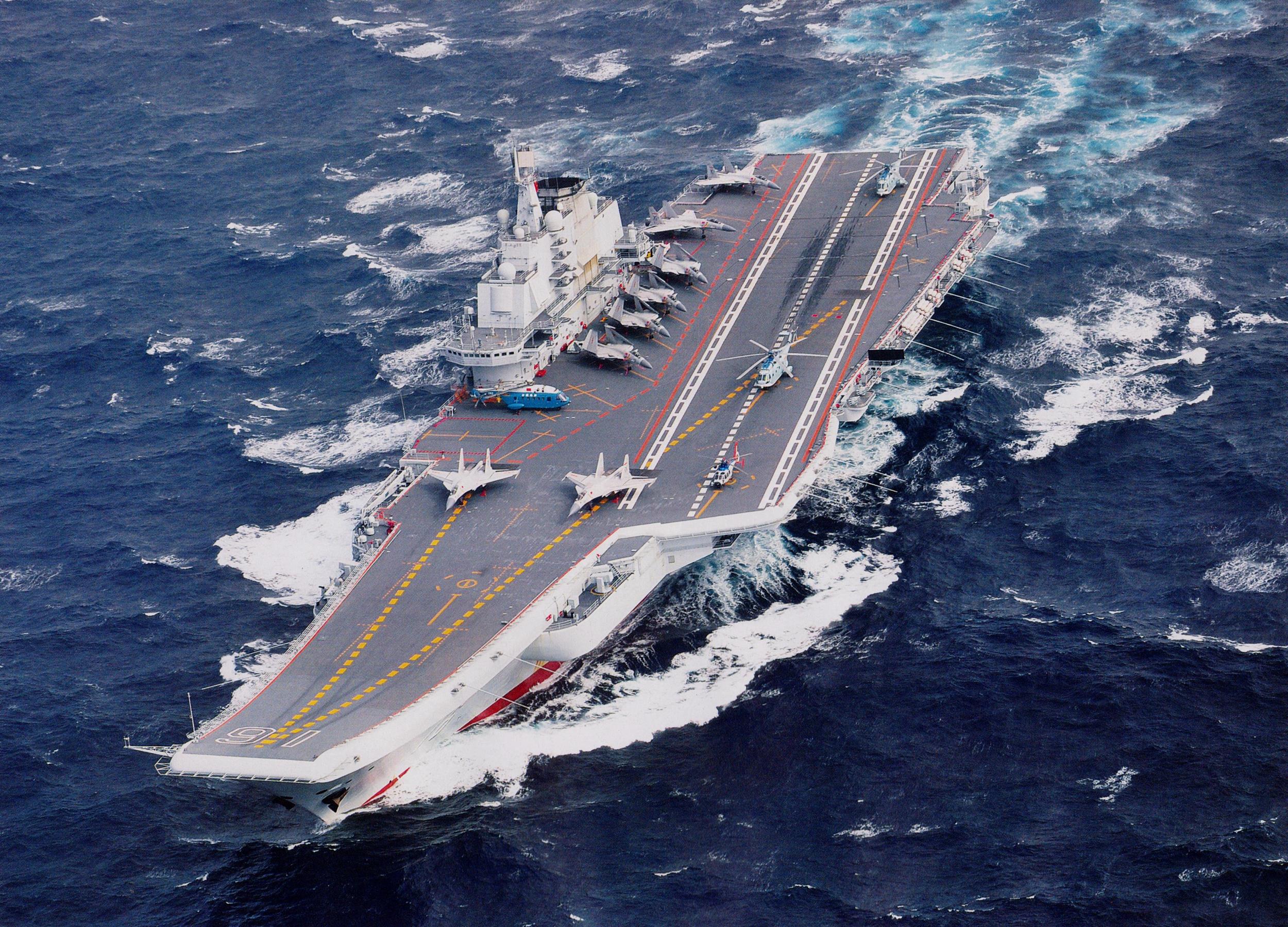
The Liaoning is China's first aircraft carrier, and its ski-jump takeoff deck limits the payload and sortie efficiency of the J-15 series compared to electromagnetic catapult carriers. However, its value has never been solely about "whether it can launch a full round of aircraft," but rather whether it can complete fleet maneuvers, carrier-based aircraft takeoffs and landings, air situation command, and logistical support under conditions far from land-based air cover.
From publicly available information, there has been no announcement of the number of carrier-based aircraft, escort vessels, or training subjects, so it cannot be directly inferred that the Liaoning has formed a complete ocean-going carrier strike group. I tend to view this as a deployment with characteristics of route and coordination testing. In simple terms, the real challenge for an aircraft carrier is not just to sail out of the first island chain, but to connect the flight deck, escort air defense, early warning aircraft, and logistical support into a system that can operate continuously.
Not the Same as the Five No-Sail Zones
The Taipei Times reported that China's maritime authorities previously issued five no-sail notifications covering the Bohai Sea, Yellow Sea, East China Sea, and South China Sea; Taiwan assessed that the related live-fire drills are mainly close to the Chinese mainland coast, with one area about 159 nautical miles from Taiwan and another about 588 nautical miles away. The Liaoning's training in the Western Pacific reported by the South China Morning Post cannot simply be viewed as the same operation as these near-shore artillery or live-fire activities, but they overlap in timing, indicating that the PLA is integrating training arrangements from different maritime areas into a larger rhythm.
- Near-shore no-sail zones: Testing land-based firepower, air-sea coordination, and maritime control capabilities;
- Liaoning's Western Pacific training: Testing carrier group long-range maneuvering, carrier-based aviation, and sustained support;
- Japan-U.S. "Keen Sword" exercise: Strengthening joint operational readiness for the air and maritime situation around Taiwan.
Strategic Impact Depends on Duration
If the Liaoning is only making a short-term transit and conducting limited training, the political signal outweighs military change; if it can maintain a longer presence in the Western Pacific and repeatedly conduct high-frequency takeoffs and landings of carrier-based aircraft and fleet coordination, then the significance changes. This would force Japan, the United States, and Taiwan to expand their monitoring focus from a singular Taiwan Strait direction to the Philippine Sea and its eastern waters.
However, the Liaoning's shortcomings are also quite evident: the ski-jump takeoff limits heavy loads and sortie rates, and the aging platform faces maintenance and personnel training pressures. Whether China's carrier system can turn this long-range presence into stable combat capability ultimately depends on escort vessels, fixed-wing early warning aircraft, carrier-based pilot training, and the logistics network, rather than just the presence of a single aircraft carrier on the map. The real question worth asking is whether, after this training, the PLA will allow the Shandong or Fujian to take over in the same maritime area.
References: South China Morning Post, October 14, 2026; Taipei Times, October 12, 2026; Taiwan News, Taiwan's defense department public activity data.
The Liaoning aircraft carrier is conducting training exercises in the Western Pacific as of October 14, 2026, coinciding with the US-Japan 'Sharp Sword' joint exercises. This deployment is significant as it tests the carrier's operational capabilities away from land-based support. The Chinese military has also established no-sail zones in adjacent waters, indicating a broader military focus in the region.
- Liaoning aircraft carrier is conducting training in the Western Pacific.
- The training coincides with the US-Japan 'Sharp Sword' joint exercises.
- The training is not aimed at any specific country or target.
- China has issued five no-sail zones in nearby waters.
- The duration of the Liaoning's presence in the Pacific will impact regional military dynamics.