
Ukraine's Starlink Crisis Exposes Europe's 11,000-Satellite Dependency
 Alexandra Reeves
Ukraine's Starlink Crisis Exposes Europe's 11,000-Satellite Dependency
One switch turned a battlefield advantage into a political warning. Ukraine reported this week that Starlink-linked terminals moving faster than 100 mph suddenly lost connectivity, disrupting drone missions and weakening the interceptor systems used against Russia's jet-powered Shahed attacks. Elon Musk then said that the military-grade Starshield systems involved are owned and controlled by the US government, with limits decided by the US military and ultimately the president.
That is more than a quarrel between Donald Trump, Volodymyr Zelenskyy and Musk. It is a live demonstration of Europe's central defence problem: European governments can fund ammunition, train Ukrainian troops and promise strategic autonomy, yet still depend on an American-controlled digital layer to make some of those capabilities work.
The battlefield effect was immediate
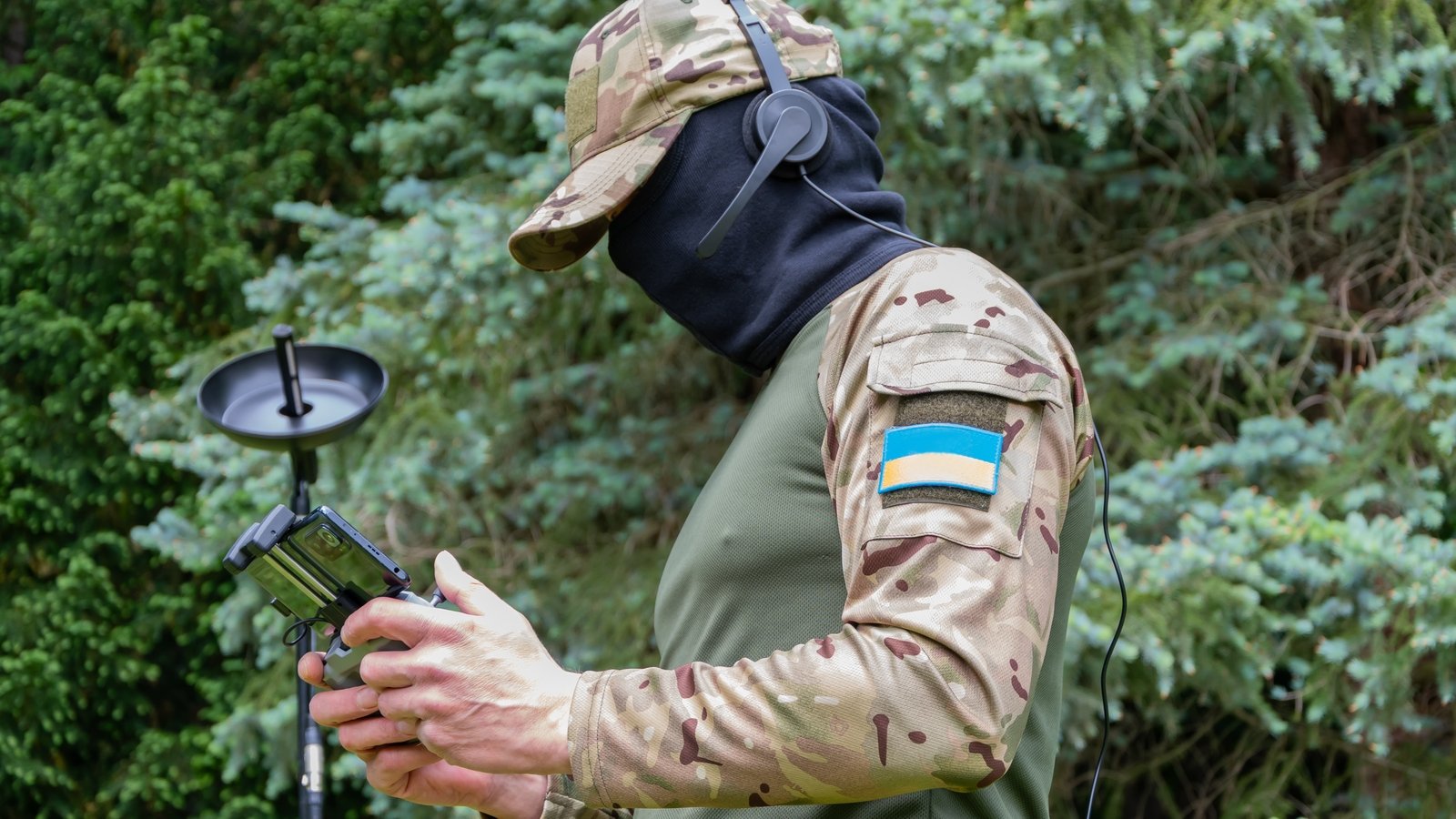
According to The Guardian's reporting, Ukraine uses Starlink-connected terminals in many drones for guidance and control. The speed restriction reportedly made much of the country's mid-range strike-drone fleet inoperable when those systems were moving beyond the threshold. It also hit an increasingly important defensive mission: Ukrainian interceptor drones hunting Russian Shaheds.
The distinction matters. Kyiv's long-range attacks on Russian oil refineries are not supposed to use Starlink, and the reported restriction did not erase Ukraine's entire strike capability. But the systems affected sit close to the front line, where seconds and reliable communications matter more than headline range. Russia has upgraded some Shahed drones with jet engines, pushing their speed close to 200 mph. A network rule designed for a commercial service therefore becomes a tactical variable in an air-defence engagement.
Ukrainian military technology adviser Serhiy Beskrestnov said the change was imposed without warning and caused missions to fail. Zelenskyy said the decision would bring human losses. The Guardian also reported that Ukrainian interception rates against the faster Shaheds had already fallen from more than 90 percent to roughly 60 percent after the engine upgrades. Those figures are Ukrainian claims, not an independent audit, but they describe the operational logic clearly: when Russia changes the speed and profile of its attack drones, removing a network used by Ukrainian interceptors is not an administrative inconvenience.
Starlink is commercial in name, strategic in practice
SpaceX describes Starlink as a commercial broadband network, while Starshield is its military and intelligence business for the Pentagon. The Guardian, citing Reuters and Agence France-Presse, reported that Starshield adds enhanced encryption and allows sensors to be integrated with platforms such as drones. Its secure communications still rely on the wider Starlink constellation, which has grown to roughly 11,000 satellites launched since 2019.
That architecture creates a legal and political grey zone. SpaceX says commercial Starlink is not licensed for offensive military action. Musk said the Ukrainian military was linked to Starshield and that any restrictions were a US government decision, not a private corporate one. The White House, according to the same reporting, did not confirm or deny that account. Ukraine was left with the least reassuring answer possible: the service might return, but nobody outside Washington could say with confidence who could turn it off.
Reports on Thursday indicated that functionality for some Ukrainian systems had been restored. That is welcome for Ukrainian operators, but it does not solve the underlying problem. Restoration is not sovereignty. A capability that returns after a political argument remains a capability that can disappear during the next one.
Europe has promises, but no quick substitute
This is where the story becomes a NATO problem rather than only a Ukraine problem. Europe has satellite programmes, secure military communications and a growing commercial space sector. It does not, however, possess a ready-made substitute for the combination of coverage, terminals, software integration and battlefield familiarity that Starlink provides today.
Reuters reported that Europe has no quick fix for Ukraine's exposure to restricted satellite access. That conclusion should embarrass every European defence ministry. The continent has spent years discussing strategic autonomy as if the main test were whether it could manufacture another missile or armoured vehicle. The harder test is whether European forces can continue to see, communicate and target when an American political decision changes the rules of a commercial network.
The answer is currently no. Even a European replacement constellation would not arrive simply by launching satellites. Ukraine would need terminals, protected links, ground stations, spectrum access, software updates and permission to integrate the network with drones and air-defence systems. It would also need a political guarantee strong enough to convince commanders that the service will remain available under pressure. That is an alliance commitment, not a procurement line.
The uncomfortable lesson for NATO
Europe's instinct will be to describe this as an exceptional crisis caused by Trump's volatility. That is too comfortable. Trump may have made the risk visible, but the dependency existed before his intervention. So did the assumption that private American infrastructure could be treated as a stable extension of allied military power.
The same question now hangs over NATO's broader digital architecture. If a platform is privately owned but operationally indispensable, who controls it in wartime? If the answer is Washington, what exactly do European governments mean when they promise independent defence? And if a future US administration restores access only after extracting political concessions, will European leaders call that alliance management or coercion?
Washington may argue that it is preventing offensive use of a commercial service or managing escalation. Those are legitimate policy concerns. But a rule applied without warning in the middle of an air-defence campaign transfers the risk to Ukrainian crews and civilians. It also teaches every European military the same lesson: American support is not only a question of weapons stocks. It includes invisible permissions embedded in code, contracts and orbital infrastructure.
What to watch next
Three indicators matter now. First, whether restored access is permanent or limited to selected terminals and missions. Second, whether the United States publishes clear rules for Starlink and Starshield use in Ukraine. Third, whether European governments announce a funded alternative with a timeline, rather than another declaration about resilience.
Ukraine's immediate crisis may pass. The strategic warning will not. Europe has discovered that its battlefield communications can be throttled faster than its politicians can assemble a summit. Until that changes, European security will remain dependent on an American network whose most important feature is not its satellites, but the identity of the person allowed to switch them off.
Ukraine's Starlink terminals recently lost connectivity, disrupting drone missions and air defense against Russian Shahed drones. This incident highlighted Europe's dependency on American-controlled satellite systems for military operations. Ukrainian interception rates against Shahed drones significantly decreased, raising concerns about operational effectiveness. The situation underscores the strategic implications of relying on commercial satellite networks for military communications.
- Ukraine's Starlink terminals lost connectivity, disrupting drone missions.
- Ukrainian interception rates against Russian Shahed drones fell from over 90% to roughly 60%.
- Starlink's operational control is linked to US government decisions.