
Lockheed gets $117M for Apache radar-hunting sensors
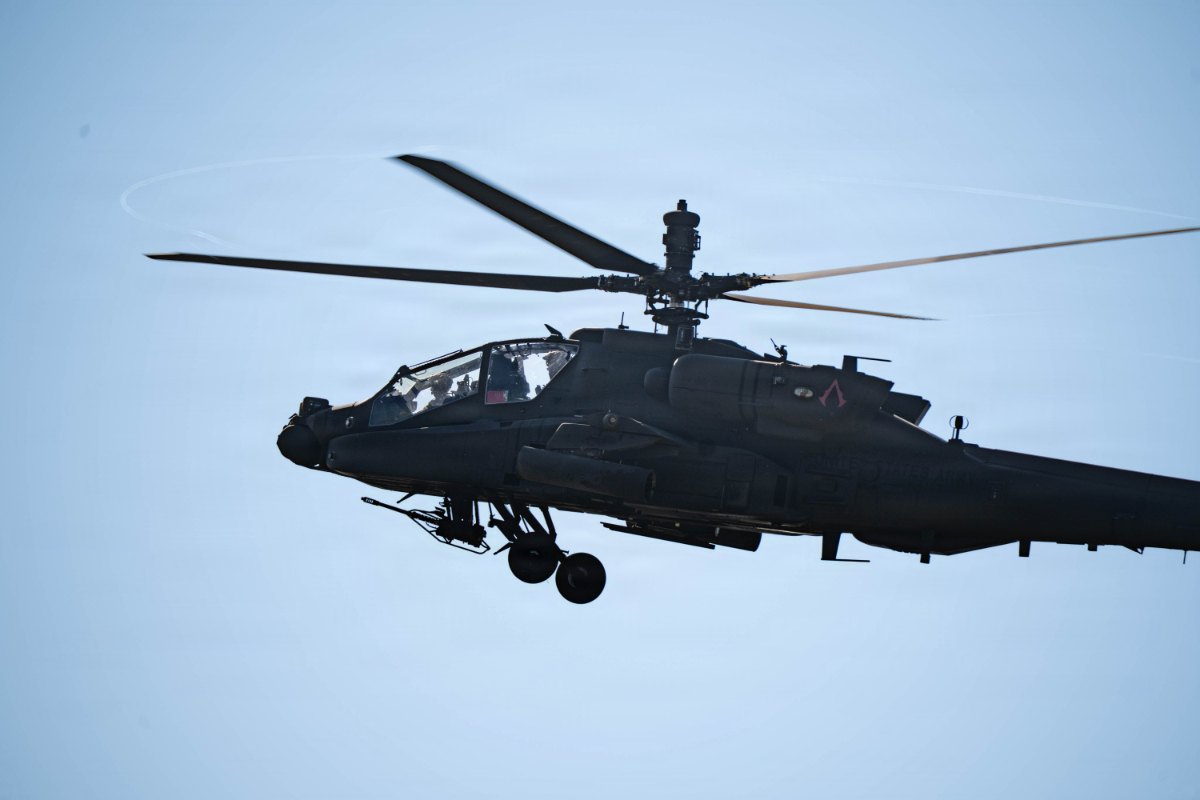
The U.S. Army has awarded Lockheed Martin a $117.1 million contract to keep supporting the second-generation radar frequency interferometer on its Apache attack helicopters, a passive sensor that lets crews find and pinpoint enemy radars without giving away their own position.
The Department of War contract announcement describes an indefinite-delivery/indefinite-quantity deal that mixes cost-no-fee, cost-plus-fixed-fee and firm-fixed-price terms for “post-production support services” on the Generation II system, with work running through Oct. 12, 2031. Lockheed Martin’s Owego, New York, business received the award after the Army solicited only one bid, and both work locations and funding will be set as individual orders are placed under the contract.
Known in military designation as the AN/APR-48B, the system listens for radar emissions on the battlefield rather than transmitting its own signal. It detects, identifies and locates enemy radars and then ranks them by priority for attack, while also cueing the Apache’s fire-control radar and warning the crew of radar-guided anti-aircraft threats. The same unit serves as the controller for the helicopter’s integrated survivability equipment, which ties it to the aircraft’s self-protection suite as well as its targeting.
Owego has supplied this family of sensors for decades. The first-generation AN/APR-48A flew on Apache Longbow helicopters in Desert Storm, Operation Iraqi Freedom and Operation Enduring Freedom, and the modernized second-generation version followed on the AH-64E Apache Guardian, the current production model flown by the U.S. Army.
The Generation II sensor also equips foreign Apache fleets, with Lockheed Martin delivering units to the United Kingdom, Qatar, Saudi Arabia and South Korea through Foreign Military Sales alongside those built for the U.S. Army.
Production of the current version has been winding down. An earlier $60.5 million award for AN/APR-48B production and related services scheduled work in Owego through Oct. 31, 2026, which places the new support contract right at the point where the Army shifts from buying the sensor to sustaining the fleet already in service.
A successor is already in development. In October 2024 the Army’s Apache program office hired Lockheed Martin to develop a Generation 3 radar frequency interferometer and radar warning receiver, promising better sensor performance in a smaller and lighter package built around a radio frequency system on a chip, and the new sensor is set to replace all Gen 2 systems across the Apache fleet.
That timeline explains the length of the new deal, since Generation II sensors will need spares, repairs and engineering support for as long as they remain on Apaches waiting for the upgrade. Neither the Army nor Lockheed Martin has said when Generation 3 will enter production or how quickly it will reach operational units.
Content preview only. Full article available at source. View Full Article
The U.S. Army awarded Lockheed Martin a $117.1 million contract for post-production support of the AN/APR-48B radar frequency interferometer used on Apache helicopters. This contract will last until October 12, 2031, and involves maintaining the system that detects enemy radars. Lockheed Martin is also developing a Generation 3 radar system to eventually replace the current model.
- U.S. Army awarded Lockheed Martin a $117.1 million contract
- Contract is for post-production support of the AN/APR-48B radar system
- Work will continue through October 12, 2031
- The system is used to detect and locate enemy radars
- A Generation 3 radar system is in development to replace the current model.