
Poland's $3.8 Billion San Air Defense Bet Exposes NATO's Drone Gap
 Alexandra Reeves
Poland's $3.8 Billion San Air Defense Bet Exposes NATO's Drone Gap
Poland is spending billions to stop cheap drones, and that is the point. Warsaw is not buying a prestige weapon or polishing a parade-ground capability. It is trying to close the most embarrassing gap exposed by the war in Ukraine: NATO can field exquisite air-defence systems, but it still struggles to defeat large numbers of inexpensive unmanned aircraft without burning through expensive interceptors.
Poland Is Building a Counter-Drone Industry
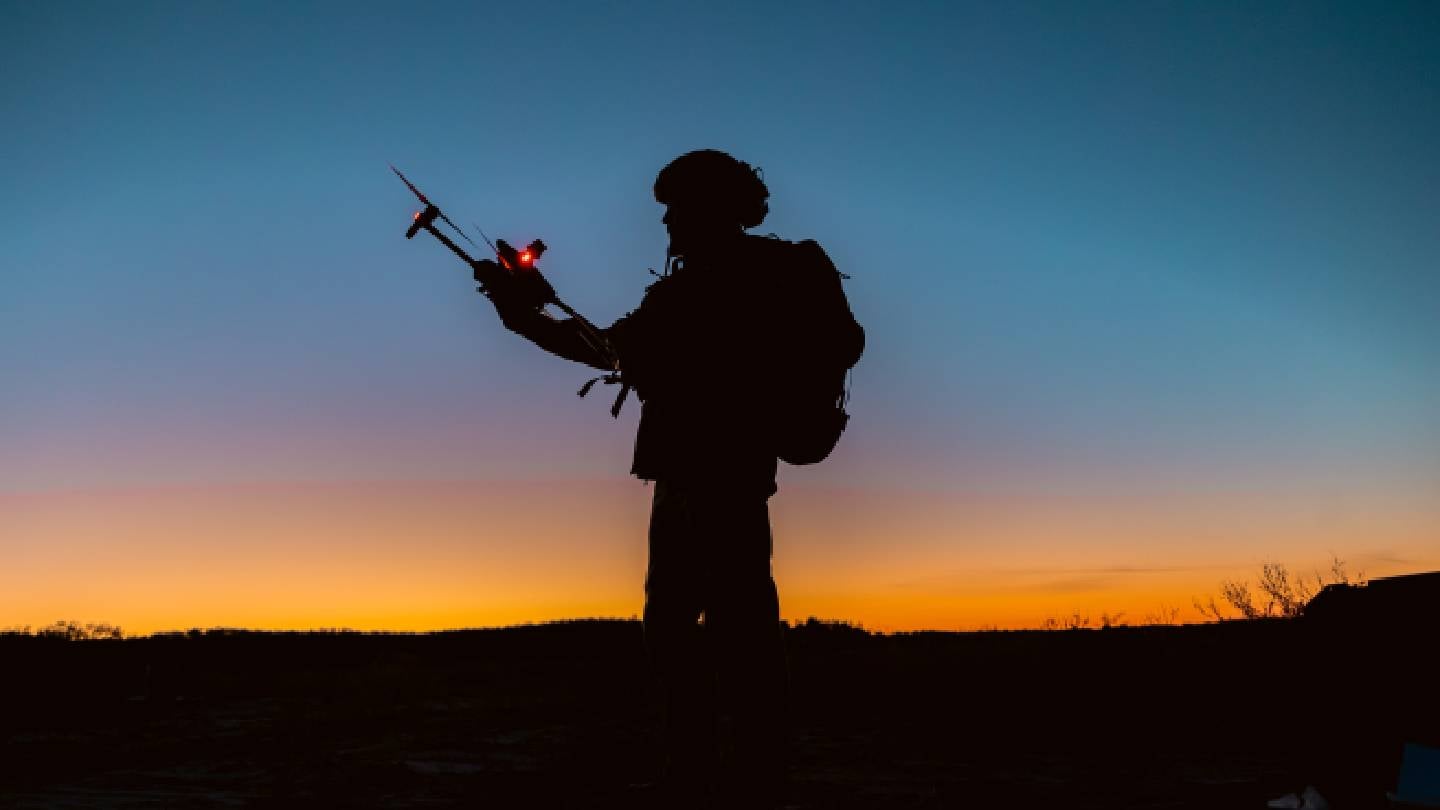
Norway's Kongsberg plans to build a counter-drone production facility in northern Poland, investing more than 200 million zloty, or about $51 million, according to Defense News. The plant is tied to Kongsberg's cooperation with Poland's state-owned PGZ on the San counter-drone system. Construction is expected to begin after a contract is signed by the end of 2026, with serial production planned for the first half of 2028.
The industrial move matters as much as the hardware. Poland wants the ability to manufacture, maintain and eventually export the system from its own territory. That gives Warsaw a deeper supply chain, reduces dependence on distant factories and turns the country's eastern flank into a defence-industrial workshop. In a long war, those are not administrative details. They are combat power.
The San Programme Is Large by Design
Poland's contract with Kongsberg and PGZ is valued at roughly 15 billion zloty, or $3.8 billion. Data from Poland's Ministry of National Defence, cited by Defense News, describes a force of 18 counter-drone batteries, 52 firing platoons, 18 command platoons and 703 vehicles.
That scale suggests Warsaw is not treating drones as an isolated base-security problem. It is trying to build a layered network that can protect manoeuvre units, logistics hubs, airfields and critical infrastructure. The San system will have to detect and track small targets, pass data through command networks, and engage threats at a cost that makes sense against mass-produced drones. A system that works technically but costs more to fire than the drone it defeats is not a solution. It is an expensive way to lose slowly.
There is also a geographic logic. Poland sits between NATO's main logistics routes and the alliance's most exposed eastern territory. Its airspace has already been made more politically sensitive by repeated concern over Russian missile and drone activity around the war in Ukraine. The country does not need to wait for a formal attack to learn the lesson. Every unexplained incursion, navigation error or deliberate probe tests the same question: can NATO identify a small target quickly enough to decide whether shooting it down is safer than letting it pass?
Ukraine Changed the Economics of Air Defence
The traditional air-defence model assumed that the attacker would spend heavily on aircraft and missiles. Ukraine has complicated that arithmetic. Russia can launch waves of relatively cheap one-way attack drones, often alongside cruise or ballistic missiles, forcing defenders to mix guns, electronic warfare, short-range missiles and fighter aircraft.
That combination creates a nasty resource problem. Patriot interceptors are built to defeat high-end threats and cost vastly more than the drones used to saturate a defended area. Using them against every low-cost target may protect a city tonight while hollowing out the magazine needed for a missile attack tomorrow. Refusing to engage leaves commanders gambling with infrastructure, troops and civilians.
Poland's San investment is therefore an admission that NATO needs a middle layer. The alliance requires systems that are mobile enough to follow ground forces, networked enough to share tracks, and cheap enough to fire repeatedly. It also needs stocks of ammunition and replacement components, not merely a handful of demonstration vehicles. The number of vehicles in the Polish programme is important precisely because it points toward persistence rather than a symbolic purchase.
Why the Factory May Matter More Than the Launcher
Kongsberg says the Polish site could create more than 100 jobs at full capacity and may eventually produce additional defence solutions. The immediate economic benefit is modest compared with the programme's price tag. The strategic benefit is larger.
European militaries have discovered that buying a weapon is easier than sustaining it. Ukraine's battlefield has consumed sensors, interceptors, batteries, antennas and repair capacity at a pace that peacetime procurement models did not anticipate. Local production gives Poland a way to shorten repair cycles and expand output during a crisis. It also gives European governments a reason to standardise around systems they can actually replenish.
The funding model reinforces that political shift. Defense News reports that the San contract will be largely financed through loans Poland secured under the European Union's Security Action for Europe scheme. That links national rearmament to a wider European attempt to turn defence spending into industrial capacity. Brussels can approve loans; it cannot manufacture urgency. Russia's drone campaign has done that job.
NATO's Drone Gap Is Still Bigger Than Poland
Poland's programme is serious, but it is not a magic shield. Counter-drone defence is a system-of-systems problem. Sensors must survive electronic attack. Command networks must function when satellites are jammed. Operators must distinguish a hostile drone from civilian traffic. And the alliance must decide in advance who has authority to engage an ambiguous target near a border.
Nor can Poland solve NATO's interoperability problem alone. A Polish counter-drone battery must be able to receive tracks from allied radars, share its own data and operate alongside American, German and British air-defence assets. Otherwise NATO will have many national solutions and one multinational vulnerability.
The uncomfortable conclusion is that Warsaw's $3.8 billion bet is less a sign that Poland has solved the drone threat than proof that the threat has become impossible to ignore. The San system may give NATO a credible low-cost defensive layer, but only if the alliance buys enough of it, connects it properly and keeps producing it under pressure. By 2028, when Polish serial production is expected to begin, Russia and other potential adversaries will not be waiting. The real test is whether NATO can manufacture protection faster than its enemies can manufacture targets.
Poland is investing $3.8 billion in a counter-drone defense system in collaboration with Kongsberg to enhance NATO's capabilities against low-cost unmanned aircraft. The program includes 18 counter-drone batteries and 703 vehicles, with production expected to start by 2028. This initiative aims to address vulnerabilities exposed by the war in Ukraine and reduce dependence on external supply chains.
- Poland is investing $3.8 billion in a counter-drone system with Kongsberg.
- The program includes 18 counter-drone batteries and 703 vehicles.
- Construction of a counter-drone production facility in Poland is planned to begin by 2026.
- The investment aims to enhance NATO's air defense capabilities against inexpensive drones.
- The funding will be largely financed through EU loans.