
Lockheed gets $76.6M for next-gen of Trident II nuclear missile
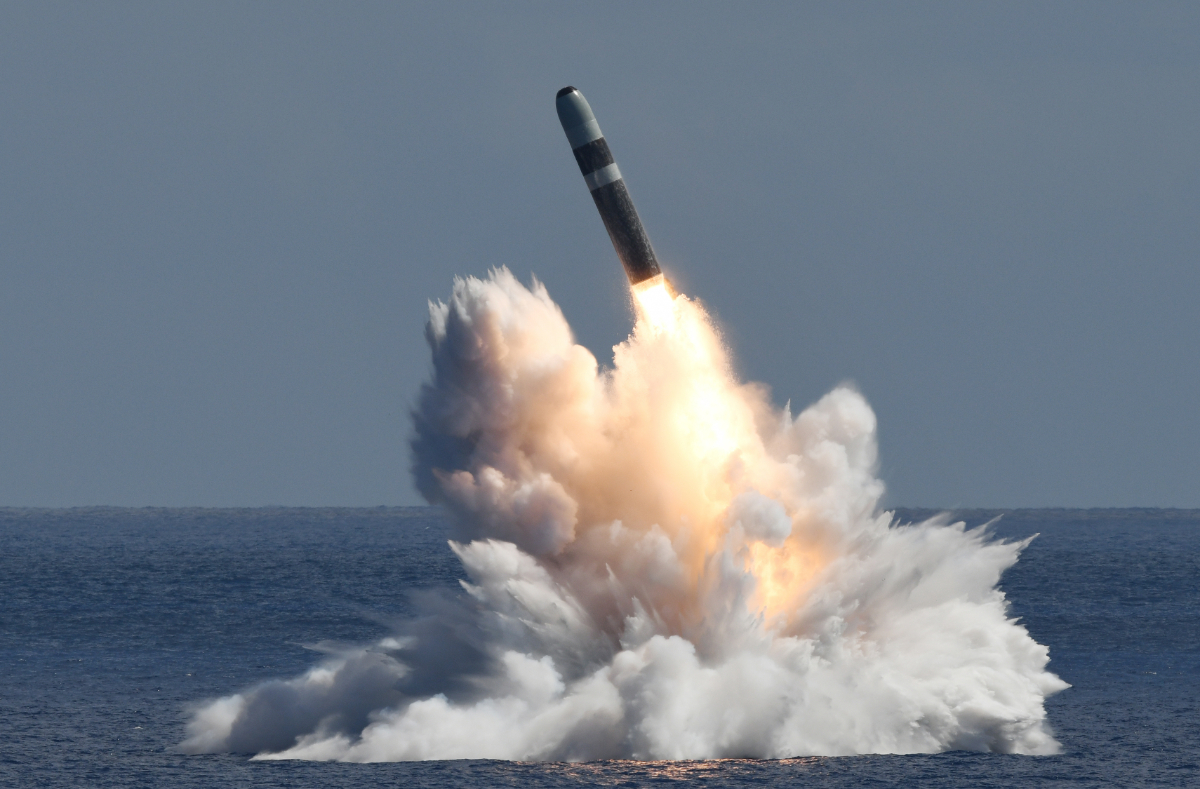
The U.S. Navy has added $76.6 million to a Lockheed Martin contract for continued design work on the next generation of the Trident II D5 nuclear missile, part of a long-term effort meant to keep the submarine-launched weapon in service into the 2080s.
The modification adds to an existing contract with Strategic Systems Programs, the Navy office that manages the country’s submarine-launched nuclear deterrent, and covers advanced design and development work under the Trident II D5 Life Extension 2 program, known as D5LE2. Lockheed Martin’s Titusville, Florida division will lead the effort, though the work itself is spread across more than a dozen locations, with Denver, Colorado handling 51 percent, followed by smaller shares in Elkton, Maryland; Montville, New Jersey; Greeneville, Tennessee; and Cape Canaveral, Florida, among others. The Navy is obligating the full $76.6 million now from fiscal 2026 weapons procurement funds, with work scheduled to run through Sept. 30, 2030. The award was not competitively bid, a legal option the Navy can use for specialized defense work, and only one company submitted a proposal after the opportunity was posted publicly.
Trident II D5 missiles form the sea-based leg of the U.S. nuclear triad, the three-part system of submarines, land-based missiles and bomber aircraft that has underpinned American nuclear deterrence for decades. The missile first entered service in 1990 and went through its first major refresh, called D5LE, in 2017. This second life extension effort is meant to keep the weapon effective for decades beyond that, with the Navy targeting continued service through roughly 2084, nearly a century after the missile’s original design.
The current Trident II D5 weighs about 130,000 pounds (59,000 kilograms), can fly roughly 4,000 nautical miles (7,400 km), and reaches speeds reported to exceed Mach 20. It currently arms the Navy’s Ohio-class submarines and Britain’s Royal Navy Vanguard-class boats, both of which are approaching retirement. The D5LE2 version being developed now is intended to carry over onto the submarines replacing them, the Navy’s incoming Columbia-class and the Royal Navy’s future Dreadnought-class, making this a joint U.S.-U.K. modernization effort rather than a purely American one.
The program has moved forward in stages. The Navy first awarded Lockheed a $383 million contract in January 2025 to begin D5LE2 design and development, followed by an $850 million contract modification announced in April 2026 to continue that work. Lockheed is separately building a roughly 225,000-square-foot (20,900-square-meter) production facility in Titusville expected to open in 2027, while the Navy is constructing its own 130,000-square-foot Engineering Test Facility at Cape Canaveral Space Force Station, one of 28 facility projects the Naval Ordnance Test Unit plans to complete between 2024 and 2032 to support the missile’s development and testing.
Even as the newer version moves through design work, the current fleet of missiles remains active. The Navy conducted four unarmed Trident II D5LE test flights from an Ohio-class submarine off the coast of Florida in September 2025, a demonstration officials said confirmed the continued readiness of the sea-based deterrent while the next generation is still years from completion.
Content preview only. Full article available at source. View Full Article
The U.S. Navy awarded Lockheed Martin $76.6 million for continued design work on the next generation of the Trident II D5 nuclear missile. This funding is part of the D5 Life Extension 2 program, aimed at maintaining the missile's operational capability into the 2080s. Work will be conducted across various locations, with a significant portion in Denver, Colorado, and is scheduled to continue through September 30, 2030.
- U.S. Navy awarded Lockheed Martin $76.6 million for Trident II D5 design work.
- The contract is part of the D5LE2 program to extend missile service into the 2080s.
- Work will be conducted across multiple locations, primarily in Denver, Colorado.
- The current Trident II D5 missile can fly 4,000 nautical miles and exceeds Mach 20.
- The program includes collaboration with the U.K. on future submarine systems.