
Lockheed Martin teams up to mass produce hypersonic weapons
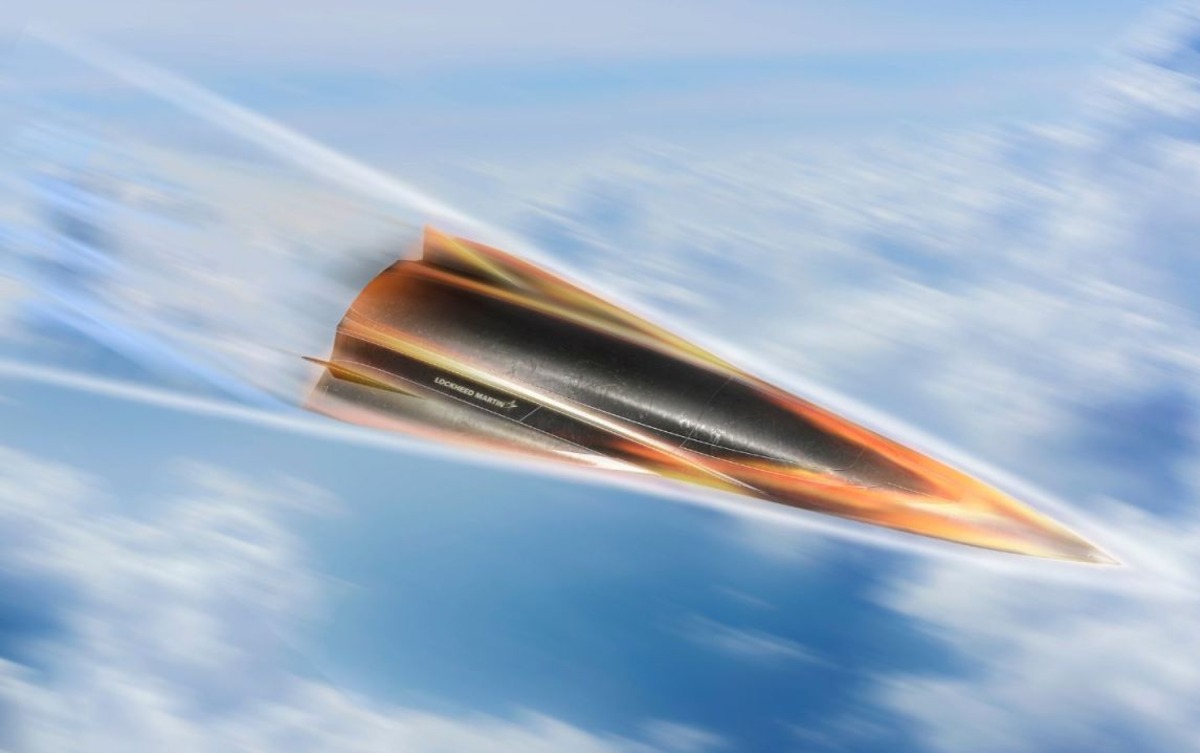
Two of America’s biggest defense manufacturers teamed up to solve a problem that has quietly threatened to undercut the Pentagon’s entire hypersonic weapons push, the country’s struggle to actually build these weapons fast enough once the engineering work is done.
Lockheed Martin and Albany Engineered Composites, a segment of Albany International Corp., announced a teaming agreement aimed at accelerating production of hypersonic weapons, systems designed to fly faster than Mach 5, or roughly 3,836 miles per hour (6,174 km/h), while maneuvering unpredictably enough to slip past traditional missile defenses.
Lockheed Martin brings decades of experience integrating complex weapons systems, the process of taking individual components like guidance software, propulsion and warheads and combining them into a single working weapon ready for deployment. Albany Engineered Composites, based in Rochester, New Hampshire, specializes in manufacturing advanced composite materials, lightweight, high-strength structures built from layered fibers rather than traditional metal, that can withstand the extreme heat and stress hypersonic vehicles generate as they streak through the atmosphere at more than five times the speed of sound. The companies said they plan to jointly pursue upcoming full-rate production contracts, the phase of a weapons program where a design moves from limited prototype numbers into the kind of high-volume manufacturing that actually arms military units in meaningful quantities.
Johnathon Caldwell, Lockheed Martin vice president and general manager of Strategic and Missile Defense Systems, framed the partnership as a direct response to Pentagon pressure to close the gap between hypersonic weapons that work in testing and hypersonic weapons the military can actually stockpile.
“By pairing our experience in system integration and battle-ready engineering with Albany’s cutting-edge composite production, we are accelerating the delivery of critical technologies to bolster the Arsenal of Freedom and strengthen our defense industrial base,” said Caldwell.
That reference to the Arsenal of Freedom points to a broader Pentagon manufacturing initiative pushing defense contractors toward faster, higher-volume production across multiple weapons categories, part of a wider effort under Secretary of War Pete Hegseth to reduce the years-long lag that has historically separated a weapon’s successful test flight from its actual availability on a battlefield. Chris Stone, president of Albany Engineered Composites, echoed that urgency while pointing specifically to the manufacturing bottleneck his company aims to help solve.
“The future of hypersonics depends on more than breakthrough design, it requires the ability to manufacture advanced composite structures at unprecedented scale. This partnership combines Lockheed Martin’s proven architecture with Albany’s advanced composite technologies and agile manufacturing capabilities to deliver a low-risk solution with the speed and quality the Department of War requires,” said Stone.
The urgency behind that manufacturing push reflects a strategic reality American defense planners have grown increasingly vocal about over the past year, that China has already moved its own hypersonic weapons from testing into fielded, combat-ready status. Chinese state media has reported that the country’s DF-17 hypersonic missile has reached full combat capability and entered mass deployment, a milestone that puts pressure on the United States to demonstrate it can not only design comparable technology but actually manufacture it in numbers that matter for deterrence, rather than producing a small handful of expensive, hand-built prototypes that take years to reach operational units.
The company recently disclosed a multimillion-dollar investment in what it calls its Modular Prompt Distributed Strike system, an approach built on flight-tested hypersonic technologies and an established industrial base, designed specifically to reduce the engineering rework and cost typically required to integrate new hypersonic payloads into existing airframes. Lockheed Martin has said that investment supports the Department of War’s Scaled Hypersonics Critical Technology Area, part of a broader munitions acceleration initiative, and that the modular design increases automation throughout assembly, integration and testing in order to cut labor hours and shorten delivery timelines. Those efforts sit alongside Lockheed Martin’s continued work on Conventional Prompt Strike, a major hypersonic weapons program the company’s CEO Jim Taiclet told investors during the company’s second-quarter 2026 earnings call had made continued technical and contractual progress following a series of successful flight tests, with $1.4 billion in contract modifications aimed at speeding the program’s development.
Neither Lockheed Martin nor Albany Engineered Composites disclosed the financial terms of this new teaming agreement, nor did they identify which specific hypersonic weapons programs the partnership will ultimately support once full-rate production opportunities are formally competed and awarded.
The companies did describe the agreement as built on a flexible structure with clearly defined roles and cost responsibilities between the two firms, a framework intended to let the partnership adapt quickly as Pentagon program requirements and government directives continue evolving, rather than locking both companies into a rigid arrangement that could become outdated as hypersonic weapons priorities shift.
Content preview only. Full article available at source. View Full Article
Lockheed Martin and Albany Engineered Composites have formed a partnership to expedite the production of hypersonic weapons in response to Pentagon requirements. This collaboration aims to overcome manufacturing challenges and enhance the U.S. defense capabilities against emerging threats, particularly from China's operational hypersonic systems. The companies plan to pursue full-rate production contracts to ensure timely delivery of these advanced weapon systems.
- Lockheed Martin and Albany Engineered Composites are partnering to accelerate hypersonic weapons production.
- The hypersonic weapons are designed to fly faster than Mach 5 and evade traditional missile defenses.
- The partnership aims to address manufacturing bottlenecks and meet Pentagon demands for faster production.
- Lockheed Martin has made a multimillion-dollar investment in hypersonic technologies.
- China has reportedly deployed its DF-17 hypersonic missile, increasing pressure on the U.S. to enhance its capabilities.