
Macron and Merz test four defense fields in 2026 — why Europe's cooperation fails without governance
 Dr. Klaus Weber
Macron and Merz test four defense fields in 2026 — why Europe's cooperation fails without governance
Four topics are on the agenda, but none of them already has a robust European decision-making architecture: nuclear deterrence, ballistic missile defense, long-range precision strikes, and military satellite communication. This is precisely the significance of the German-French ministerial meeting in Cologne on July 16 and 17, 2026. Berlin and Paris are demonstrating their ability to act after the FCAS fighter jet program has effectively collapsed. However, the list of new cooperation fields shows less a renewal of the axis than its institutional overload.
According to information from Reuters, published by Defense News, France and Germany are expected to adopt two joint statements. The French side speaks of deepening cooperation in nuclear deterrence, missile defense, long-range capabilities, and space. The German side also expects an agreement on which parts of FCAS can be continued, particularly data connections between fighter jets and the associated software, the so-called Combat Cloud. This sounds technically sober. Politically, it is an attempt to break down a failed large program into smaller, less visible modules.
FCAS is not just a fighter jet problem
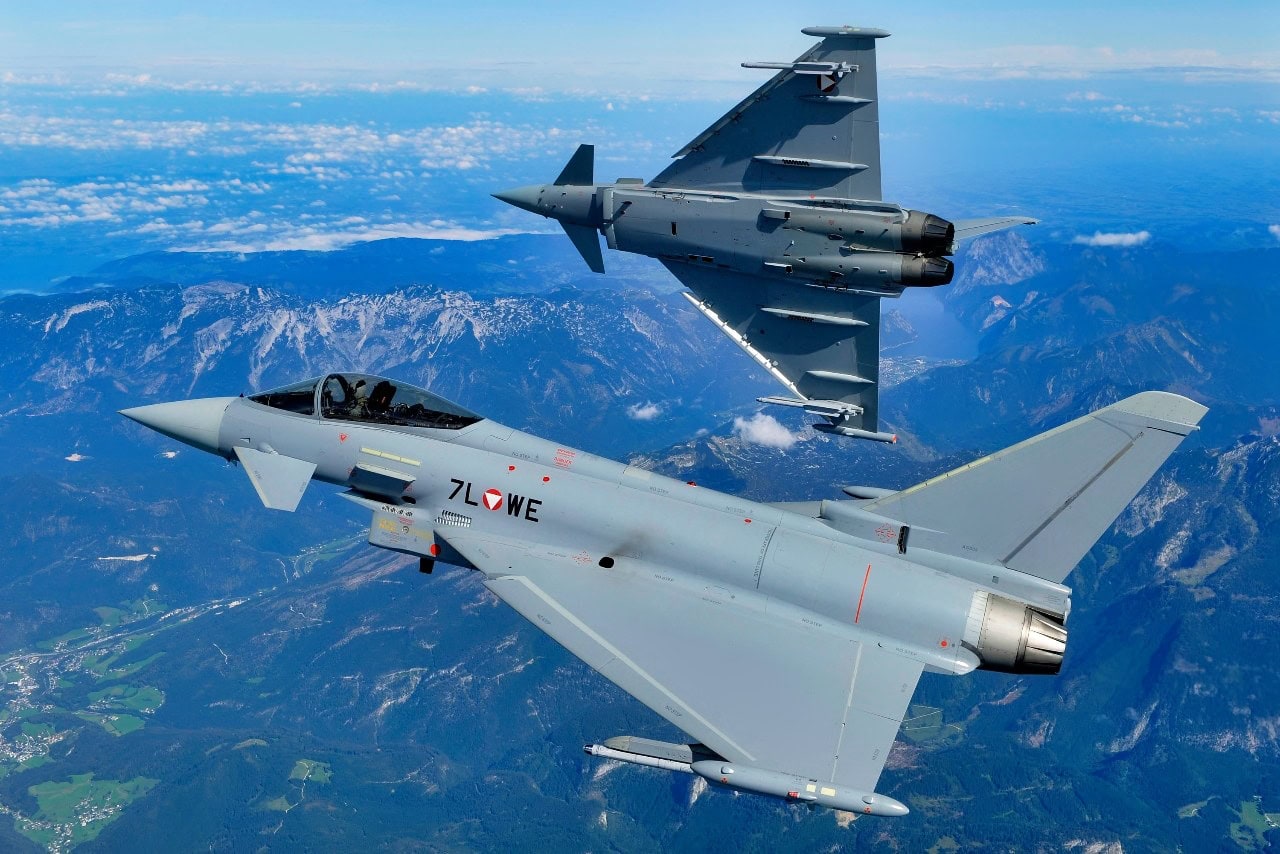
The mistake would be to treat FCAS as an isolated industrial conflict between Dassault and Airbus. The program did not fail because Europe lacks engineers. It failed because France and Germany never translated their differing views on leadership responsibility, export control, intellectual property, and industrial returns into a binding governance structure. Whoever controls system integration also controls modernization, export capability, and operational logic. This is not an industry vanity but the core of military sovereignty.
Therefore, the attempt to at least salvage Combat Cloud elements is ambivalent. On one hand, the networking of Rafale, Eurofighter, future drones, and ground stations is indeed more urgent than the distant decision about a manned fighter jet of the 2040s. On the other hand, a software cooperation without a common leadership structure merely shifts the old problem into a new technical layer. Data links are not neutral cables. They define who prioritizes targets, who processes sensor information, and who inputs the fire command into a multinational system in case of emergency.
Nuclear exercises do not replace guarantees
Particularly sensitive is Macron's concept of a forward French deterrence. According to the report, Berlin is expected to agree that German soldiers will participate in a French nuclear exercise in the fall. Symbolically, this would be remarkable. Germany, which is still secured nuclear-wise through NATO and thus through the United States, would for the first time be visibly involved in French deterrence practices. But is that enough?
An exercise is not yet nuclear participation, and French deterrence remains constitutionally, operationally, and politically national. Paris can consult European partners, but it cannot transform its Force de frappe into an EU instrument without destroying its logic. Berlin, in turn, seeks additional European security without openly stating what political costs it would incur for a French nuclear guarantee. This ambiguity is convenient as long as it concerns exercises. It becomes dangerous as soon as deterrence is sold as a substitute for American security guarantees.
Missile defense shows the toughest conflict of interest
In the field of air and missile defense, the fundamental decisions clash even more directly. France has been calling for stronger European solutions for years; Germany has long relied more on available systems like Patriot, IRIS-T SLM, and Arrow 3 through the European Sky Shield Initiative. From a German perspective, this is plausible: The threat from Russian missiles and drones cannot be countered with an industrial concept that will only mature in ten years. From a French perspective, however, this procurement cements a dependency on American and Israeli key technologies.
The NATO declaration from Ankara exacerbates this contradiction. The European allies and Canada committed there to 70 billion euros in military equipment, support, and training for Ukraine by 2026 and stated that they aim to maintain at least a comparable level in 2027. At the same time, the alliance announced more than 50 billion dollars in new procurements and referred to 139 billion dollars in additional European and Canadian core defense investments in 2025. More money is flowing. However, the crucial question is whether it flows into a common European capacity or into parallel national procurement lists.
MBDA is both a model and a warning
MBDA shows that European arms cooperation can work. The company, supported by Airbus, BAE Systems, and Leonardo, is Europe's most important manufacturer of guided missiles. According to company information summarized by Defense News on July 15, sales are expected to rise to 5.8 billion euros in 2025, with a backlog of 44.4 billion euros. Investments for 2026 to 2030 are set to increase to 5 billion euros, after previously planning 2.5 billion euros for 2025 to 2029. Production is set to double between 2023 and the end of 2025; total production is expected to increase by another 40 percent in 2026.
This is impressive, but precisely for that reason politically instructive. MBDA does not function because all national interests have disappeared. It works because national interests have been embedded in an ownership, location, and product architecture that leaves France, Germany, Italy, and the UK enough sovereignty without renegotiating every capability development. This institutional groundwork was precisely what was missing in FCAS. It is also lacking in many new projects that are now being presented under time pressure as a European response to Russia.
IRIS² and the German satellite question
The contradiction is also visible in space. France and Germany want to reaffirm their support for IRIS², the planned secure EU satellite communication constellation. At the same time, Berlin is pursuing its own military satellite project. This can be interpreted as a division of labor. More realistically: Germany does not fully trust the European timeline, France does not fully trust the German parallel structure, and both still want to invoke European sovereignty in a joint statement.
This is not a moral failure but normal government policy under uncertainty. National defense ministers are first held accountable for national operational capability. European programs, on the other hand, are often measured against consensus, budget cycles, and industrial returns. As long as this incentive structure remains unchanged, even well-meaning governments produce duplicate structures. Europe then does not gain strategic autonomy but strategic redundancy with poor cost control.
The real test comes after the declaration
The Cologne meetings can be useful if they draw a sober lesson from the FCAS shock: Cooperation does not begin with a joint press conference but with decision rules, export rules, leadership rights, and dispute resolution. Those who do not answer these questions at the beginning will pay later with delays, additional costs, or program death.
For Germany, the temptation is great to dismiss French sovereignty rhetoric as too slow and to buy available American systems. For France, the temptation is equally great to condemn German procurement pragmatism as strategic shortsightedness. Both diagnoses contain truth. Both solve nothing. Europe's paradox in 2026 is: Without quick purchases, deterrence remains hollow; without common governance, quick purchases only make Europe more expensive, not more sovereign.
France and Germany tested four defense fields during a meeting in Cologne on July 16-17, 2026, focusing on nuclear deterrence, missile defense, long-range precision strikes, and military satellite communication. The discussions aimed to demonstrate capability following the failure of the FCAS program and included Germany's potential participation in a French nuclear exercise, indicating a shift in defense collaboration. However, the report emphasizes the ongoing challenges of European defense cooperation without a solid governance framework.
- France and Germany are testing four defense fields: nuclear deterrence, missile defense, long-range precision strikes, and military satellite communication.
- The meeting in Cologne aims to demonstrate capability after the FCAS program's failure.
- Germany is considering participation in a French nuclear exercise, marking a significant political shift.
- The report highlights the challenges of European defense cooperation without a governance structure.