
Maïga returns to Algiers — the Tamanrasset corridor becomes vital again for the war in Mali in 2026
 Marie Dubois
Maïga returns to Algiers — the Tamanrasset corridor becomes vital for the war in Mali in 2026
Algiers, August 24. Abdoulaye Maïga arrived in the Algerian capital with a written message from Assimi Goïta and a carefully chosen phrase: between Bamako and Algiers, the views "completely converge" on sovereignty and non-interference. Stated this way, it sounds like a classic communiqué. On the ground, it is quite another matter. After fifteen months of rupture caused by the destruction of a Malian drone at the end of March 2025, followed by the closure of airspaces and the recall of ambassadors, Mali is knocking on a door it cannot afford to leave closed for long.
This visit is not primarily diplomatic. It is logistical, border-related, and military. Northern Mali is still burning amid the offensives of JNIM, the maneuvers of the Azawad Liberation Front (FLA), and the Russian presence. None of these equations stabilize without Algeria. That is the real issue.
A normalization that aims at the map more than the protocol
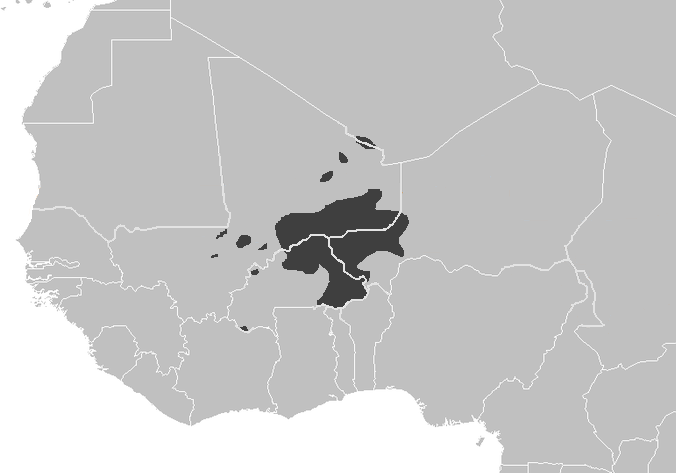
The facts are known. On July 10, Algiers sent its ambassador back to Bamako. On August 24, the Malian Prime Minister came to consolidate this thaw, received by Abdelmadjid Tebboune and in a working session with his counterpart Sifi Ghrieb. But what matters is not the photo. It is the 1,300 kilometers of Saharan border between the two countries, a theoretical line that actually covers corridors of movement between Tinzaouatène, Kidal, Bordj Badji Mokhtar, and Tamanrasset.
In this strip, one does not control a theater of operations with statements. One controls it with fuel, human intelligence, monitored crossings, and interlocutors who can still talk to the men of the North. Since the bilateral crisis, Bamako has been waging its war with planes, columns, and Russian auxiliaries, but without political depth on its northern flank. This is a major weakness.
- The Algerian border remains a potential transit axis for fuel, parts, mediations, and evacuations.
- The Joint Operational Staff Committee of Tamanrasset, largely paralyzed during the crisis, could become a useful channel for coordination again.
- The crises in Northern Mali are rarely resolved solely in Bamako or Moscow; they also go through Algiers.
Why Bamako needs Algiers again
The prisoner releases this month show better than any speech where the leverage still lies. On August 14, the Malian army announced the return of 82 soldiers captured by armed groups in the North. According to a source from the Malian Ministry of Foreign Affairs cited by AFP via Al Jazeera, this release was facilitated by Algeria. Then, on August 23, 22 more Malian soldiers were released by Tuareg rebels, some held for more than three years, according to security sources and the junta reported by AFP via Daily Trust.
This detail is decisive. Algeria does not bring Bamako more firepower than the Africa Corps. It brings something that the Russians cannot provide: a channel. A channel with Tuareg actors, a border channel, a humanitarian channel, sometimes even a de-escalation channel. In the Malian war of 2026, this often counts for more than an additional strike on an empty depot.
It is useful.
Northern Mali cannot be closed off with bombings alone
From an officer's perspective, the problem is simple. Strikes can destroy a pickup or a depot. They do not reopen a road, secure a supply source, or restore the minimal trust necessary to recover prisoners. The fighting around Kidal, Anefis, and Tinzaouatène reminded us all summer: the FLA and JNIM remain capable of cooperating occasionally against Bamako, even if their objectives differ profoundly.
Mali can hold a base for a few days with Russian support. It cannot sustainably reshape the balance of power in the Adrar des Ifoghas if it alienates both the Algerian circuits and the mediators capable of speaking to the notables of the North. The Sahelian war is not just an addition of battles. It is a system of tracks, markets, tribal relays, and border posts. Capitals forget this. The desert never does.
Fuel matters as much as doctrine
The other interest in the rapprochement is less spectacular but even more concrete: energy. Bamako is facing real difficulties in fuel supply. If Algerian deliveries become more regular again, the effect will not only be economic. It will be military. An army that lacks fuel quickly runs out of patrols, then convoys, then initiative. In the Sahel, logistics always ends up dictating strategy.
That is why this sequence deserves to be read without Maghreb romanticism. Algiers is not returning to save Bamako. Bamako is not returning out of nostalgia for old solidarity. The two regimes are rediscovering that the fallout from 2025 was too costly at the very moment when Northern Mali was entering a more dangerous phase, with prisoners to negotiate, axes to reopen, and jihadist pressure that is not intimidated by state symbols.
The first test will be seen north of Kidal
The success of this visit will not be measured by the number of communiqués. It will be seen elsewhere: in the real resumption of discreet security mechanisms, in the fluidity of border exchanges, in new releases, and in the reduction of the risk of incidents between Malian forces and Algerian space. For now, we do not know if Algiers is ready to go for substantial security coordination or if it prefers to remain on a minimal political normalization. This uncertainty must be stated.
But one thing is already clear. In 2026, the road from Algiers becomes for Bamako an indirect line of operations again. If it really reopens, Mali will gain oxygen in the north. If it closes again, the Russians may continue to deliver weapons and men; they will not replace either geography or Algeria.
Malian Prime Minister Abdoulaye Maïga visited Algiers on August 24, 2026, to discuss military cooperation and border security with Algerian officials. This visit follows the release of 82 Malian soldiers, facilitated by Algeria, highlighting the importance of the Algeria-Mali border for military logistics. The ongoing conflict in northern Mali necessitates collaboration between the two nations to address security challenges.
- Abdoulaye Maïga visited Algiers with a message from Assimi Goïta.
- 82 Malian soldiers were released with Algeria's assistance.
- The border between Mali and Algeria is crucial for military logistics and operations.