
Mali 2026 imprisons 2 journalists — the JNIM turns Kidal into an information battle
 Marie Dubois
Mali 2026 Imprisons 2 Journalists — JNIM Turns Kidal into an Information Battle
On June 9, in Bamako, Abdramane Keïta was placed in provisional detention for a statement that, on the ground, was nothing extravagant: he said on television that the Support Group for Islam and Muslims, the JNIM linked to Al-Qaeda, controlled Kidal. Twenty-four hours earlier, Chahana Takiou, director of the newspaper 22 Septembre, had been arrested after criticizing the use of cybercrime law against journalists. Human Rights Watch confirmed on June 10 the procedural dates: Takiou's trial is scheduled for July 27, and Keïta's for August 17.
This is not just a matter of press freedom. It is a military issue. When a state prosecutes a journalist for describing the state of a strategic city, it means that the front line has also become a line of vocabulary. Bamako is no longer just fighting the JNIM in the north; it is fighting the very possibility of saying that Kidal is no longer under effective government control.
Kidal is not an Abstract Symbol
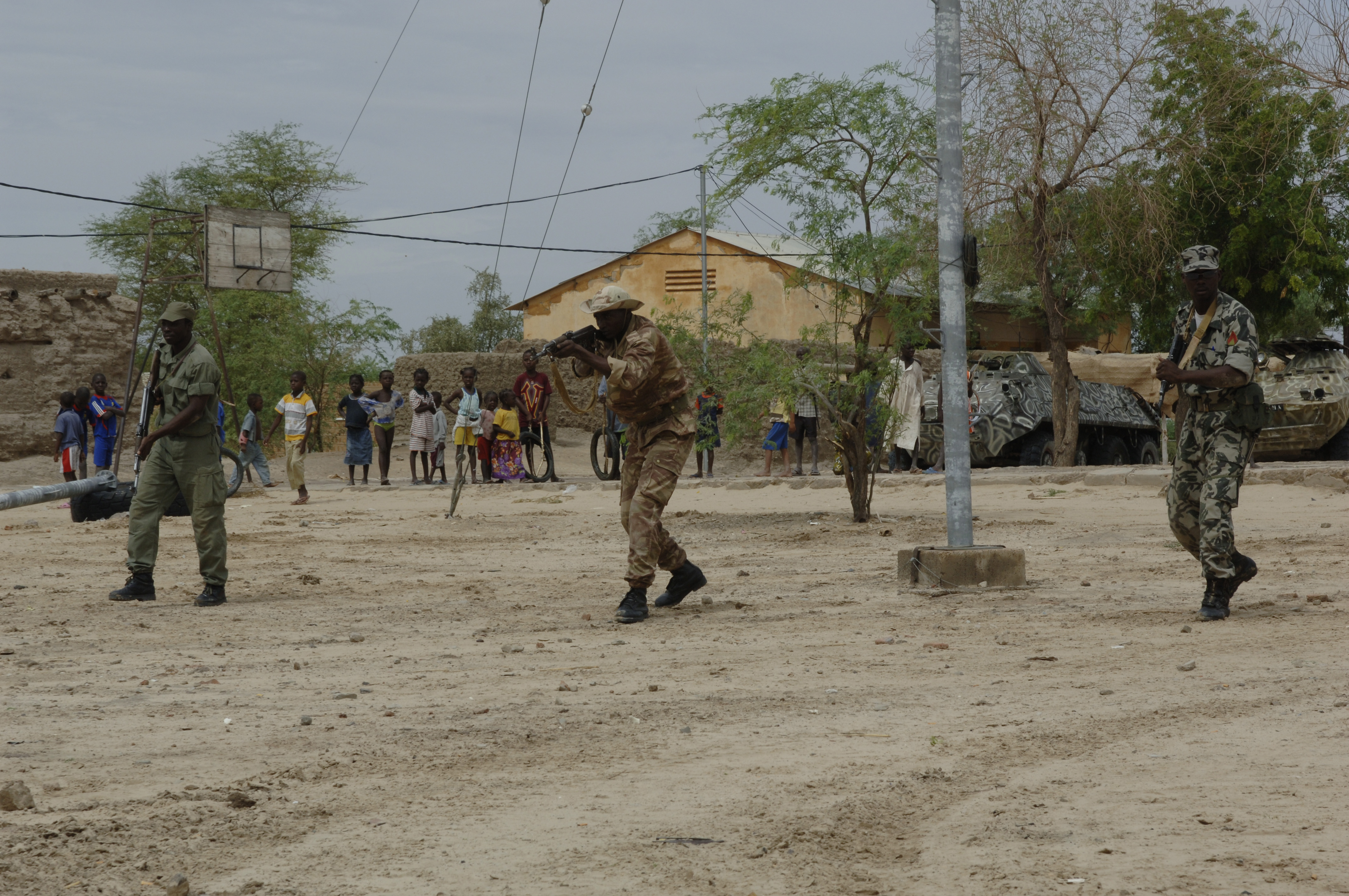
Kidal is located more than 1,500 kilometers from Bamako via the passable roadways, in the northeast of Mali, in an area where distance is measured less in kilometers than in fuel, intelligence relays, and tribal loyalty. From Gao, the road to Kidal crosses a desert depth where an armored column becomes predictable: it must follow the tracks, water points, and rare cover. From experience, an isolated garrison in this theater does not hold by the flag. It holds by rotations, informants, and the ability to evacuate the wounded.
In April, several international sources reported that Kidal had fallen during a coordinated offensive involving the Azawad Liberation Front and the JNIM. The Associated Press recalls that the city had been seized during these major attacks. Le Monde also described the return to Kidal of Azawadian leaders after their expulsion in 2023 by the Malian army and Russian mercenaries. The exact details of the sharing of authority between Tuareg rebels and jihadists remain imperfectly verified. But for a local population, the nuance between administrative control, military control, and nighttime control is not theoretical. If the checkpoint, the local judge, and the religious leader respond to three different forces, the state has already lost the essential.
The Junta Transforms Territorial Loss into a Language Offense
Keïta is being prosecuted for undermining national unity and disseminating information deemed false. Takiou, on the other hand, is targeted for criticizing the use of justice and cybercrime law. Human Rights Watch emphasizes that this Malian law from 2019 allows for sentences of up to ten years in certain cases, with sufficiently broad formulations to absorb ordinary political criticism. For a former officer, the essential point lies elsewhere: an army that forbids naming a territorial loss deprives itself of correction.
In the staff offices, this is called feedback. It is sometimes brutal, often imprecise, but vital. Merchants, drivers, local journalists, and community radios provide the first signals of a cut-off road, a new jihadist levy, a replaced commander. If these relays fear prison, the command later receives cleaner information on paper and less useful in operations. Censorship produces bad maps.
Bamako can still say that Kidal is not lost. The problem is that the convoy that is supposed to go there from Gao does not advance on a statement. It advances on a track where the JNIM knows how to place scouts, mine a passage, and negotiate with the villages before the arrival of vehicles. Official language does not protect a fuel truck.
The Bounty on Iyad Ag Ghali Confirms the Same Weakness
On June 5, Malian authorities promised 2 billion CFA francs, or about 3.5 million dollars, for information leading to the capture or neutralization of Iyad Ag Ghali, the head of the JNIM. Another bounty, of about 2.5 million dollars, targets his deputy Amadou Kouffa. This announcement is not ridiculous: bounties can crack networks, especially when supply chains become costly. But it also shows that Bamako recognizes, through money, what it sometimes refuses in public discourse: the jihadist center of gravity is not just an armed band; it is a command architecture.
Ag Ghali has survived the French, the Russians, drone campaigns, and internal rivalries. His advantage is not invincibility. His advantage is social depth: notables, former Tuareg networks, religious mediations, trafficking, and Peul recruitment in the center. The JNIM does not need to administer Kidal like a French prefecture. It is enough for it to make the Malian army intermittent and Bamako's authority contestable.
Russia Does Not Replace a Local Network
Since the break with France and the withdrawal of the Barkhane architecture, Bamako has bet on military sovereignty supported by Moscow. This option has provided capabilities: helicopters, advisors, strikes, deterrent presence around certain sites. It has not recreated the human mesh destroyed by years of distrust between center and periphery. This is where the former French presence also had its limits. We had drones, maps, patrols, but not always the political legitimacy to transform a tactical success into stability.
The Malian junta now finds itself in an even harsher contradiction. It claims to speak on behalf of national sovereignty, but it shrinks the civil channels that allow knowing where this sovereignty still exists. When Malian journalists become threats because they mention Kidal, the message received in Gao, Timbuktu, or Menaka is simple: it is better to remain silent than to report a reality that displeases.
What to Watch Now
- The reaction of local radios and correspondents in the north after Keïta's arrest.
- The movements between Gao, Bourem, and Kidal, especially fuel convoys and medical evacuations.
- The JNIM's ability to present its grip on Kidal as protection rather than occupation.
- Bamako's attempts to produce a visible military demonstration before the trials in July and August.
Uncertainty remains about the exact degree of daily coordination between the JNIM and Azawadian leaders in Kidal. This is precisely why we need journalists, local sources, and imperfect but rapid descriptions. In the desert, silence is never neutral. It often precedes the ambush.
The battle for Kidal is no longer just played around an old base or a governorship. It is played in Bamako's ability to hear bad news before the JNIM exploits it.
Main Sources: Human Rights Watch, Associated Press, Asharq Al-Awsat/AFP, Le Monde Afrique.
On June 9, 2026, two journalists were arrested in Mali for reporting that the JNIM controls Kidal. This incident reflects the Malian government's efforts to suppress information regarding its military challenges. The arrests are part of a broader struggle for control over narratives in a region where JNIM's influence is growing, particularly following recent offensives.
- Two journalists were arrested in Mali for reporting on JNIM's control of Kidal.
- The arrests are seen as a military issue related to information control.
- Human Rights Watch confirmed the dates of the journalists' trials.
- The Malian government is offering a reward for information on JNIM leaders.
- Kidal's strategic importance is highlighted due to its control by JNIM.