
Mali imprisons 2 journalists in 2026 — Kidal's denial exposes Bamako to JNIM
 Marie Dubois
Mali Imprisons 2 Journalists in 2026 — Kidal's Denial Exposes Bamako to JNIM
On June 9, in Bamako, Abdramane Keïta was placed in provisional detention after stating on television that the Group for Support of Islam and Muslims (JNIM), affiliated with Al-Qaeda, controlled Kidal. The day before, Chahana Takiou, presenter and director of the newspaper 22 Septembre, had already been arrested after criticizing the use of Malian cybercrime law. These are not just two press cases. In Mali in 2026, it is an operational symptom.
When a general staff continues a statement about Kidal as if it were an attack on national unity, it reveals a weakness more serious than the statement itself. It shows that the real battlefield and the declared battlefield no longer coincide. On the ground, this discrepancy is costly.
An Arrest Born from a Map That Bamako Refuses to Acknowledge
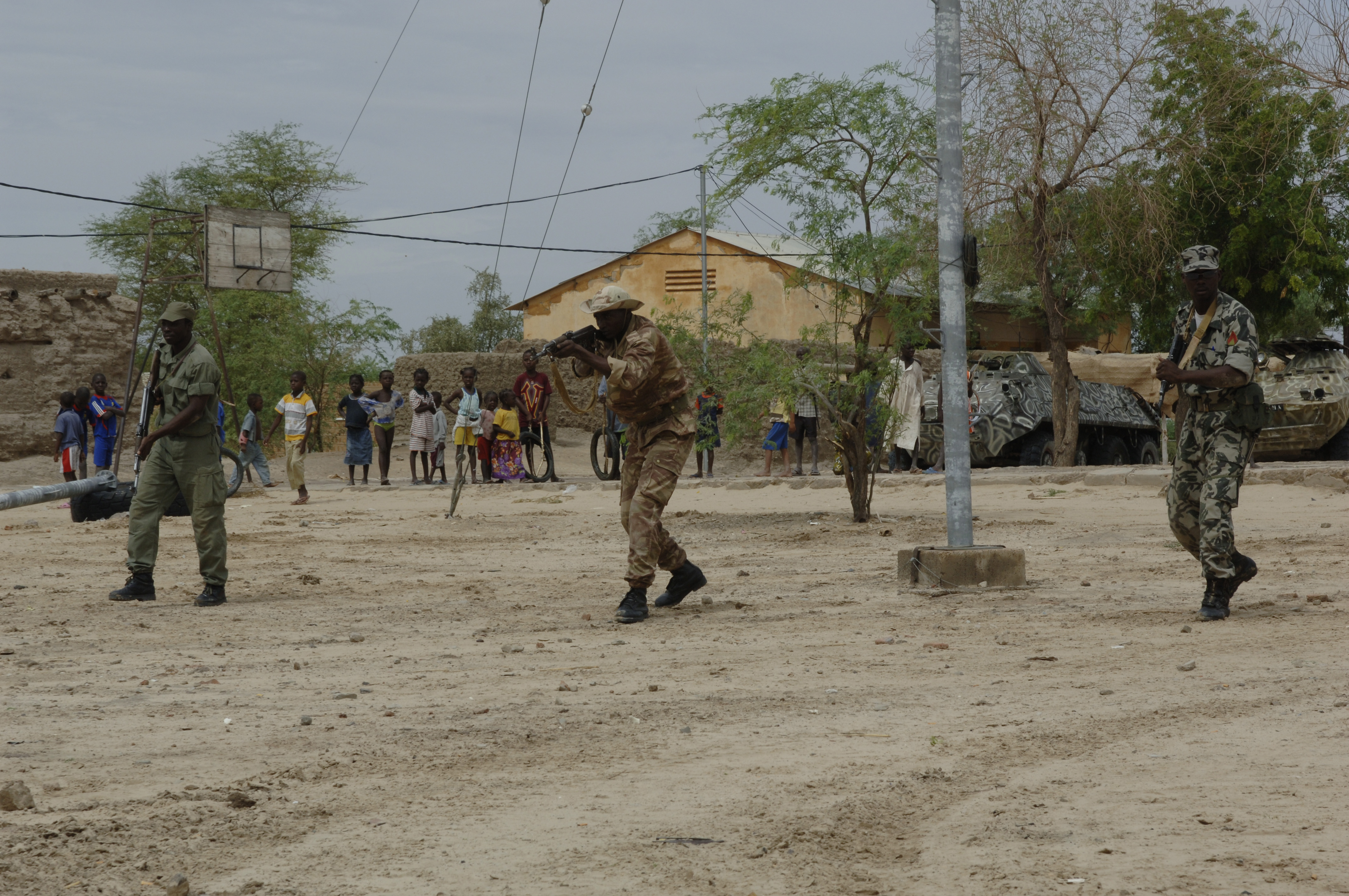
According to the Associated Press, Keïta was charged with undermining national unity, harming the state's credibility, and disseminating false or misleading information. Human Rights Watch specifies that Takiou was charged on June 8, Keïta on June 9, both by the cybercrime unit. Takiou's trial is scheduled for July 27, and Keïta's for August 17. These dates matter, as they extend judicial pressure well beyond the immediate news cycle.
The crux of the matter is Kidal. Since the coordinated offensive in April, this city is no longer just a Tuareg symbol or a northern garrison. It has become the public marker of Bamako's security gamble failure. The AP reminds us that the JNIM and the Azawad Liberation Front (FLA) offensive included blocking Bamako, taking Kidal, and the attack that killed former Defense Minister Sadio Camara. For a military regime that has built its legitimacy on the return of armed sovereignty, admitting Kidal is tantamount to admitting that sovereignty remains discontinuous.
Kidal is Not Just a City
One must move beyond administrative reading. Kidal is not an isolated point in the north of a school map. It is a lock in a system of tracks, abandoned bases, markets, tribes, and military roads. From Gao, the road north is long, vulnerable, and depends on relays that Malian and Russian columns no longer hold securely. Critical Threats estimates that FLA-JNIM control of nodes like Kidal, Bourem, and certain parts of Gao degrades the capacity of Malian and Russian forces to reinforce the north. This is a reading that any officer who has traveled in the Sahel understands immediately.
A position is not just a flag planted on a prefecture. It is measured by freedom of movement, the ability to resupply, the possibility of evacuating the wounded, local intelligence, and the fear of civilian drivers to take a track after dark. If a journalist says that JNIM controls Kidal, the state can contest the statement. But it must first answer the military question: who moves, who taxes, who arbitrates local conflicts, who decides if a convoy passes?
The Cybercrime Law Becomes a Tool of Domestic Counterinsurgency
The junta now uses digital law as a tool to secure the narrative. This is not new in Mali, but the pace is changing. HRW and Reporters Without Borders describe a continuous reduction of civic space since the coup in 2020: foreign media banned, organizations dissolved, opponents detained, journalists prosecuted. The novelty is that the red line is shifting towards military assessment itself.
In a counterinsurgency war, banning bad news destroys part of the alert system. Merchants, drivers, village chiefs, local journalists, and community radios form an imperfect but indispensable layer of intelligence. It can be scorned in press releases. It cannot be replaced by drone videos or statements from a spokesperson in Bamako.
From experience, the best alerts do not always come from an equipped service. They come from a driver who refuses a road, a market that empties too early, a gas station that no longer receives its trucks, an imam who no longer wants to mention a name in public. If these signals become judicially dangerous, they fall silent. And when they fall silent, the units advance more blindly.
The Russian Paradox
The Malian regime expelled France by promising a more sovereign war, then relied on Wagner, now replaced or reorganized in the form of the Russian Africa Corps. This shift has given Bamako shock capacity, particularly in the air, but it has not resolved the political problem in the north. El País highlights the central role of Iyad Ag Ghali in the alliance between Tuareg rebels and jihadists. This point is essential: JNIM does not only win through violence. It also wins because it knows how to negotiate, insert itself into local grievances, and exploit the state's faults.
Russia can provide instructors, helicopters, strikes, and anti-Western rhetoric. It cannot manufacture trust remotely between a Malian post and a camp in the Adrar des Ifoghas. This is precisely where the arrest of the journalists becomes strategic. It signals that Bamako prefers to criminalize the messenger rather than address the loss of connection with part of the country.
What JNIM Can Exploit Now
JNIM does not need the entire population to support its project. It only needs the state to appear distant, brutal, or deaf. Each arrest related to security information offers the group three benefits. First, it confirms its narrative: Bamako would be lying about the ground. Second, it weakens the civilian relays that could signal its movements. Finally, it pushes sensitive discussions into more closed, less verifiable channels, often easier to manipulate.
One must remain cautious: information on the exact degree of control in Kidal remains incomplete, and the city may be fragmented among FLA, jihadist networks, local notables, and residual military pockets. But it is precisely for this reason that a reliable information space is vital. The grayer the ground, the more human sensors are needed. Imprisoning them amounts to turning off lights during a night march.
The Next Weak Point
The immediate danger is not that Bamako will fall tomorrow. JNIM has not yet demonstrated that it can sustainably hold a capital of this size. The more concrete risk is gradual strangulation: roads to Kayes, axes to Sikasso and Ségou, pressure on Gao, amplified rumors in markets, fear of road transport. The recent ban on large motorcycles outside cities and the creation of 35 military interest zones show that the general staff understands the problem of insurgent mobility. But a motorcycle ban does not replace a sincere map.
Mali can survive bad news. An army in the field survives it every day. What endangers it is the political obligation to pretend that bad news does not exist. In Kidal, JNIM and FLA are testing supply lines. In Bamako, the arrest of Keïta and Takiou tests something else: the regime's ability to look at the theater of operations without looking away.
Sources
- Associated Press, arrests of Chahana Takiou and Abdramane Keïta, June 10, 2026.
- Human Rights Watch, Jailed for Calling a Fact a Fact in Mali, June 10, 2026.
- Critical Threats Project, analysis of the fall of Kidal and the FLA-JNIM offensive, May 2026.
- El País, profile of Iyad Ag Ghali and the FLA-JNIM alliance, May 8, 2026.
In June 2026, the Malian government arrested journalists Abdramane Keïta and Chahana Takiou for reporting on the control of Kidal by the JNIM. These arrests highlight the government's attempt to suppress information and maintain a narrative of national unity amidst ongoing security challenges. The situation in Kidal reflects deeper issues of governance and military effectiveness in Mali.
- Two journalists were arrested in Mali for reporting on JNIM's control of Kidal.
- Abdramane Keïta and Chahana Takiou were charged under Mali's cybercrime law.
- The arrests are seen as a symptom of the government's failure to acknowledge the situation in Kidal.
- The JNIM's control of Kidal is linked to broader security failures in Mali.
- The Malian government is using legal measures to suppress dissent and control the narrative.