
SkyStriker for the Bundeswehr 2026 Shows Germany's Drone Turnaround Without Full Sovereignty
 Dr. Klaus Weber
SkyStriker for the Bundeswehr 2026 Shows Germany's Drone Shift Without Full Sovereignty
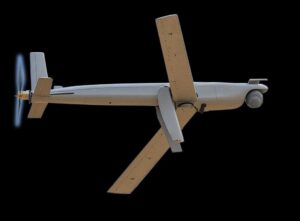
On June 11, 2026, Diehl Defence and Elbit Systems announced in Berlin that they would jointly offer the SkyStriker to the Bundeswehr. The technical figure that counts is not the contract value, but the range: over 200 kilometers, more than two hours of loitering time, and up to ten kilograms of warhead. With this, Germany is seriously entering a segment that has become a routine firepower from a special capability in the Ukraine war.
The agreement is therefore more than just a trade fair event at ILA Berlin. It fills a noticeable gap in German procurement logic. In February, the Bundeswehr signed purchase contracts with Helsing and Stark; in April, Rheinmetall followed with the FV-014. Now, with SkyStriker, an Israeli-German offer is added that promises not only tactical but also operational range. The question is: is Germany building industrial sovereignty here, or is it merely organizing the local assembly of imported combat experience?
The New German Drone Procurement is Faster than the Old Bundeswehr Logic
The Bundeswehr itself now describes loitering munitions as a new procurement case. It refers to three manufacturers, rapid tests with the troops, framework contracts, milestone cancellations, and innovation clauses. This is remarkable because these instruments contain a quiet criticism of the previous procurement practices. A system whose software can become tactically obsolete in a few months does not fit into procedures designed for decades of stability.
For the Panzer Brigade 45 in Lithuania, a reconnaissance and effects network is to be established starting in 2027. This is militarily plausible. A brigade on NATO's eastern flank needs not only battle tanks, artillery, and air defense but also affordable sensor-effect chains that can hit enemy command posts, artillery, and mobile targets early. The Bundeswehr has learned from Ukraine that mass and updatability are more important than perfect individual platforms.
But speed comes at a price. Germany is purchasing several systems in parallel because no single provider can deliver the mix of maturity, quantity, range, and industrial anchoring alone. Stark cites more than 130 kilometers of range and up to 90 minutes of endurance for Virtus. Rheinmetall reports up to 100 kilometers, 70 minutes of flight time, and a four-kilogram warhead for FV-014. SkyStriker significantly exceeds this with more than 200 kilometers of range. This does not create a uniform arsenal but a portfolio. This is operationally smart, but institutionally challenging.
SkyStriker Brings Operational Range, but Also Israeli System Dependence
The central statement in Diehl's announcement is that the partnership includes local manufacturing, assembly, integration, and qualification on behalf of Diehl Defence. This is precisely where Weber's skepticism begins. Local manufacturing does not automatically equate to technological sovereignty. The crucial factor is who controls the core software, who develops the sensors and data links, who can influence export approvals, and who sets production priorities in an acute European crisis.
Elbit undoubtedly brings real combat experience. The SkyStriker is not a PowerPoint system but a mature loitering munition that can be deployed from vehicles, containers, ships, aircraft, and, according to the company, also from the EuroPULS context. For Germany, this is attractive because it partially fills the gap between tube artillery, rocket artillery, and tactical air power. The combination with PULS or EuroPULS would make a European deep-strike architecture more realistic.
However, the industrial grammar remains hybrid. Germany receives German value creation, and Diehl takes on the system integration role. Elbit retains the origin of the technology. This is not a reproach but a sober description. Those who want quick capability today buy where operational experience has already been translated into software and procedures. Those who want to be sovereign tomorrow must institutionalize this experience themselves. Between these two goals lies not a rhetorical but an organizational distance.
Diehl Becomes a Hub of a German Integration Strategy
Notably, there has been a surge in Diehl announcements this week. On June 9, the company presented IRIS-T SLS MK4 with a range of twelve kilometers, six kilometers of altitude coverage, and an eight-fold load. On June 10, the deepened IAMD cooperation with Airbus Defence and Space followed. Also on June 10, Diehl joined Boeing's German MQ-28 Ghost Bat industry team, with possible integration of IRIS-T and future air-to-air effectors. On June 11, SkyStriker was announced.
This sequence is more important than any individual announcement. Diehl is positioning itself not only as a missile manufacturer but as a German integrator for air defense, unmanned effects, and effectors. This is strategically sensible because modern deterrence consists of interconnected layers: short-range air defense against drones and cruise missiles, medium-range air defense against aircraft and precision weapons, loitering munitions against mobile ground targets, cooperative combat aircraft as sensor and weapon carriers.
But even here, the old European problem remains visible. Airbus, Boeing, Elbit, Rheinmetall, Stark, Helsing, and Diehl do not form a European program but a procurement landscape. It is more dynamic than previous large projects but not automatically more coherent. The FCAS problem was too much political steering with too little technical agreement. The drone problem could be reversed: much technical procurement but too little common doctrine, training, and data architecture.
Brigade Lithuania Needs Drones, but Drones Do Not Replace European Armed Forces Planning
Panzer Brigade 45 is the right first user. Lithuania is where German alliance defense becomes concrete. It does not matter whether Berlin has learned new procurement terms; what matters is whether systems, operators, maintenance, data connections, target assignment, and legal rules of engagement work together. Loitering munitions are only deterrence if the opponent must believe that they are available, networked, and resupplied on the first day of combat.
The Bundeswehr has itself articulated the crucial reservation: drones are not a panacea. They are weather-dependent, can be jammed, and are vulnerable to modern air defense. Anyone who wants to create a cheap substitute army from this is merely repeating the old European mistake of confusing politically convenient capabilities with military completeness in digital form. Loitering munitions increase the operational value of connected forces; they do not replace these forces.
That is precisely why the SkyStriker step is important but limited. It shows that Germany can buy and integrate faster when political pressure is high enough. It also shows that the German industry is willing to work pragmatically with foreign technology. What it does not yet show is a European answer to the production and software question: Who updates the target recognition? Who guarantees munitions supply after six months of war? Who decides on export and deployment in a NATO crisis?
The Real Test Begins After the Signature
Germany has made a rare advance in loitering munition procurement: multiple providers, early troop involvement, framework contracts, and update obligations. This is closer to the reality of modern warfare than many procurement rituals of the past twenty years. Nevertheless, the strategic balance remains mixed. SkyStriker can close a capability gap. However, it can only Europeanize it if local assembly transitions into local further development, its own data architecture, and robust series production.
The paradoxical situation is therefore: Germany must purchase foreign combat experience to rebuild its own sovereignty. This is not a failure as long as Berlin understands the intermediate step as an intermediate step. It would be a failure if local manufacturing were to become just a new word for dependence.
Sources
Germany announced the procurement of the SkyStriker loitering munition system on June 11, 2026, in Berlin. This system, developed by Diehl Defence and Elbit Systems, features a range of over 200 kilometers and a payload capacity of up to 10 kilograms. The Bundeswehr is integrating multiple systems to enhance its military capabilities, reflecting a strategic shift in response to lessons learned from the Ukraine conflict.
- Germany announced the procurement of the SkyStriker loitering munition system on June 11, 2026.
- The SkyStriker has a range of over 200 kilometers and a payload capacity of up to 10 kilograms.
- The Bundeswehr is integrating multiple systems to enhance its military capabilities in response to lessons learned from the Ukraine conflict.
- Diehl Defence and Elbit Systems are collaborating on this project, indicating a partnership for local manufacturing and integration.
- The procurement reflects a shift in Germany's defense strategy towards more agile and responsive military capabilities.