
Marcos Can't Buy Chinese Gas Without Selling the South China Sea EEZ
 Marcus Chen
Marcos Can't Buy Chinese Gas Without Selling the South China Sea EEZ
Ninety-eight percent of Philippine oil and petroleum imports come from the Middle East. When the Strait of Hormuz closed in late February, pump prices spiked and Ferdinand Marcos Jr. declared a national energy emergency on March 24. On August 14, he told foreign correspondents in Manila that joint oil and gas exploration with China before his term ends in 2028 is a "distinct possibility." That is not energy policy. That is a sovereignty trade wearing a hard hat.
What Marcos Is Actually Offering
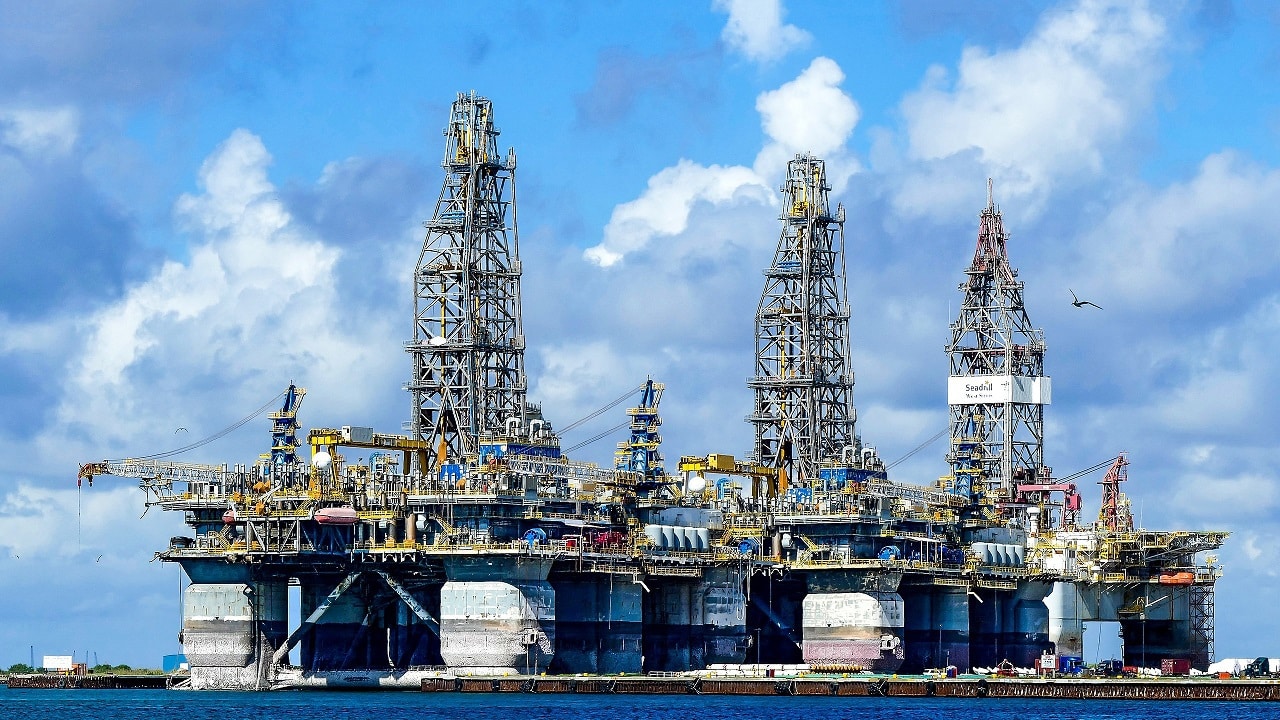
The statement came at a luncheon with foreign correspondents in Manila. "The Philippines needs additional supplies of oil and gas, and we need to explore the possibilities that we have in the Philippines, in the West Philippine Sea, and wherever else we can," Marcos said, per Rappler. He described talks with Beijing as having "moved forward" since "initial exchanges" between diplomats in late March, with the two sides still working through terms of reference — whether any arrangement would be a joint venture or "merely commercial."
The target is Recto Bank, inside the Philippine exclusive economic zone, believed to hold oil and gas deposits. No timetable was given. That vagueness matters, because the obstacles are not commercial. They are constitutional, legal, and naval.
The Wall He Has to Climb
The Philippine Constitution reserves exploration of natural resources to the state or to Filipino-controlled firms that are at least 60 percent Filipino-owned. That alone makes a China state-company operating in Philippine waters legally impossible without a constitutional change or an executive arrangement that would not survive judicial review.
The 2016 arbitral award sits on top of that wall. The tribunal found China's nine-dash line had no basis in international law and that Second Thomas Shoal lies inside the Philippine EEZ. Beijing rejects the ruling as "null and void." A joint exploration deal is not a neutral commercial act — it is a de facto acceptance that China has a co-claim in waters Manila won in arbitration. The last time Manila tested this, the template was explicit: under a 2018 memorandum of understanding, a Chinese state oil firm would extract from disputed areas in exchange for handing Manila a 40 percent share of profits, as the ISW-AEI China & Taiwan Update noted on August 18. Rodrigo Duterte killed those talks in mid-2022, with his foreign secretary saying they had gone as far as "it is constitutionally possible to go." Marcos and Xi Jinping agreed to resume in January 2023, and nothing materialized.
He'd Be Signing With the Navy That Rams His Ships
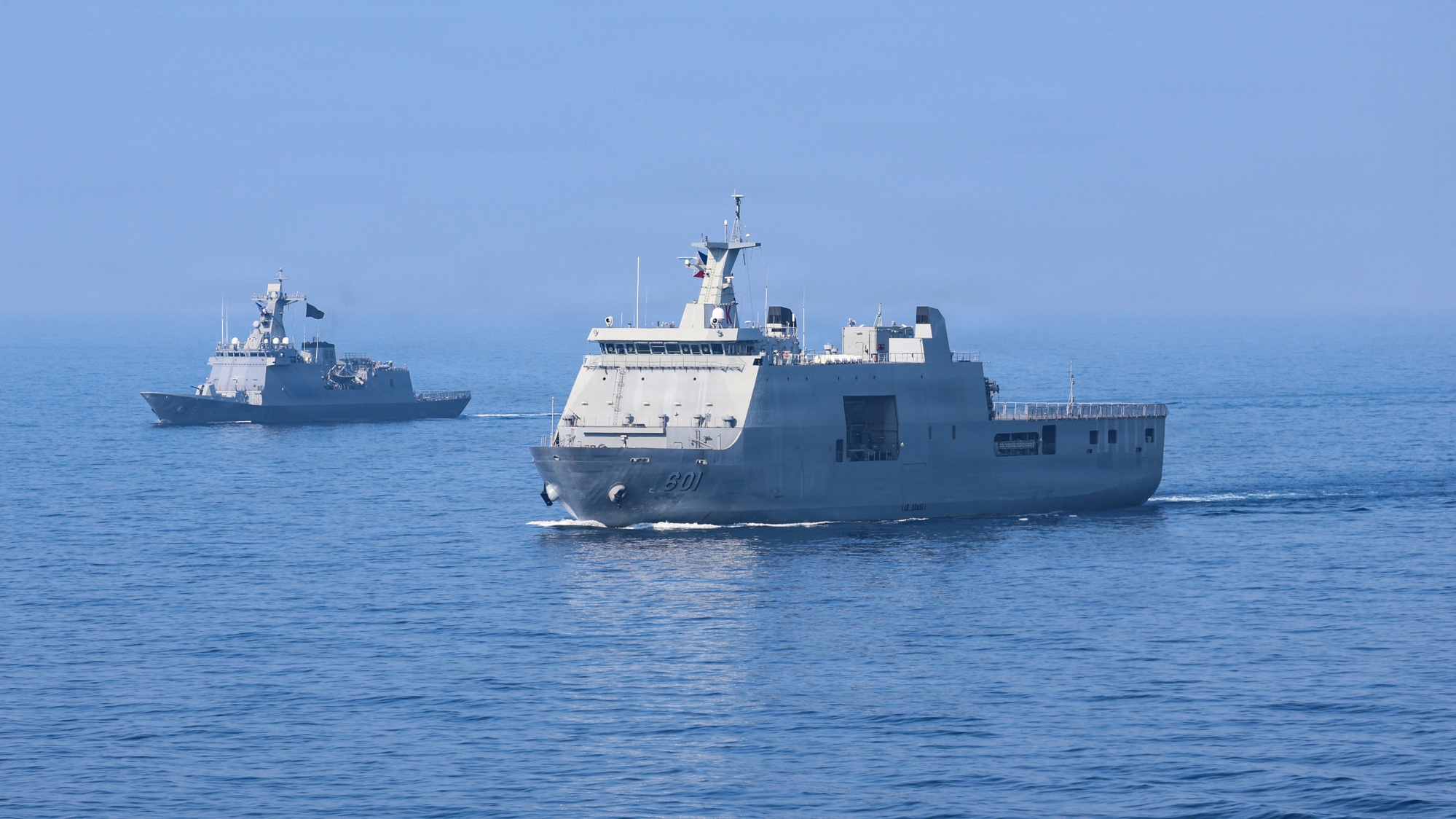
Consider who Manila would be drilling alongside. In late July, China Coast Guard personnel in a boat approached the rusting BRP Sierra Madre, the grounded outpost at Second Thomas Shoal, and struck a Philippine marine in the head with a baton. Days later, CCG vessels turned water cannons on Philippine counterparts at Scarborough Shoal, some 650 kilometers to the northeast. Beijing accused Manila of attempting to ram the Chinese boat and of spreading "false propaganda."
Anyone who has served on a deck knows what happens to a seismic survey vessel operating under a joint rubric in disputed water: it does not get Philippine Navy escorts and Chinese restraint. It gets Chinese escort vessels and Philippine compliance, because the whole point of the deal from Beijing's side is that the area is contested and the Chinese state company needs no permission it does not already claim.
Same Day, He Barred US Strikes From Philippine Soil
The August 14 remarks were a package. Asked whether Manila would allow the United States to launch offensive operations from Philippine bases in a Taiwan contingency, Marcos said "there will be no attacks on anyone from the Philippines," and framed Taiwan cooperation as "purely commercial" under the one-China policy. Days earlier he had conceded the Philippines would be pulled into a Taiwan war "kicking and screaming," then complained Beijing misread the remark.
Put the two statements together and the calculus is visible. Manila wants Chinese gas, and it is pricing that gas in the two currencies Washington values most: forward-basing utility for a Taiwan fight, and the legal clarity of the 2016 ruling. The United States gets access to nine EDCA sites whose offensive value Manila has just publicly discounted. Beijing gets the signal that energy dependence outranks alliance arithmetic.
What Beijing Actually Collects
China does not need Philippine gas. It needs Philippine validation of jurisdiction. The 2016 ruling is the single asset that keeps the South China Sea contest legal rather than territorial, and every joint-exploration framework Beijing signs with a claimant is a quiet amendment to it. The 40 percent profit-share template shows the actual structure: a Chinese state firm operating inside Philippine EEZ waters, with Manila paid to say the arrangement is commercial.
The precedent matters beyond Manila. Vietnam, Malaysia, and Brunei are all watching whether a claimant that won an arbitral award — the only one to do so — can be induced to share jurisdiction for fuel. The Philippine energy emergency, born of a Hormuz closure that has nothing to do with China, is precisely the lever Beijing needed.
The Math Doesn't Work
Manila's only enforceable asset in the West Philippine Sea is the 2016 ruling, and it is the one thing a joint deal with China would spend. The gas, even in the best case, would not flow before 2028 — exploration alone takes a decade, and the constitutional barrier guarantees a political fight first. The status quo costs Manila fuel price spikes. The deal costs Manila the only legal ground it has ever won, in exchange for a promise signed by the same state that water-cannoned its coast guard last month.
The guy who rams your resupply boat is not offering a partnership. He is offering a foreclosure. Marcos should decide whether he wants to be the president who bought oil with the ruling, or the one who kept the ruling and took the political hit.
Philippine President Ferdinand Marcos Jr. indicated a possibility of joint oil and gas exploration with China in the West Philippine Sea, particularly at Recto Bank, during a luncheon with foreign correspondents on August 14, 2023. This potential deal raises significant constitutional and sovereignty concerns, as it may imply recognition of China's claims in the region. Marcos also stated that the Philippines would not allow U.S. offensive operations from its bases in a Taiwan conflict.
- 98% of Philippine oil imports come from the Middle East.
- Marcos declared a national energy emergency on March 24, 2023.
- Joint exploration with China is a possibility before 2028.
- The Philippine Constitution restricts resource exploration to Filipino-controlled firms.
- China's nine-dash line claim was rejected by a 2016 arbitral ruling.