
Milrem Robotics and the EU must turn defense capabilities into protection against Russian sabotage by 2026
 Dr. Klaus Weber
Milrem Robotics and the EU Must Make Defense Capability from Russian Sabotage Acts by 2026
On September 29, 2026, an arson attack on Milrem Robotics, a manufacturer of military robotics, was publicly classified as suspected Russian sabotage in Estonia. The Estonian authorities did not describe this as an ordinary criminal case, but rather as an attack on the industrial base of European support for Ukraine. A fire in a factory is not yet an armed attack in the sense of the NATO treaty. However, it can certainly damage production, investment readiness, and trust, which are the foundations of defense capability.
BBC, The Guardian, DW, and Defense News reported on the Estonian allegations. They should be treated as allegations, not as conclusively proven facts. Politically, however, the suspicion is already sufficient to make an old European weakness visible: Europe recognizes hybrid attacks faster than it organizes common responses.
The Attack on the Industrial Bottleneck
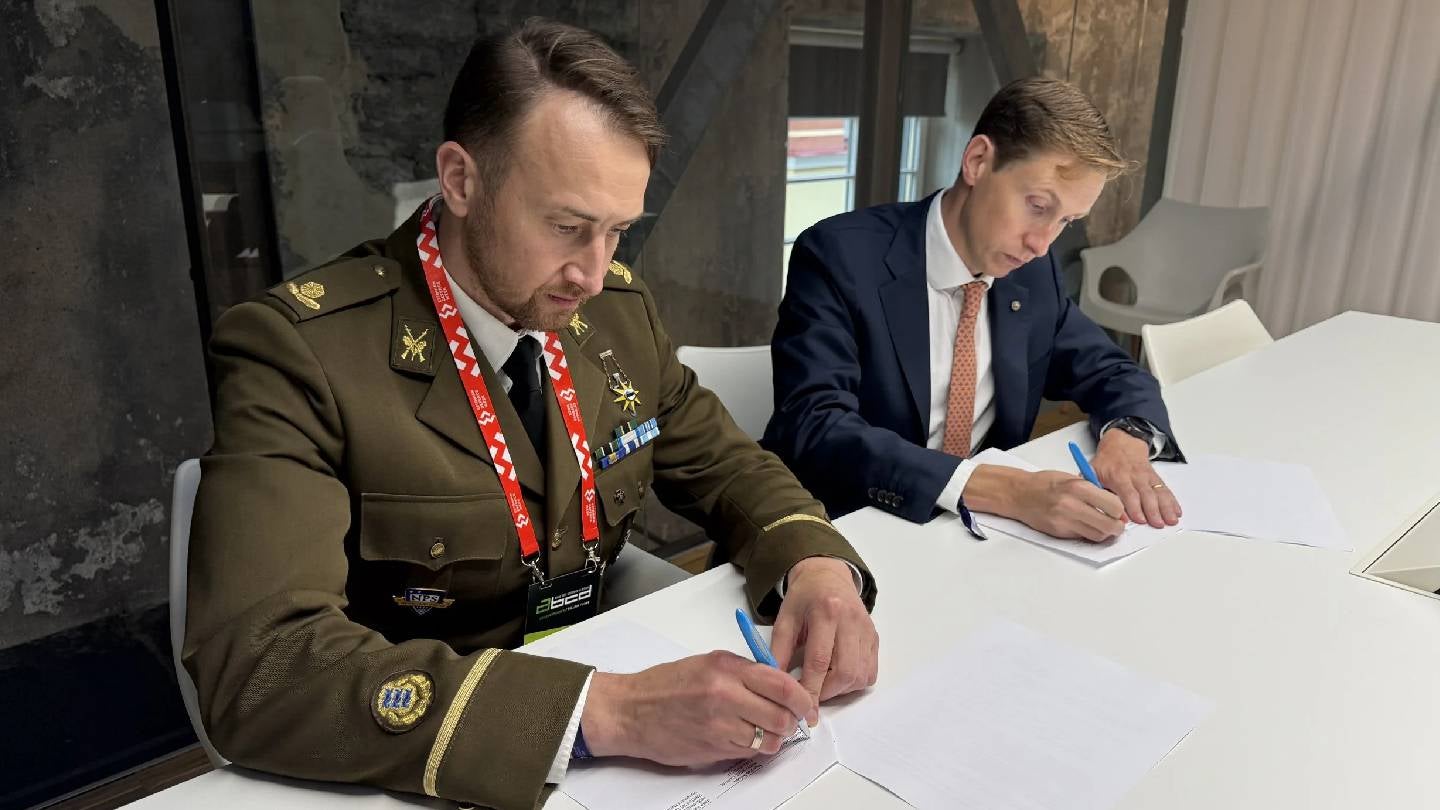
Milrem Robotics represents a development that has become central to the war in Ukraine. The company develops modular, unmanned tracked vehicles for logistics, casualty transport, reconnaissance, and other military tasks with the THeMIS family. Such systems do not replace an armored personnel carrier and do not win a war on their own. However, they shorten the time between tactical idea and deployable product. For Ukraine, this combination of software, sensors, and relatively low-cost platforms is more important than the European preference for decades-long large programs.
That is precisely why the industrial dimension is crucial. An act of sabotage does not have to destroy the entire production to have an effect. Delayed deliveries, additional security costs, and insecure suppliers are sufficient. For small and medium-sized defense companies, a few weeks of downtime can be strategically more relevant than a major summit decision. The European defense industry is still not a crisis-proof production community, but rather a network of national approvals, private specialists, and fragile supply chains.
Brussels Discovers Article 4 Without Article 4
In parallel to the Estonian case, the Financial Times, Politico, and Euronews reported on considerations for a NATO-like European response to Russian hybrid attacks. A mechanism similar to Article 4 is being discussed: a member state could trigger consultations if its security is threatened by sabotage, cyberattacks, or other covert operations. This would be institutionally more sensible than the previous sequence of national statements.
However, a consultation mechanism is not yet a deterrent. Article 4 of NATO obliges consultations, not automatically military countermeasures. The EU also has different responsibilities, different intelligence cultures, and 27 national political risk calculations. If Estonia, Finland, or Poland assess an attack as state-directed aggression while larger member states initially refer to evidence gathering and de-escalation, the mechanism becomes a conference formula.
The crucial question, therefore, is not whether the EU finds a new name for consultations. It must determine what follows: joint investigations, protection of critical defense sites, sanctions against responsible networks, intelligence sharing, and possibly covert countermeasures. NATO Secretary General Mark Rutte has also emphasized that not every response to hybrid attacks will be public. This is realistic. Deterrence does not work if every step is announced in advance.
The Drone Threat Shows the Same Gap
The debate coincides with a stress test of the eastern flank. After the downing of a drone in Lithuanian airspace by Italian NATO fighter jets in September, Rutte announced stronger air defense and more cost-effective drone defense. The episode highlights the European cost asymmetry: expensive jets, standby personnel, and complex command structures are deployed against a cheap or ambiguously assigned aircraft.
Europe needs sensors, electronic warfare, mobile interception systems, and defense drones in large quantities. The answer cannot be to combat every new threat with another high-priced aircraft. Responding to a drone costing a few thousand euros with an hour of a fighter jet's flight time protects the airspace but loses the economic competition.
The same applies to sabotage. The protection of a defense company must not begin only after an attack. Access controls, redundant manufacturing, digital surveillance, and common security standards cost money. However, they do not create a spectacular inauguration ceremony and therefore appear far less frequently in European defense plans than new platforms.
What Germany Must Learn from This
Germany politically supports the European response to hybrid threats but remains institutionally slow in implementation. The old pattern is: share responsibility, distribute accountability, and wait for the next situation briefing. This is dangerous for the Bundeswehr and the German defense industry. When European companies produce for Ukraine, they are part of the alliance's defense infrastructure, even if they are formally organized as private and national entities.
Berlin should set three priorities. First, it needs a binding protection standard for critical defense and dual-use sites. Second, intelligence agencies, police, and armed forces must translate information into joint protective measures more quickly. Third, the EU must consolidate procurement for drone defense and unmanned systems without stifling projects in years of jurisdictional disputes. PESCO and the European Defense Fund are only relevant if they turn industrial vulnerability into concrete resilience.
The Uncomfortable Balance Sheet
Estonia has shown with its response that hybrid attacks do not only become strategic when tanks cross a border. The EU seems to understand this now and is considering a NATO-like consultation framework. This is progress, but not yet a capability. Europe's problem remains the gap between political diagnosis and institutional execution.
More defense spending does not help if a small number of saboteurs can disrupt a production chain. An Article 4 mechanism does not help if member states subsequently act alone again. And modern drone defense does not help if Europe procures the needed systems more slowly than the threat evolves. The bitter truth is: Europe has begun to treat hybrid attacks as a defense problem. It must now prove that it can also create defense capability from this.
Sources: BBC, The Guardian, DW, and Defense News on the Estonian allegations against Russia regarding the arson attack on Milrem Robotics, September 29–30, 2026; Financial Times, Politico, and Euronews on the debate about a NATO-like EU mechanism against hybrid attacks, September 28–29, 2026; Euronews, Defence Industry Europe, and Anadolu Agency on Rutte, drone defense, and the incident in Lithuanian airspace, September 2026.
On September 29, 2026, an arson attack on Milrem Robotics in Estonia was classified as suspected Russian sabotage. This incident underscores vulnerabilities in European defense capabilities and has prompted discussions about a NATO-like consultation mechanism to address hybrid threats. The attack raises concerns about the protection of critical defense infrastructure and the need for a coordinated response among EU member states.
- Milrem Robotics was attacked in Estonia on September 29, 2026.
- The attack is suspected to be Russian sabotage.
- The incident highlights vulnerabilities in European defense capabilities.
- There are discussions about a NATO-like consultation mechanism in response to hybrid threats.
- The EU is considering measures to protect critical defense infrastructure.