
More than thirty years ago, we designed our own aircraft carrier: Unveiling Project "891"
On September 25, 2012, China's first aircraft carrier, the Liaoning, was delivered to the People's Navy. As early as the 1980s, our country launched the aircraft carrier verification project codenamed "891," marking the first close contact between our military technology personnel and aircraft carrier catapults.
Member of the "891" project team, Shen Changyun: Why is it called the "891" project? Because it was established in January 1989 as an expert group organized at the national level to conduct research on the development of our aircraft carriers and carrier-based aircraft.
Why was the "891" project initiated? The main reason was that at that time, our destroyers were already in development with two types making significant progress, but we lacked an aircraft carrier. Therefore, from the perspective of ship technology development, it was necessary to study aircraft carriers.
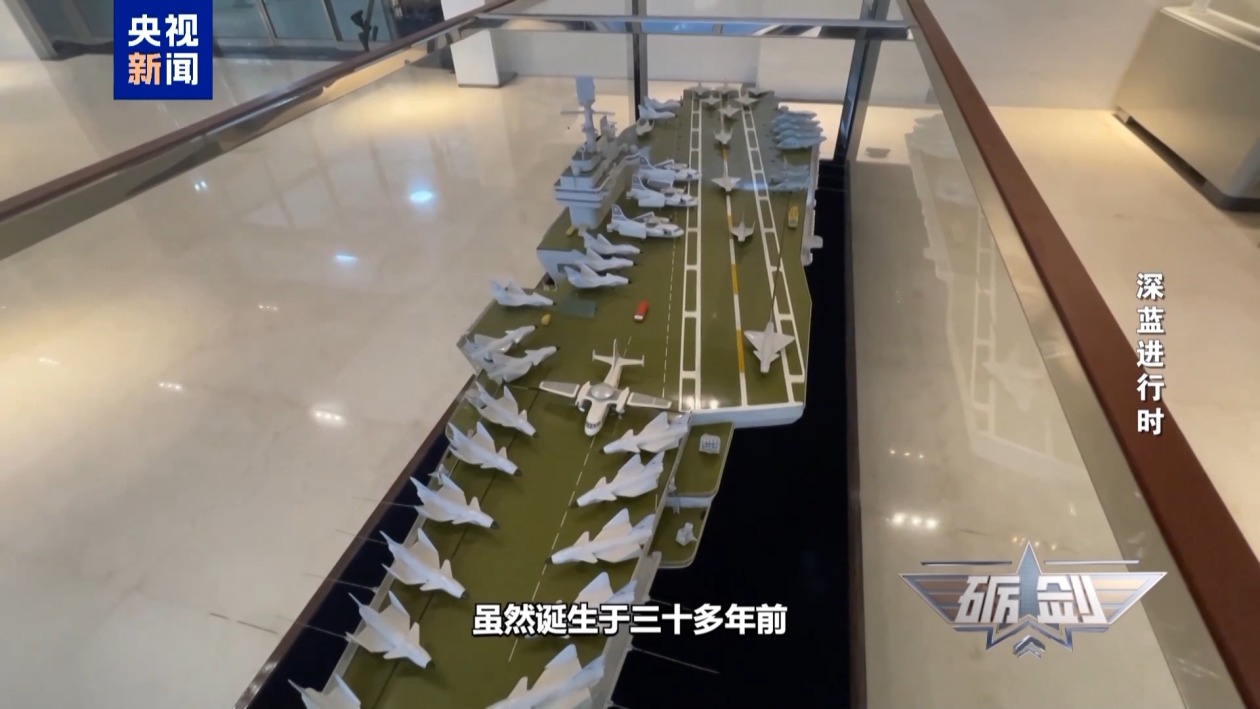
Reporter from the Central Station, Zhuang Xiaoying: A flat deck, steam catapults, and arrestor wires. This model of an aircraft carrier, although created over thirty years ago, features advanced design concepts similar to those of modern aircraft carriers. It is a display model of the research results from the "891" project.
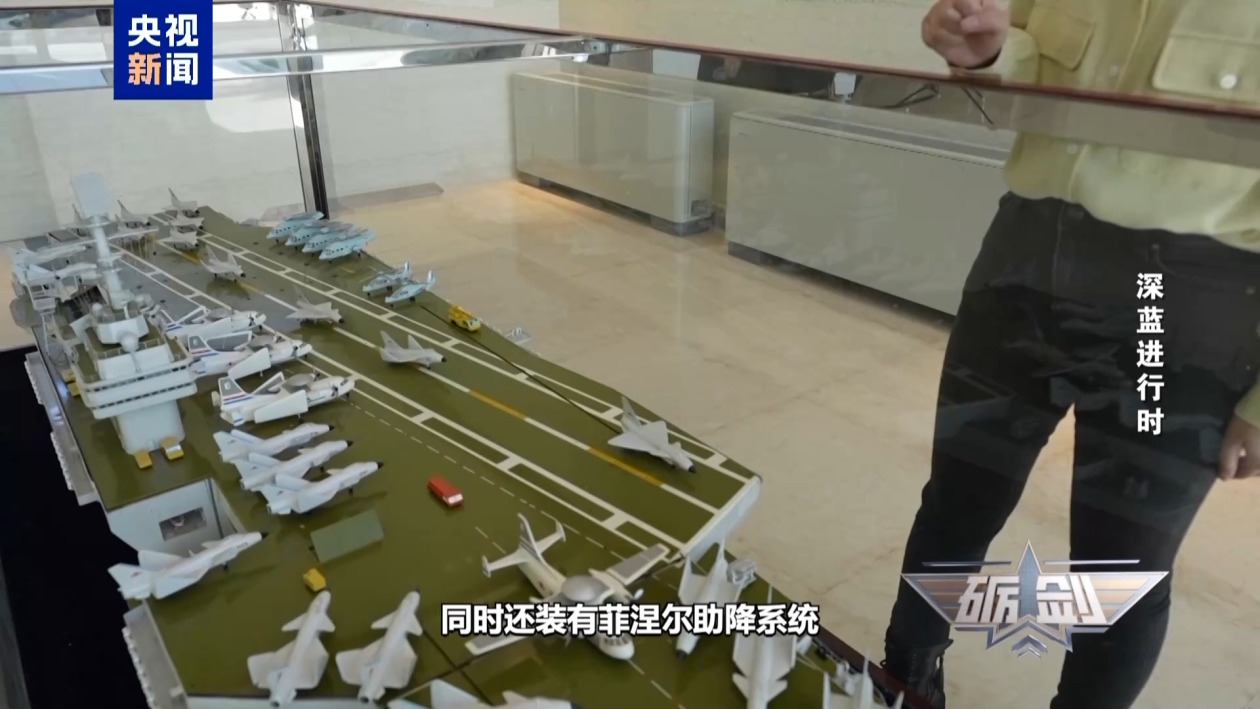
It features an angled flight deck and is equipped with a Fresnel lens landing system.
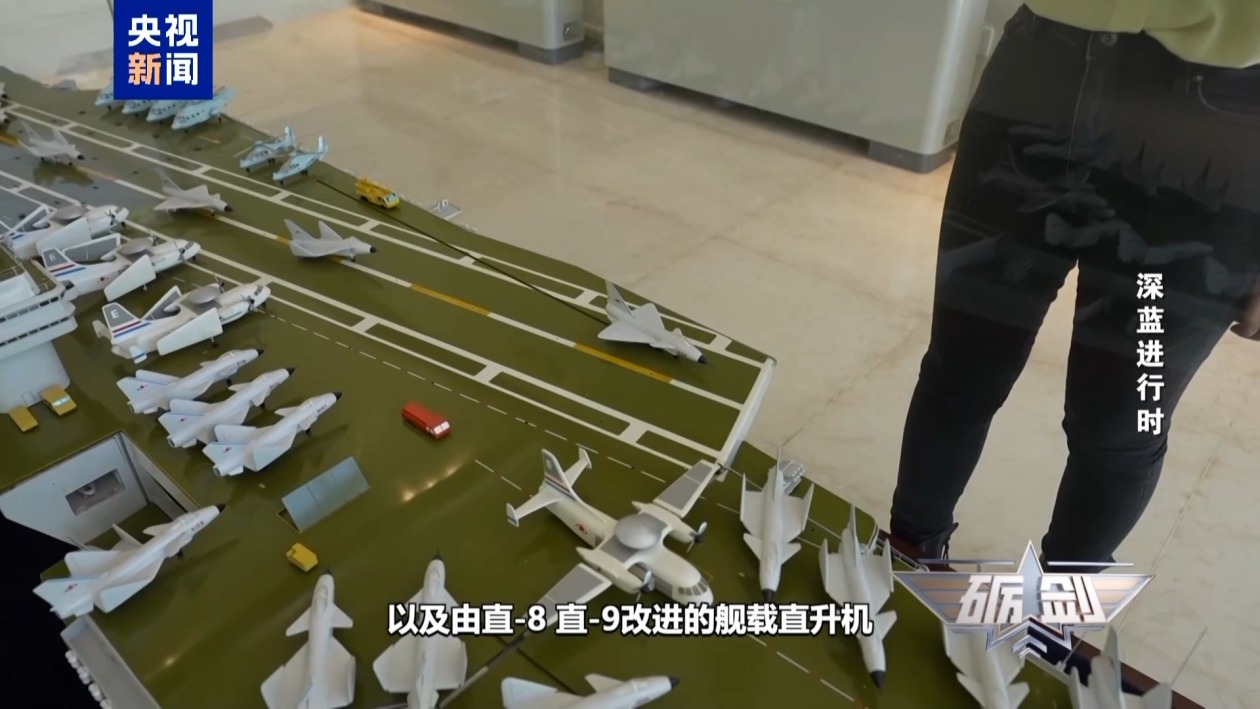
On the deck, there are models of carrier-based aircraft that were proposed at the time, such as a carrier-based fighter derived from the J-10, a carrier-based early warning aircraft derived from the Y-7, and carrier-based helicopters derived from the Z-8 and Z-9.
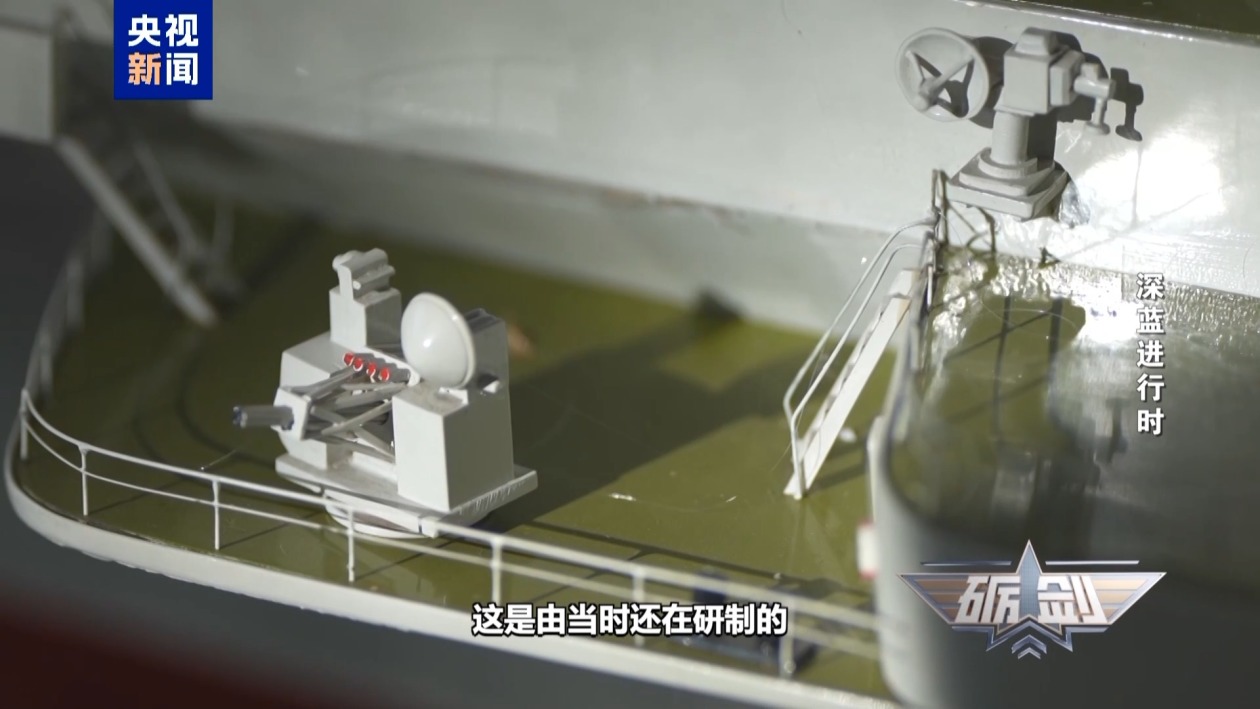
The model is also surrounded by air defense weapon systems, including the "857" artillery complex that was still under development and the HQ-7 ship-to-air missile.
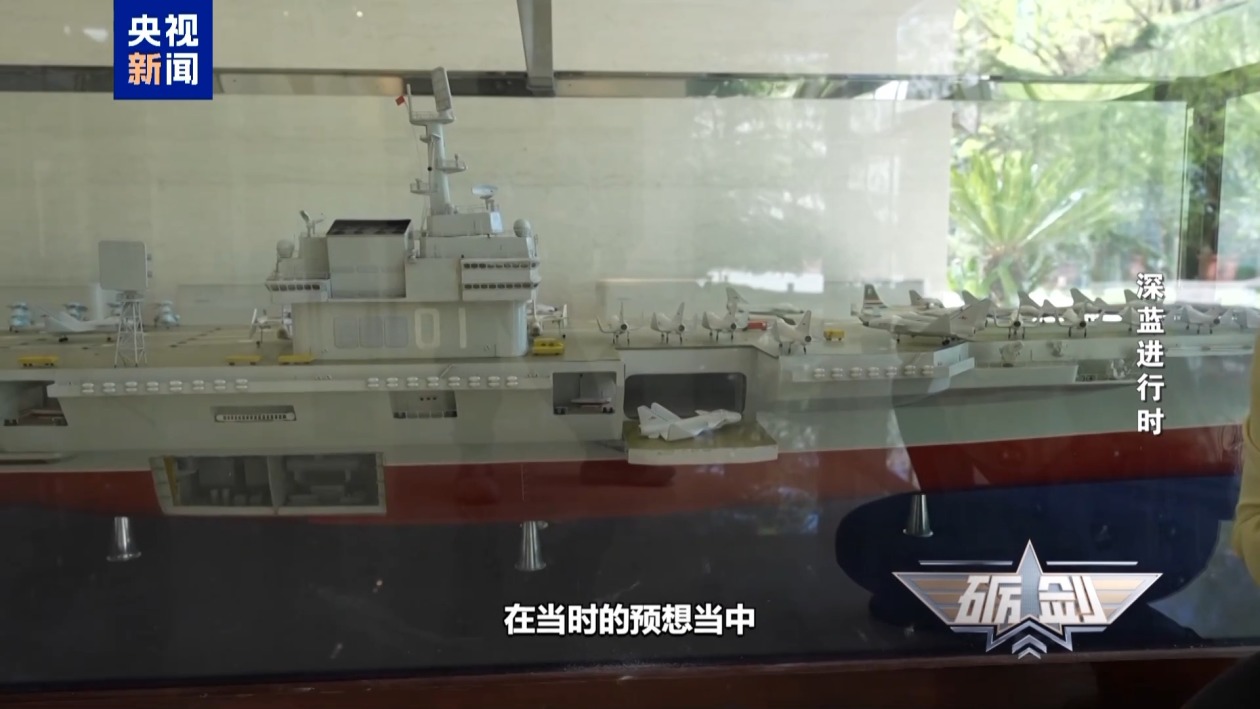
On the side, there is an elevator and a power compartment, which was envisioned at the time to use steam turbines as its power source.
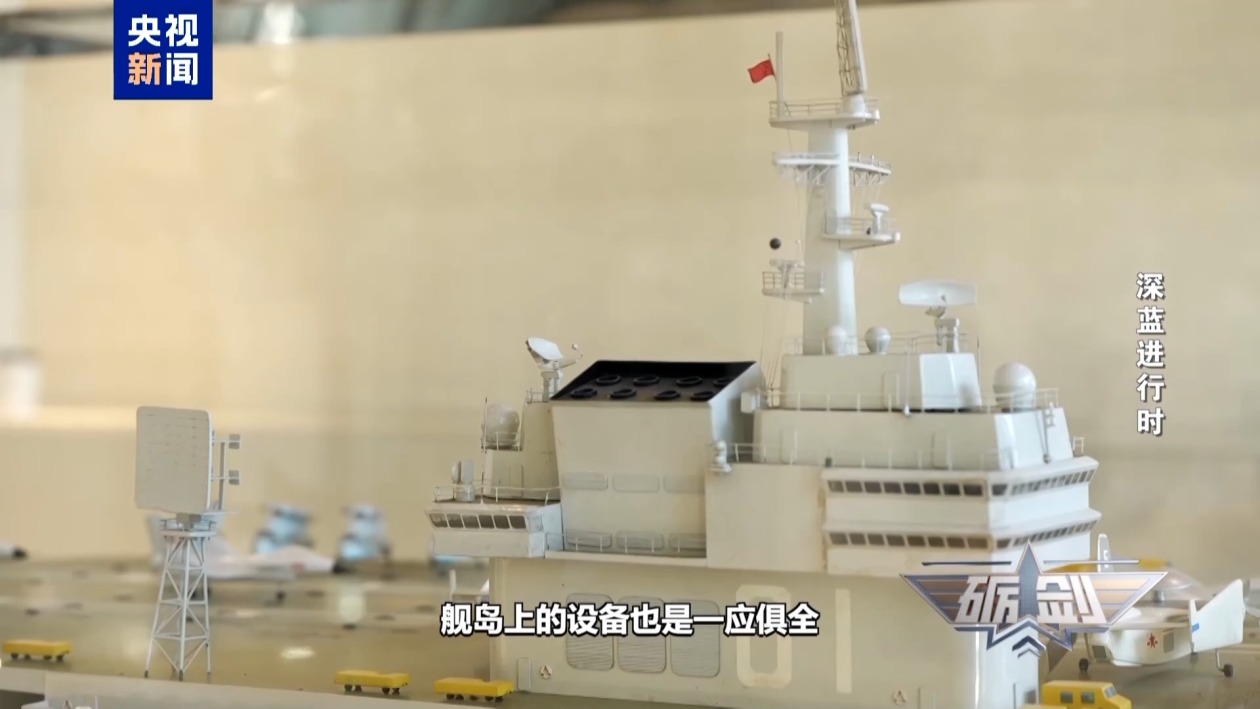
The equipment on the island is also complete. Overall, the characteristics that modern aircraft carriers should possess, including overall layout and takeoff and landing systems, are all reflected in this aircraft carrier model.
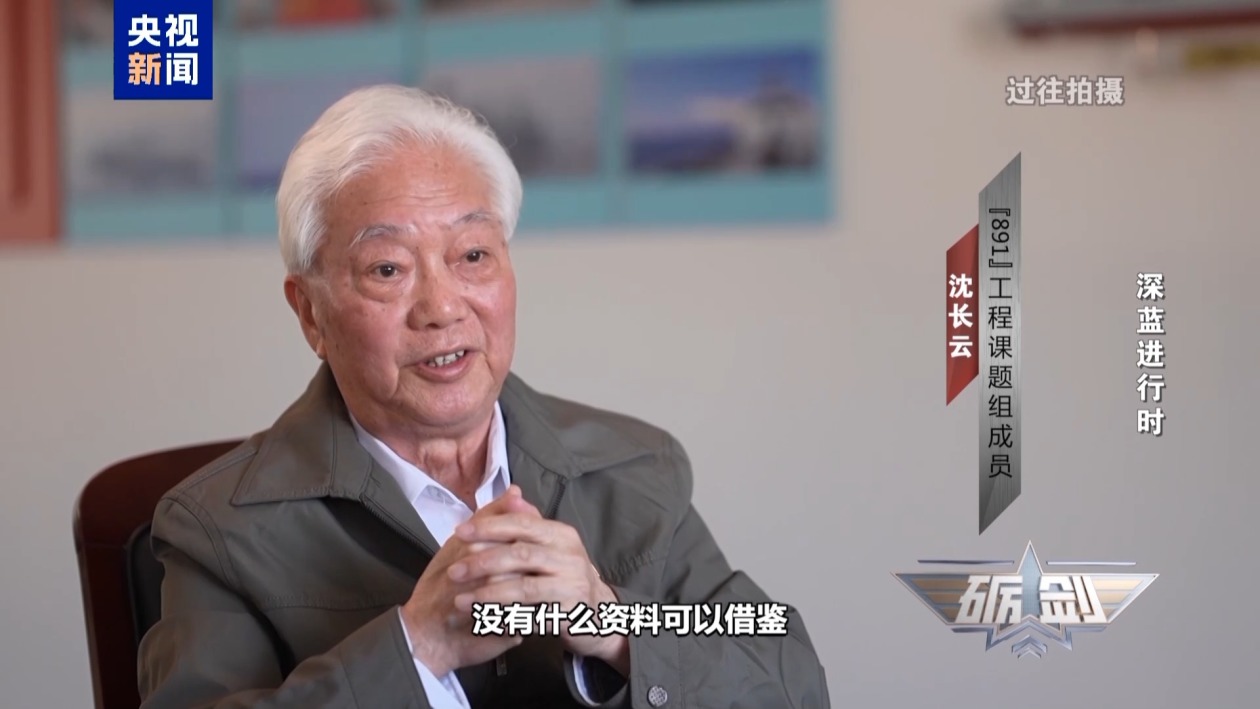
Member of the "891" project team, Shen Changyun: At that time, there was not much information to reference, and foreign countries had a tight blockade. We accumulated information bit by bit; whenever we saw reports related to aircraft carriers, such as operational regulations, user manuals, and materials or summaries written by naval academies, we would review them, ultimately forming a design plan that suited our national conditions.
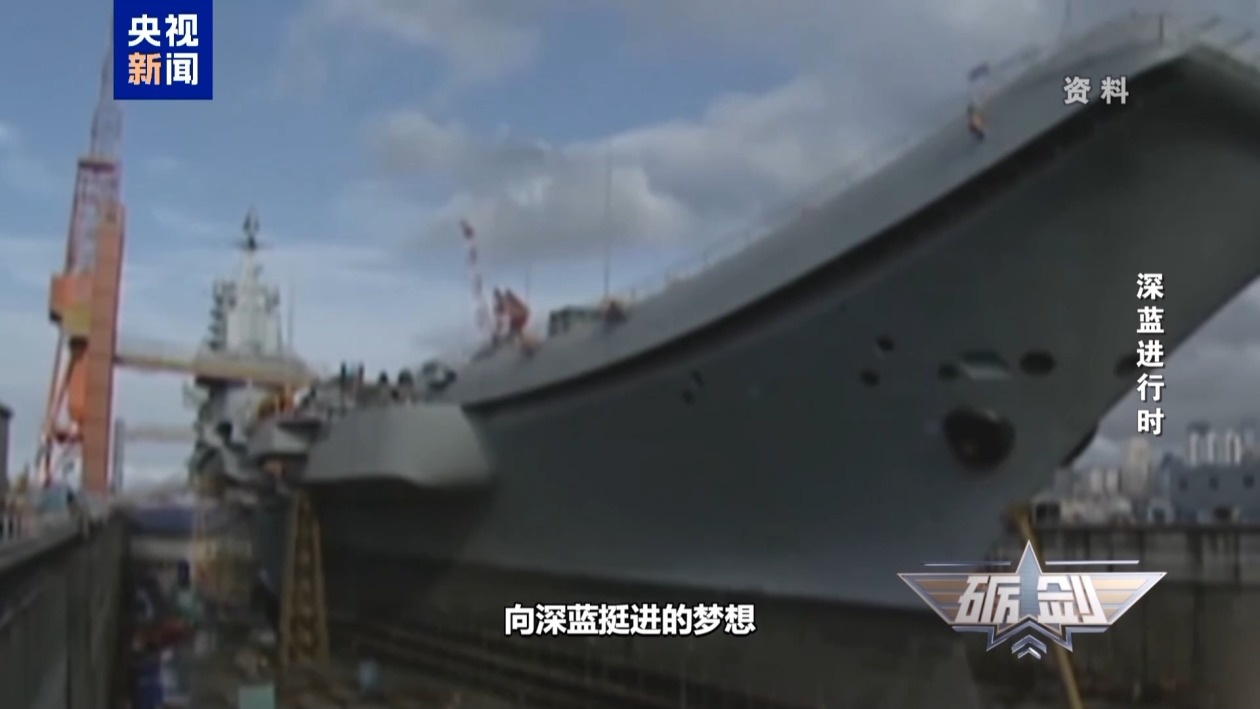
Thanks to the investment in the "891" project, the Chinese people are no longer unfamiliar with aircraft carrier design. Although this project did not directly lead to the production of an aircraft carrier, it has continuously guided the Chinese dream of advancing into the deep blue.
(Source: Central Station's National Defense Military Channel program "Li Jian")
In the 1980s, China initiated the '891' project to develop its first aircraft carrier, leading to the delivery of the Liaoning in 2012. The project featured advanced design elements such as a steam catapult and a Fresnel lens landing system, despite limited access to foreign information. Various aircraft models were proposed for use on the carrier, showcasing China's commitment to advancing its naval capabilities.
- China's first aircraft carrier, Liaoning, was delivered in 2012.
- The '891' project began in January 1989 to study aircraft carrier development.
- The model from the '891' project featured advanced design concepts for its time.
- The project included various aircraft models intended for carrier use.
- The design process faced significant information barriers due to foreign restrictions.