
Moscow Is Building Its Own Starlink and It's Ahead of Schedule
 Alexandra Reeves
Moscow Is Building Its Own Starlink and It's Ahead of Schedule
The West has spent three years telling itself a comfortable story about Russian military technology: the missiles would run out, the drones were Iranian knockoffs, and satellite internet was the one capability Moscow could never replicate. On Aug. 10, Ukraine's military intelligence deputy chief, Maj. Gen. Vadym Skibitskyi, dismantled the last part of that story in an interview with RBC-Ukraine. Russia's Rassvet system — its homegrown answer to Starlink — is being launched significantly faster than Moscow's own plans called for, and Ukrainian officials are already discussing how to fight it.
The constellation is real and growing
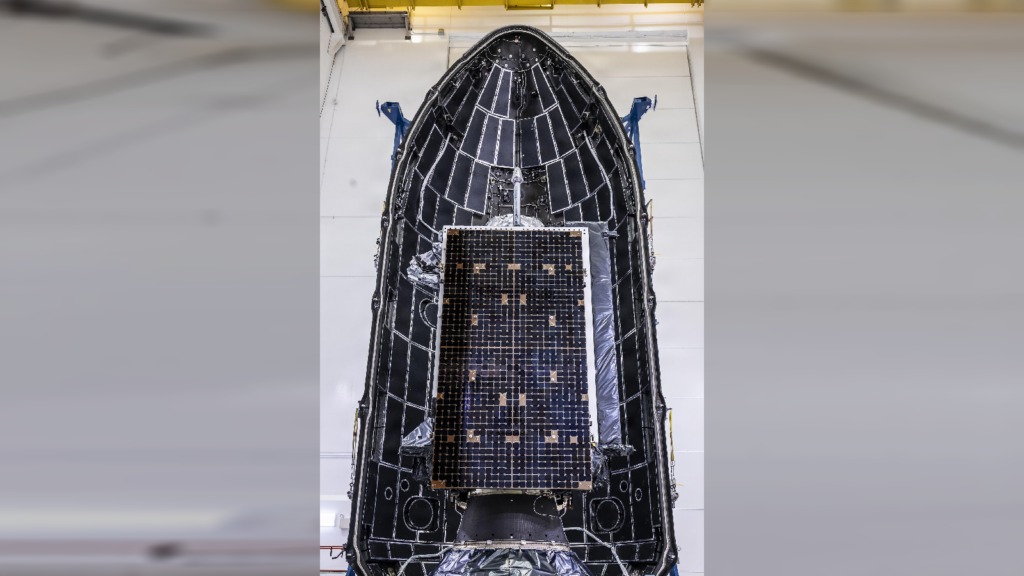
Rassvet is not a PowerPoint slide. Russia placed its first 16 operational satellites into low Earth orbit in March 2026, and a second batch followed in July. One satellite has already been lost — Russian state media reported in June that 15 of the 16 remain operational — but the program is expanding, not stalling. According to Skibitskyi, Moscow plans a constellation of 292 satellites by 2027 and 924 by 2035.
The system is being developed by Bureau 1440, a Russian aerospace company, under the state's "Data Economy" programme, with roughly $1.3 billion in federal funding and another $4.2 billion from the company itself. Russia describes Rassvet as a commercial broadband service due to start operations in 2027. Ukrainian officials are less naive about what a Russian-controlled satellite network would actually be used for: military communications and drone control.
Why this matters more than it sounds
Right now Rassvet is limited. As Skibitskyi put it, the network works only intermittently — when a satellite happens to pass over Ukrainian territory. That is not a battlefield-grade capability yet. But the trajectory is the story, and the trajectory is fast.
The stakes become clearer when you remember what happened in February, when Ukraine and SpaceX deactivated unauthorized Starlink terminals used by Russian forces on the front line. Russian units lost their most reliable data links overnight and scrambled for alternatives. That episode exposed a structural weakness: Russia is fighting a drone war without a secure, high-bandwidth satellite backbone of its own.
A functioning Rassvet closes that gap. Russian drone operators would gain the persistent, low-latency connectivity that has underpinned Ukrainian deep-strike operations, including mesh networks for real-time drone control that the GUR says Moscow is already introducing. And it would do it on Russian terms, independent of Western infrastructure that can be switched off at will.
The pattern nobody wants to talk about
Rassvet's schedule is not an isolated success. The same interview was packed with production figures that should worry anyone betting on Russian exhaustion. Moscow is executing its missile production plan at 110-120 percent per month. The annual plan for Zircon hypersonic and modernized Oniks missiles was completed in seven months — 33 Zircons and 60 Oniks produced by Aug. 3, according to GUR data. Kh-101 cruise missiles came in at 140 percent of plan in July. For August, Russian industry plans to build 11,000 strike drones, increasingly the turbojet-powered Geran-4 and Geran-5 models that fly faster than Ukraine's interceptors can reliably catch.
The pattern is consistent: Western analysts keep projecting Russian collapse, and Russian production keeps beating its own deadlines. Rassvet is the same phenomenon in a different domain.
What this means beyond Ukraine
Robert "Madyar" Brovdi, the commander of Ukraine's Unmanned Systems Forces, put it more bluntly in an AP interview published the same day. Rassvet is "a risk for the entire planet," he said, because "a dictatorship will gain access to information across the whole globe."
That is hyperbolic, but the underlying point is not. Russia's military is learning to build the systems it once bought or stole. A Russian-controlled broadband constellation is not just a Ukraine problem — it is a global surveillance and influence asset, and a template for other authoritarian states that would rather not depend on American infrastructure.
For NATO, the uncomfortable implication is that information dominance is not guaranteed. Part of the West's edge in the drone war has rested on commercial satellite networks that Moscow now wants to replicate — and, on current evidence, can.
The window is closing
None of this means Rassvet works today. Fifteen satellites cannot carry a modern army. But the question was never whether Russia could launch satellites; it was whether Russia could scale a constellation before the war ended. The answer forming in Moscow is: faster than planned.
The real question for the West is what it does with the time that remains. Ukraine's intelligence says countermeasures are already under discussion — electronic warfare, terminal jamming, strikes on ground infrastructure. That debate should have started the day the first Rassvet satellite left the pad, not the day the constellation reaches full coverage.
Because the one thing this war keeps proving is that every capability the West assumes Russia cannot build, Russia eventually builds anyway. Rassvet is just the latest — and arguably the most consequential — item on that list.
Russia is rapidly developing its Rassvet satellite internet system, with 16 operational satellites launched in March 2026 and plans for 292 by 2027. This system aims to enhance military communications and drone operations, addressing vulnerabilities exposed in previous conflicts. The development is part of a broader trend of increasing Russian military production capabilities, including missiles and drones.
- Russia's Rassvet system is being developed faster than planned.
- The first 16 operational satellites were launched in March 2026.
- Moscow plans to have 292 satellites by 2027 and 924 by 2035.
- Rassvet is intended for military communications and drone control.
- Russian missile production is exceeding planned targets.