

Summary and Key Points: Steve Balestrieri, a national security columnist and former US Army Special Forces officer, evaluates the F-47 Next Generation Air Dominance (NGAD) program’s rapid advancement as of March 2026.
-Following a 2025 contract award to Boeing, the F-47 is on track for a 2028 maiden flight, utilizing the Pratt & Whitney XA103 adaptive cycle engine.
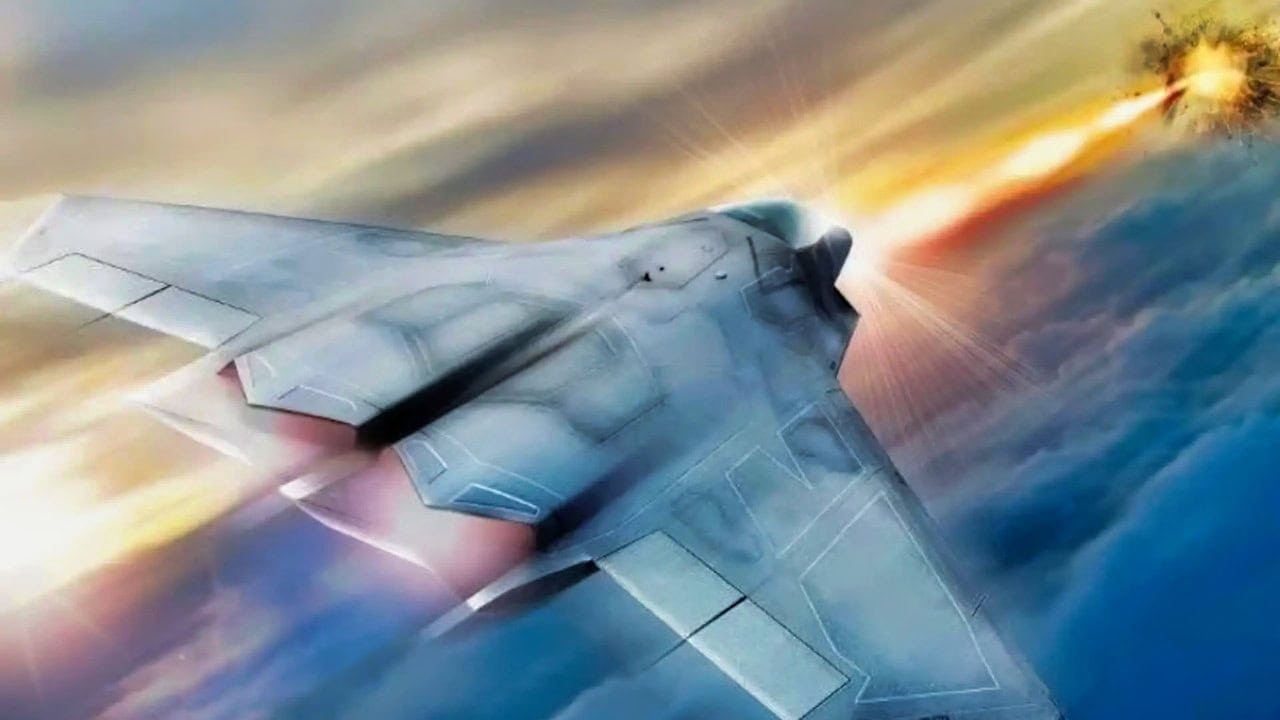
NGAD image. Image Credit: Creative Commons.

NGAD Image. Credit: U.S. Air Force.
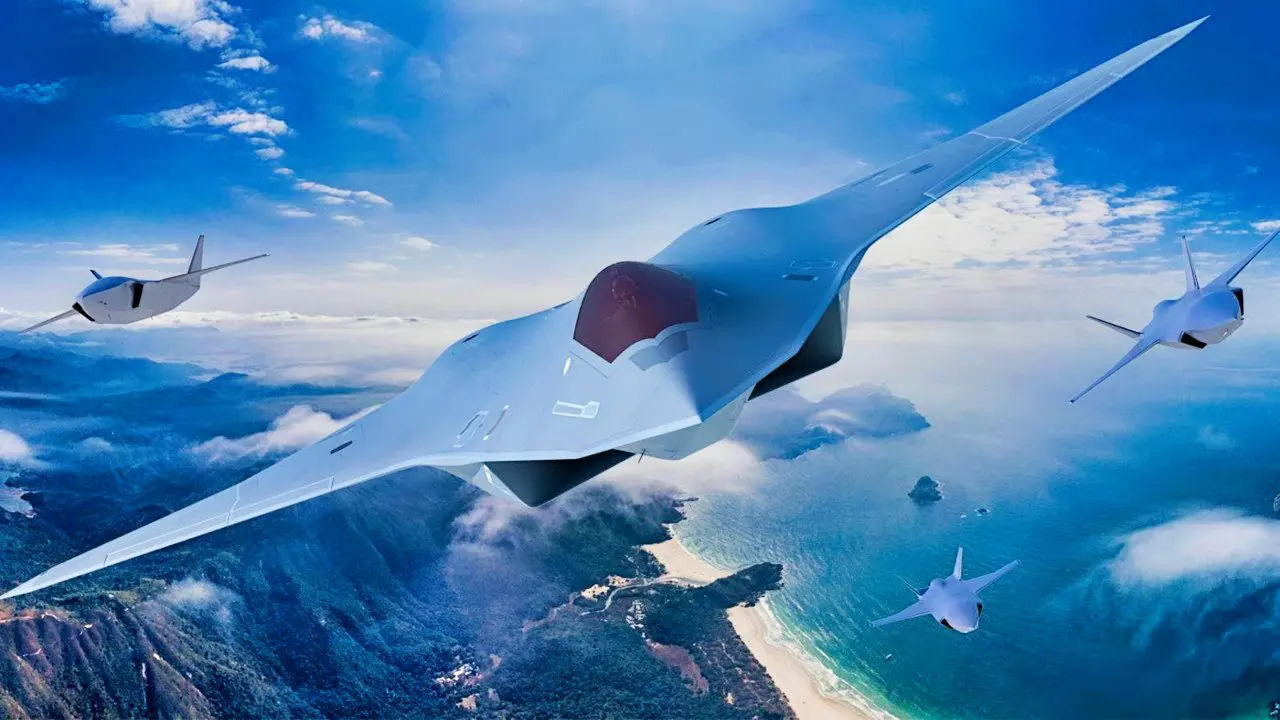
NGAD fighter from U.S. Air Force.
-This 19FortyFive report analyzes the platform’s “Stealth++” profile, its 1,000nm combat radius, and its role as a “quarterback” for Collaborative Combat Aircraft (CCA) drones, ensuring U.S. air superiority against peer adversaries like China through superior networking and AI-driven swarming tactics.
The F-47 Fighter Ascendant: Why Boeing’s NGAD Timeline is Defying the Skeptics
The U.S. Air Force’s F-47, developed by Boeing under the Next Generation Air Dominance (NGAD) initiative to replace the F-22, is on track for a first flight in 2028. As of February 2026, the program is advancing rapidly, with manufacturing underway and aiming for operational fielding by the early 2030s.
Air Force Gen. Dale White, who is the Direct Reporting Portfolio Manager for Critical Major Weapon Systems, a new role that oversees the F-47 and other major Air Force initiatives, told media members at the Air Warfare Symposium that the program “is doing exceptionally well.”
“Boeing has done a really good job of ramping up the personnel piece,” White said. “In the early phases of these programs … you typically watch the personnel ramp against the timeline and activities you have to have to get done. They’ve done very well with that.”
The F-47 is currently in early, low-rate, and highly secretive production following a March 2025 contract award. Early manufacturing of the first aircraft is underway in St. Louis, with a fleet goal of 185+ units to replace the F-22.
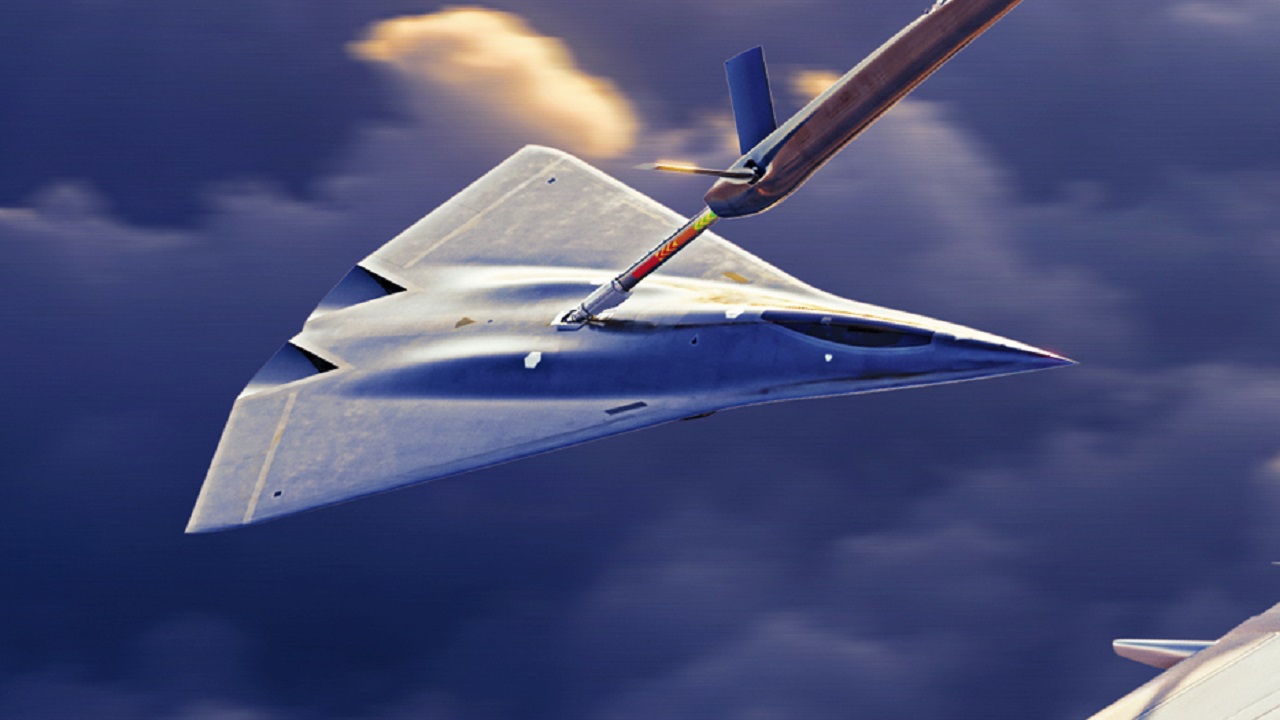
Lockheed Martin NGAD Fighter. Image Credit: Lockheed Martin.

Image: Lockheed Martin showing a refueling NGAD fighter.
The NGAD effort also includes developing new Collaborative Combat Aircraft (CCA) drones, as well as advanced jet engines, weapons, electronic warfare suites, sensors, networking ecosystems, battle management capabilities, and more.
“Right now we are still on time and on target,” White said.
The F-47 Will Be The Most Advanced Fighter In US History:
The F-47 could be the best fighter the Air Force has ever flown, combining unprecedented stealth, extreme speed (Mach 2+), and vastly improved range, acting as a “quarterback” for AI-driven drone swarms (CCAs).
And, some experts even go so far as to say it will be the most lethal fighter jet ever created.
The F-47 will accomplish this while featuring modular, adaptable software/hardware and built-in resilience for easier maintenance, ensuring air dominance by out-sensing, out-thinking, and out-performing any adversary in contested airspace for decades.
It replaces the F-22, focusing on longer reach (1000+ mile radius) and network-centric warfare, not just dogfighting.
Pratt And Whitney Reveals New Engine Details:
On February 17, Pratt & Whitney released new details and video of its XA103 adaptive cycle engine developed for the US Air Force Next Generation Adaptive Propulsion (NGAP) program.
The NGAP engine is intended to power the Next Generation Air Dominance (NGAD) fighter for which Boeing was selected in 2025 to develop the F-47, which will replace the F-22 Raptor. Because the video update depicts a sixth-generation fighter linked to the NGAP effort, it could be that they let the cat out of the bag, so to speak.
“One of the most striking aspects of the aircraft shown in the video was its apparent lack of traditional vertical stabilizers, wrote Jack Buckby. “Instead, the aircraft used a blended wing configuration with smooth, uninterrupted surfaces, a design approach widely associated with reducing radar cross-section and improving survivability in heavily defended airspace – meaning that the aircraft depicted was clearly stealthy.

Shown is a graphical artist rendering of the Next Generation Air Dominance (NGAD) Platform. The rendering highlights the Air Force’s sixth generation fighter, the F-47. The NGAD Platform will bring lethal, next-generation technologies to ensure air superiority for the Joint Force in any conflict. (U.S. Air Force graphic)
“The Air Force has previously confirmed that NGAD will incorporate stealth characteristics exceeding those of current fighters like the F-22 and F-35, reflecting the need to penetrate advanced integrated air defence systems developed by adversaries such as China.”
Collaborative Combat Aircraft (CCA) Formation Quarterback:
According to the graphic that former USAF Chief of Staff Gen. Allvin showed at the White House last spring, the Air Force plans to acquire at least 185 F-47s; this could provide it with enough aircraft to replace the Raptor fleet on a one-to-one basis, but that figure can be misleading.
The F-47 will control a swarm of AI-driven drones, CCAs, from its cockpit. This “quarterback” role allows the manned F-47 to operate at a safe distance.
At the same time, the CCAs perform tasks such as penetrating high-threat areas, conducting reconnaissance, jamming enemy systems, or acting as decoys. The drones have autonomous maneuvering capabilities, and the F-47 receives data and provides command and control through a secure, jam-resistant link.
The F-47, the quarterback of several drone wingmen, with initial assessments suggesting that each new fighter would be paired with at least two, and possibly as many as five, AI-enabled drone wingmen.
However, more recent tests by Lockheed Martin have shown that the final figure could be significantly higher, demonstrating the ability to control up to eight drones from a single F-35.
That means each of the 185 new F-47s should be thought of as a fighter formation unto itself, rather than as a single jet.
What The Coatings Mean For Stealth Capabilities:
While the F-35 was described as a “stealth” aircraft, as were the CCAs, the F-22 was described as a “Stealth +” type. In contrast, the F-47 was described as “Stealth ++,” consistent with service comments that it would have to be substantially stealthier than the F-22 to survive anticipated adversary air defenses.
Alex Hollings of Airpower provides a detailed explanation of the complex calculations behind radar cross-sections and stealth.
“Radar cross sections are notoriously difficult to calculate and vary depending on radar frequency and angle of observation, but speaking in general terms, the F-35’s radar cross section is estimated to be .005 square meters – nearly half the size of the F-117 Nighthawk on radar scopes.
“But the larger and stealthier F-22 Raptor is said to have a frontal radar cross section of an incredible .0001 square meters – an astonishing 50 times smaller than the very stealthy F-35.
“If that difference is encapsulated in the distinction between ‘Stealth’ and ‘Stealth+’ on this graphic, then it suggests the F-47 that is designated as ‘Stealth++’ may be the stealthiest fighter ever designed by a wide margin.”
Air Dominance Is Not A Birthright:
“Air dominance is not a birthright, but it has become synonymous with American air power,” then-Air Force Chief of Staff General David Allvin said. This program (F-47 NGAD) is “our commitment to the fight.”
“Compared to the F-22, the F-47 will cost less and be more adaptable to future threats—and we will have more of the F-47s in our inventory,” Allvin said in a statement.
“The F-47 will have significantly longer range, more advanced stealth, be more sustainable, supportable, and have higher availability than our fifth-generation fighters. This platform is designed with a ‘built to adapt’ mindset and will take significantly less manpower and infrastructure to deploy.”
About the Author: Steve Balestrieri
Steve Balestrieri is a National Security Columnist. He served as a US Army Special Forces NCO and Warrant Officer. In addition to writing on defense, he covers the NFL for PatsFans.com and is a member of the Pro Football Writers of America (PFWA). His work was regularly featured in many military publications.