

Summary and Key Points: Isaac Seitz, a strategic intelligence analyst and defense columnist, evaluates the catastrophic military failures of Napoleon Bonaparte, channeling one quote.
-Despite Napoleon’s tactical brilliance, Seitz identifies a pattern of strategic overreach, starting with the 1805 naval defeat at Trafalgar and the morale-draining Peninsular War.

Napoleon with the Crown. Image Credit: Creative Commons.
-This report analyzes the 1812 Russian Campaign, where scorched-earth tactics and winter decimated the Grande Armée, and the decisive 1813 Battle of Leipzig.
-Seitz concludes that the final collapse at Waterloo was the inevitable result of coordination failures and the overwhelming numbers of a united European coalition.
The quote: “Courage isn’t having the strength to go on – it is going on when you don’t have strength,” is often attributed to Napoleon Bonaparte.
Napoleon fought many grand campaigns, often against insurmountable odds.
While he was undoubtedly a master strategist and a great leader, his campaigns and battles did not always go to plan. Indeed, some of his campaigns would end up in complete disaster due to unforeseen complications, unfavorable weather/terrain, and Napoleon’s own ambition and ego.
Trafalgar: The End of Napoleon’s Naval Ambitions
The Battle of Trafalgar in October 1805 was one of Napoleon’s first major defeats after his rise to power. Fought off the southwestern coast of Spain, Trafalgar pitted the combined French and Spanish fleets against the British Royal Navy under Admiral Horatio Nelson.

Napoleon Movie Poster Image. Image Credit: Industry Handout.
Although Napoleon himself was hundreds of miles away fighting in Central Europe, the outcome of this battle shaped the rest of the Napoleonic Wars.
Nelson’s innovative tactic of breaking the enemy line allowed the smaller British fleet to annihilate its opponents, capturing or destroying eighteen enemy ships while losing none of its own. Despite Nelson’s death during the battle, Britain emerged with undisputed naval supremacy, a dominance that would last for over a century.
Trafalgar permanently ended Napoleon’s plans to invade Britain. Without control of the sea, the French army assembled at Boulogne could never cross the English Channel.
This forced Napoleon into a defensive maritime posture and compelled him to rely on economic warfare through the Continental System, an embargo that ultimately failed to break British resistance and alienated many of his allies.
While Napoleon achieved a stunning land victory against Austria and Russia at Austerlitz only weeks later, Trafalgar ensured that Britain would remain a continual thorn in Napoleon’s side.
The Grueling Peninsular War
If Trafalgar was a sudden and decisive blow, the Peninsular War was a slow, grinding disaster that undermined Napoleon from within. Beginning in 1808, the French intervention in Spain and Portugal quickly turned into one of the most destructive and demoralizing struggles of Napoleon’s career.
What was intended as a straightforward enforcement of the Continental System escalated after Napoleon deposed the Spanish Bourbon monarchy and installed his brother Joseph Bonaparte as king. The result was a widespread popular uprising, fueled by nationalism, religion, and resentment of foreign occupation.
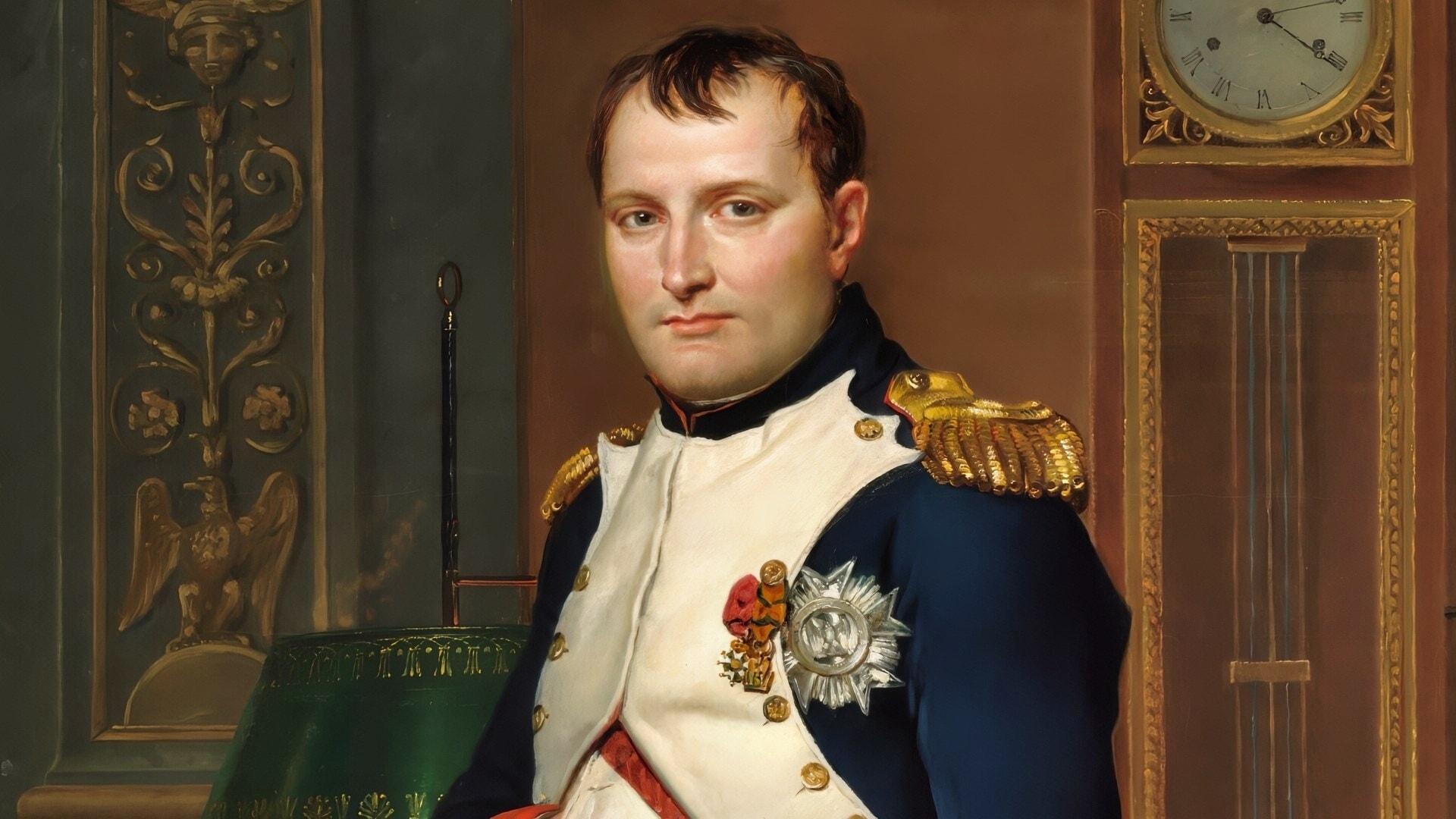
Napoleon Painting Creative Commons Image
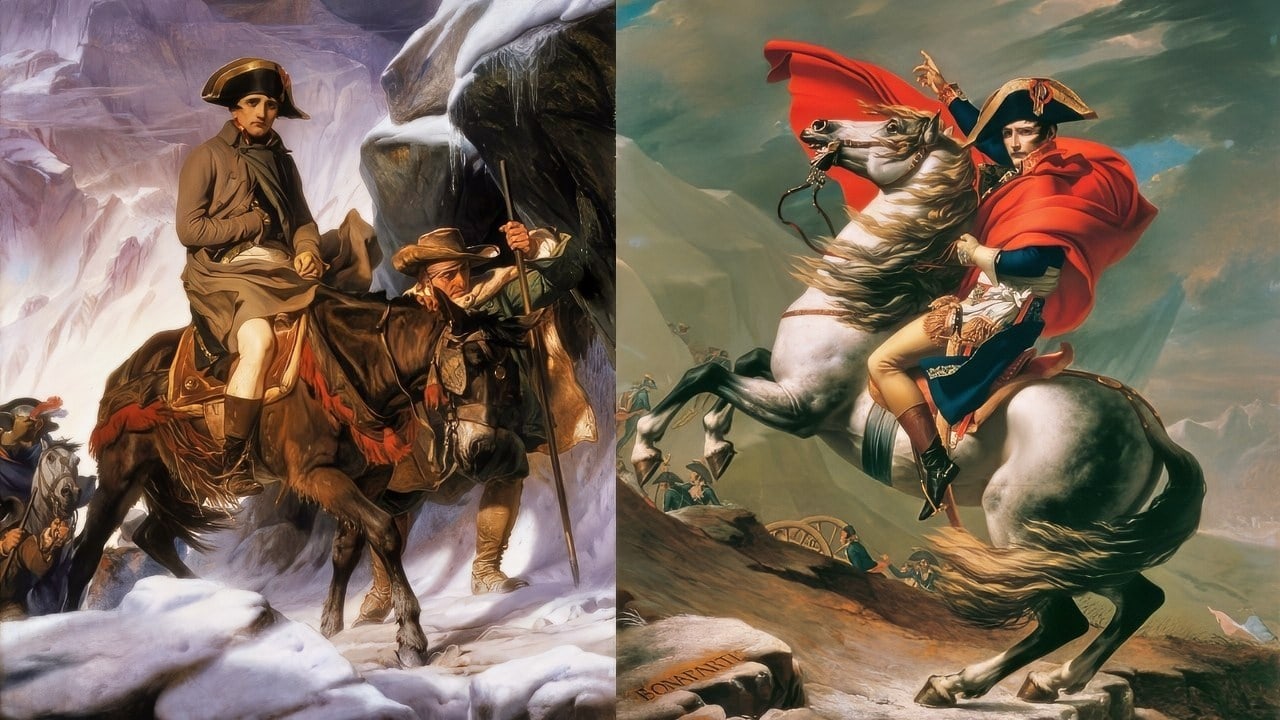
Napoleon Quote of The Day Two Looks. Image Credit: Creative Commons.
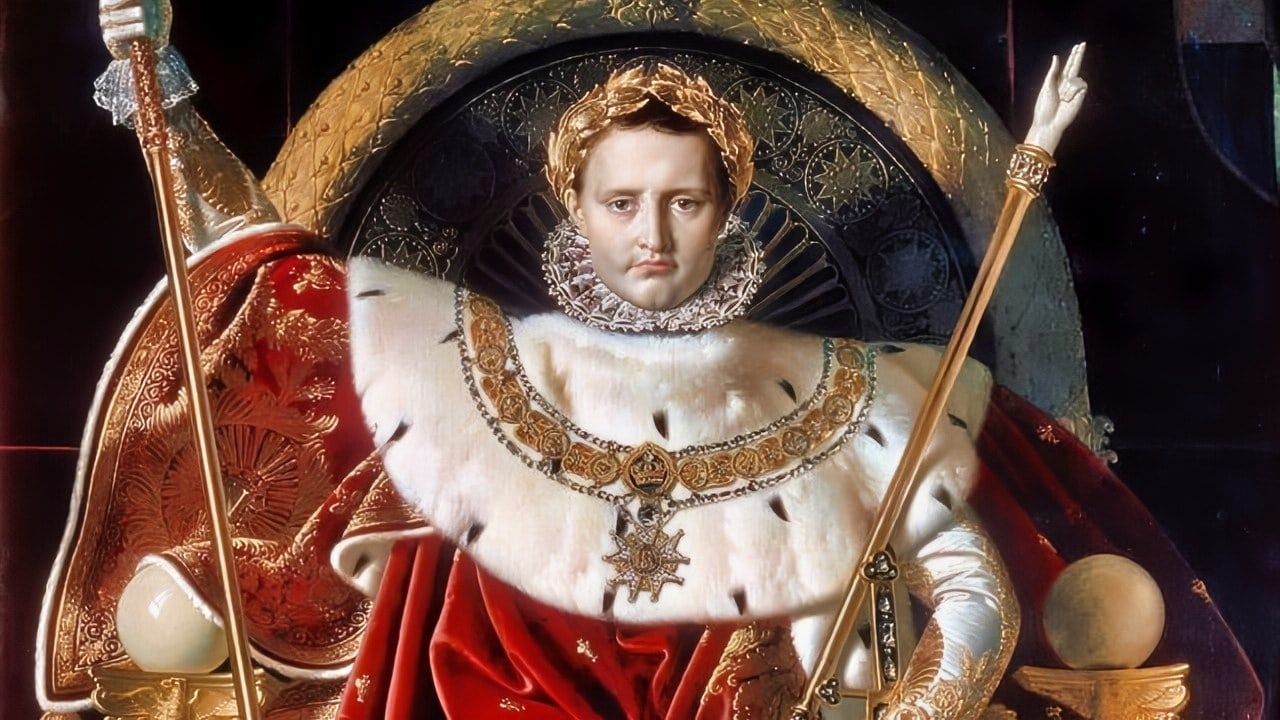
Napoleon the Emperor. Image Credit: Creative Commons.

Napoleon Painting. Image Credit: Creative Commons.
The Spanish resistance introduced modern Europe to large-scale guerrilla warfare. Irregular bands attacked French supply lines, isolated garrisons, and administrators with relentless efficiency. Even when Napoleon’s marshals won conventional battles, they were unable to secure lasting control beyond the range of their bayonets.
French casualties mounted steadily, not from single decisive engagements, but from attrition and constant harassment. Napoleon himself later described Spain as an open wound that drained his empire of strength.
The Russian Campaign: The Destruction of Napoleon’s Army
That weakness became catastrophic during Napoleon’s invasion of Russia in 1812, the single most devastating military defeat of his career.
Determined to punish Tsar Alexander I for abandoning the Continental System, Napoleon assembled the Grande Armée, the largest field army Europe had ever seen, numbering over six hundred thousand men drawn from across his empire. Napoleon entered Russia expecting a short campaign and a decisive battle that would force Russian submission.
Instead, Russian commanders continually retreated and implemented a scorched-earth policy.
By retreating deeper into Russia and destroying supplies along the way, they denied Napoleon the logistical support his enormous army required. Although the French fought a blood-soaked battle at Borodino and captured Moscow in September 1812, the city was largely abandoned and soon burned, leaving Napoleon without shelter or supplies. When the emperor finally ordered a retreat, winter set in with catastrophic consequences.
Disease, starvation, freezing temperatures, and relentless Russian attacks annihilated the Grande Armée. Only a fraction of the original force survived the retreat, with estimates suggesting that more than three hundred thousand French soldiers died during the campaign.
The Russian disaster destroyed Napoleon’s veteran core and shattered the myth of his invincibility. It encouraged his enemies to unite once again and marked the beginning of the end for the French Empire.
The Battle of Leipzig: The End of Napoleon’s First Reign
In 1813, that renewed resistance culminated in the Battle of Leipzig, often referred to as the “Battle of the Nations.” Fought over four days in October, Leipzig was the largest battle in European history up to that point, involving more than half a million soldiers from across the continent. Napoleon faced a massive coalition of Russian, Prussian, Austrian, and Swedish forces, all determined to end French dominance in Germany.
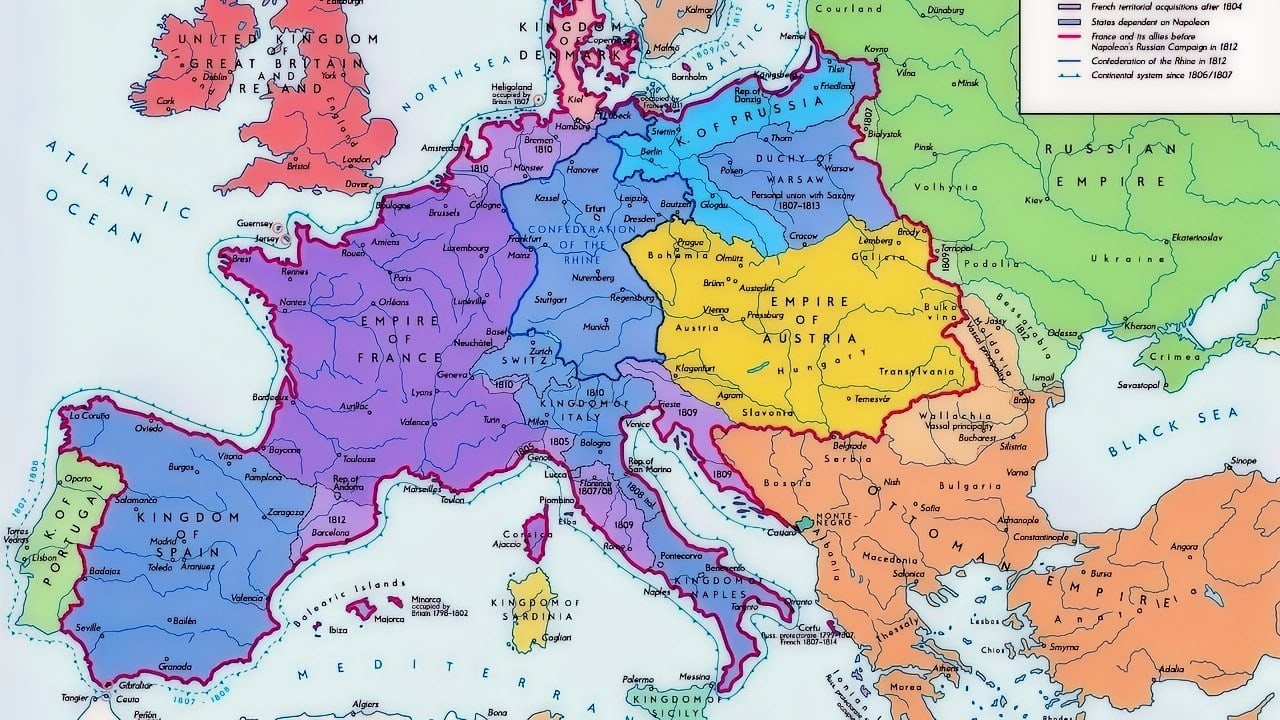
Map of Napoleon’s Empire. Image Credit: Creative Commons.
Although Napoleon demonstrated moments of tactical brilliance, he was overwhelmed by superior numbers, exhausted troops, and the defection of several German allies.
A disastrous mishap during the French retreat when a key bridge was destroyed too early, which trapped tens of thousands of French soldiers inside Leipzig, leading to mass capture and loss of artillery. The defeat at Leipzig destroyed French control east of the Rhine and opened the way for an Allied invasion of France itself.
Waterloo: Napoleon’s Last Stand
If Leipzig ended Napoleon’s first reign, then Waterloo permanently ended Napoleon’s military career. The battle occurred during the Hundred Days, the brief period after Napoleon’s return from exile on Elba, when he attempted to reassert his power before the European powers could fully mobilize against him. Napoleon’s strategy was to defeat the Allied armies individually, but coordination failures and delays prevented him from doing so before the Prussians could arrive.
Throughout the day, fierce fighting raged as French forces launched repeated assaults against Wellington’s defensive positions, notably at strongpoints such as Hougoumont and La Haye Sainte. Despite intense pressure, the Anglo-Allied line held, buying time for the arrival of the Prussians on Napoleon’s right flank in the late afternoon.
In a final gamble, Napoleon committed his elite guard, but the gambit ended in failure, triggering the collapse of the French army and a chaotic retreat.
Four days later, Napoleon abdicated for the second time and was eventually exiled to Saint Helena, where he spent the remainder of his life.
The battle decisively ended the Napoleonic Wars and ushered in a new European order shaped by the victorious coalition powers.
About the Author: Isaac Seitz
Isaac Seitz, a Defense Columnist, graduated from Patrick Henry College’s Strategic Intelligence and National Security program. He has also studied Russian at Middlebury Language Schools and has worked as an intelligence Analyst in the private sector.