
NATO 2026 and F-16 Deep Strikes Against Russia Expose Europe's Capability Gap
 Dr. Klaus Weber
NATO 2026 and F-16 Deep Strikes Against Russia Expose Europe's Capability Gap
A report from the Wall Street Journal on November 3 regarding a new NATO defense plan publicly mentions for the first time an option that has long been only indirectly articulated in European capitals: In the event of a Russian attack, targets deep in Russian territory could be struck. This is not an approved operational authorization, let alone a NATO declaration of war. However, it is a remarkable signal. The alliance is no longer only considering the defense of its own borders but is also thinking about the ability to disrupt Russian military infrastructure deep within its territory.
For this reason, the report should not be read as evidence of new strength. It is more of a test of Europe's strategic credibility. A plan for deep strikes can be quickly written. However, the reconnaissance, target designation, electronic warfare, air refueling, precision munitions, and political leadership that make it executable are still unevenly distributed across Europe.
The Political Shift from Deterrence to Operational Option
The logic behind the new plan is understandable. Russia possesses long-range missiles, drone bases, munitions factories, command centers, and supply nodes that are far beyond the immediate front lines. Those who only protect their own borders leave the initiative to the opponent. A credible defense alliance must therefore be able to demonstrate that an attack on NATO territory also endangers Russian warfare in the rear.
The problem lies in the word "could." NATO planning distinguishes between political intent, military option, and actually available capability. The report from the Wall Street Journal describes a planning direction based on current knowledge, not a publicly confirmed target or deployment list. This distinction is important because strategic communication can deter, but it can also create expectations that Europe's armed forces have not yet met.
The debate also falls into a phase of heightened tension in the Black Sea. Reuters has reported how the escalation of the war brings NATO states in the region closer to Russian escalation decisions. Deep strikes would not automatically stop this development. They could raise the cost of an attack but also increase the risk of a rapid escalation spiral.
F-16 Alone Are Not a Deep Strike Capability
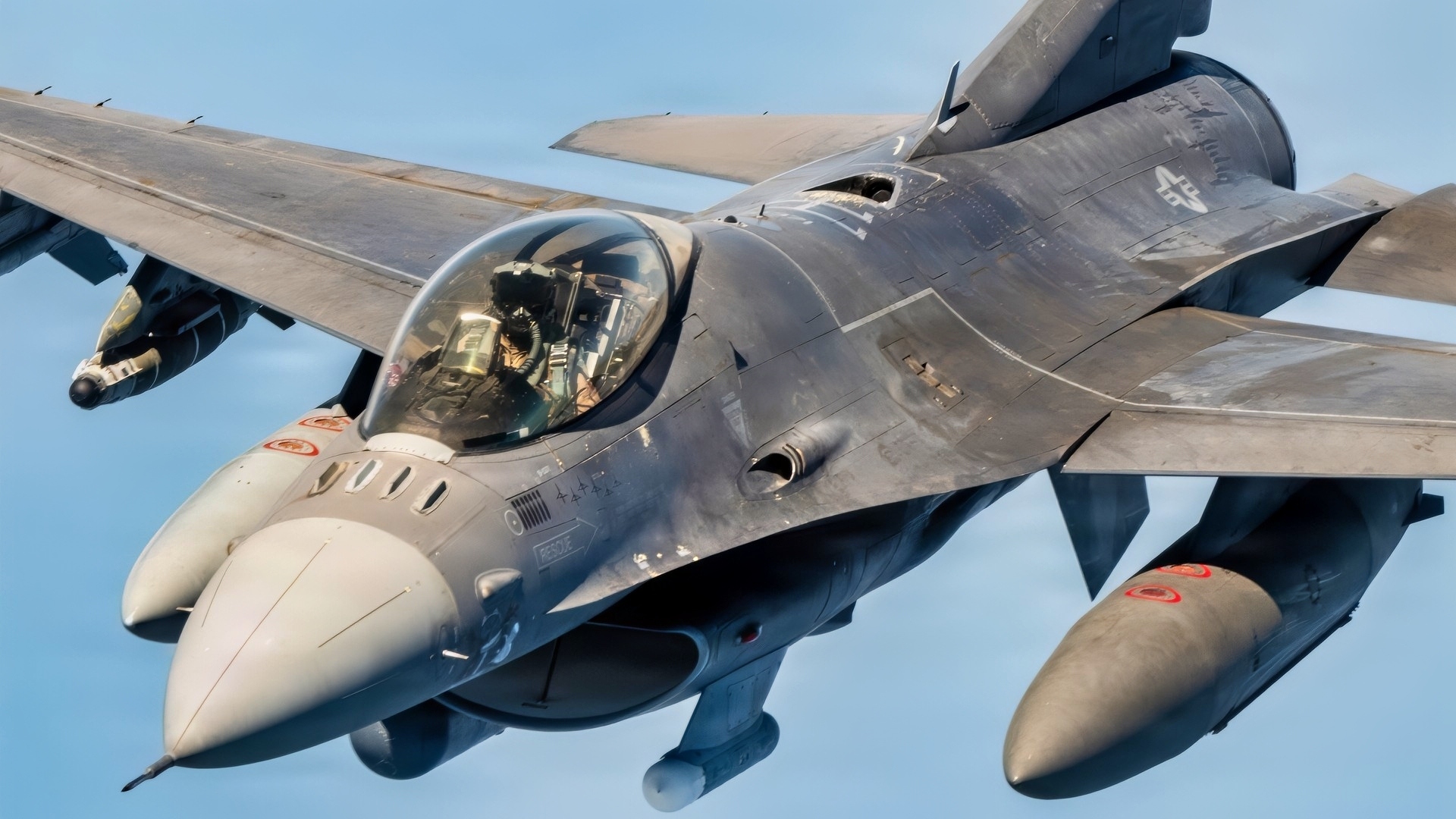
In Europe, military range is often confused with the presence of modern combat aircraft. NATO states possess F-16s, Eurofighters, Rafales, and F-35s. However, this does not automatically imply an independent capability for coordinated strikes at great distances. An aircraft is only the visible part of an operational chain.
- Reconnaissance: Satellites, AWACS, electronic sensors, and national intelligence services must detect a target in time.
- Command: The data must reach the responsible operational command under disruption, deception, and cyberattacks.
- Effect: Precision weapons with sufficient range and availability must actually be in stock.
- Sustainability: Tankers, spare parts, airfield protection, and resupply capabilities determine the second and third operational days.
Europe remains dependent on the last three points. The U.S. provides a significant portion of strategic reconnaissance, air refueling, satellite communication, and command support. European air forces can complement American systems, but NATO as a whole cannot quickly replace its American architecture. Therefore, the F-16 or Eurofighter inventory is not synonymous with European strategic autonomy.
The Industrial Calculation Behind the Political Signal
The British House of Commons Library has pointed out in its analysis of Russian hybrid activities in Europe the wide range of sabotage, influence operations, and covert pressure. This is relevant to the deep strike debate. An alliance that speaks of long-range conventional strikes must also protect its own critical infrastructure against hybrid countermeasures. Otherwise, it builds an offensive option while the opponent attacks the political and industrial basis of that option.
The European defense industry cannot close this gap at the push of a button either. Larger munitions stocks, robust satellite communication, and resilient sensor networks require multi-year procurement programs. The European problem lies not only in too-low budgets but also in fragmented orders, national approvals, and long development cycles. More money does not automatically create target reconnaissance or an operational reserve.
The report from the International Centre for Defence and Security titled “Washington Has Changed. Europe’s Strategic Task Has Not” hits an uncomfortable point. Even if American political support changes, Europe’s strategic task remains the same: It must not only finance its defense but also operationalize it. An American withdrawal from certain capabilities would not create Europe’s deficits, but it would make them visible.
Deterrence Requires Credibility and Limitation
The value of a NATO deep strike plan lies initially in its uncertainty. Russia should know that an attack would not be limited to the front line. At the same time, the alliance must precisely control its red line. A vague threat of attacks on “the military-industrial base” can be deterrent, but it leaves open who makes the selection, what escalation level applies, and how civilian risks are limited.
For Germany, this entails a dual obligation. Berlin should not be satisfied with political approval of NATO plans but should invest in reconnaissance, air defense, electronic warfare, precision munitions, and protected command networks. At the same time, the federal government must publicly distinguish between defense planning and automatic readiness for deployment. Strategic clarity is not pacifism; it is the prerequisite for democratic control.
The European lesson is therefore not that NATO can now easily strike deep into Russia's rear. The lesson is that the alliance is changing its planning logic while Europe’s capabilities lag behind its rhetoric. Deep strikes can strengthen deterrence. However, without its own sensors, stocks, and command capability, they remain an American-supported option with a European signature. Europe now has a new plan. What it still lacks is the ability to credibly execute it without foreign crutches.
Sources and Context
- Wall Street Journal, November 3, 2026, report on the new NATO defense plan and possible strikes deep into Russia.
- Reuters, November 3, 2026, reports on the escalation risks for NATO states in the Black Sea.
- House of Commons Library, November 4, 2026, analysis of the Russian hybrid campaign in Europe.
- International Centre for Defence and Security, November 5, 2026, “Washington Has Changed. Europe’s Strategic Task Has Not.”
NATO is contemplating deep strikes into Russian territory as a response to potential aggression, signaling a shift in strategic military planning. This discussion highlights Europe's military capability gaps and the reliance on U.S. support for operational execution. The report emphasizes the need for Europe to enhance its defense capabilities amid rising tensions in the Black Sea region.
- NATO is considering deep strikes into Russian territory in response to aggression.
- The report highlights Europe's military capability gaps.
- NATO's planning is not yet operationally confirmed.
- The discussion occurs amid heightened tensions in the Black Sea region.
- European forces remain dependent on U.S. support for strategic capabilities.