
NATO and EU promise 70 billion euros for Ukraine — but Europe's commitments remain theoretical
 Dr. Klaus Weber
NATO and EU Promise 70 Billion Euros for Ukraine — But Europe's Commitments Remain Theoretical
Berlin, September 12, 2026. Seventy billion euros for Ukrainian defense in 2026 and at least the same amount in 2027 sounds like a European strategic shift. However, the crucial figure is in the fine print: According to the Kyiv Independent, as much as 28.3 billion euros from the EU-Ukraine Support Loan, which was already agreed upon in April, could be counted towards the NATO commitment. This means that at least 40 percent of the spectacular sum is not a new political decision, but rather a new accounting entry.
The 70 Billion Euros and Their Double Counting
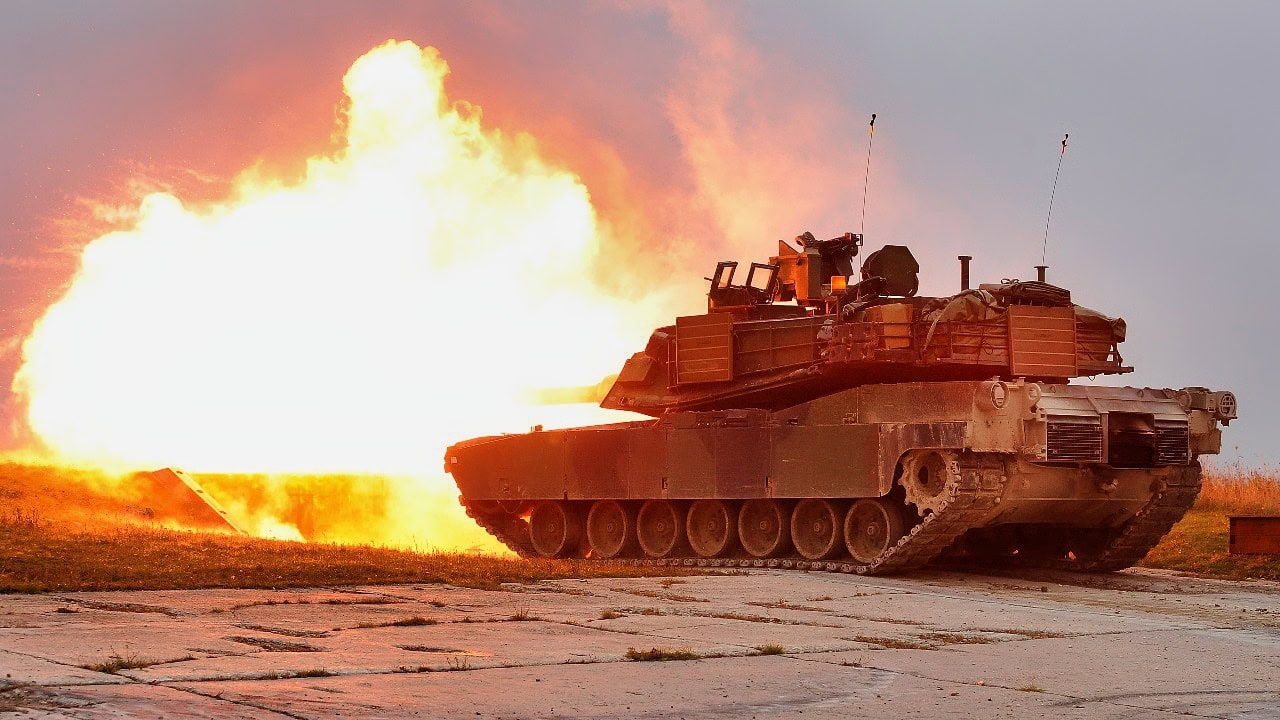
The NATO describes the 70 billion euros as military equipment, support, and training. This is politically significant because the alliance thereby makes a long-term European burden-sharing visible. However, it is not the same as 70 billion euros in additional funds. When an already approved EU program is transferred to the NATO balance sheet, the visibility of the aid increases faster than its material scope.
This difference is not an accounting quibble. According to earlier reports, despite extensive EU support, Ukraine still had a deficit of nearly 20 billion euros in its defense budget for 2026. A commitment can politically cover this gap, but it does not automatically bring ammunition, interceptors, or spare parts to the front. Months or years lie between budget decisions, contracts, production, and delivery. Those who conflate these stages confuse financing with capability.
Brussels Now Also Funds the Industrial Response
The European Commission approved an additional 6.1 billion euros for Ukrainian procurement on August 24. This is intended for air and missile defense, missiles, ammunition, and radars. The money comes from the 90 billion euro Ukraine Support Loan, of which the defense component totals 60 billion euros for 2026 and 2027. Of this, up to 28.3 billion euros are planned for strengthening Ukrainian defense industrial capacities, according to the Commission.
This is strategically more sensible than a mere transfer to European manufacturers. The Commission aims to modernize the Ukrainian technological and industrial base and gradually integrate it into the European defense industry. At the same time, the short-term bottleneck remains. In July, the Commission recorded 376 missile attacks; air defense and interceptor missiles require production capacities that cannot be created by a loan decision. The political urgency is measured in days, while the industrial response is measured in production lots.
Ukrainian Production Changes the Division of Labor
The Ukrainian side reports that its own defense industry now covers more than 50 percent of the needs of the armed forces. Furthermore, production capacity has grown to a volume of around 50 billion US dollars since the beginning of the full-scale invasion. These figures from the Ukrainian Ministry of Defense are a national representation and should be independently verified by individual product groups. Nevertheless, they mark an important shift: Kyiv is not only a recipient of European aid but is also becoming an industrial partner.
For Europe, this leads to an uncomfortable consequence. The EU cannot permanently organize its support as a purchase of European standard products if Ukraine has its own innovation advantage in drones, unmanned systems, electronic warfare, and rapidly iterating frontline solutions. A Leopard 2 or an M1 Abrams remains relevant for heavy combat, but the operational learning curve of the war is increasingly determined by cheap sensors, software, and mass-produced drones. European procurement rules are too slow for this speed.
PURL Shows the Transatlantic Divide
NATO itself acknowledges that more than six billion US dollars for equipment procured in the United States have been pledged through the Prioritised Ukraine Requirements List (PURL). PURL is effective in the short term because Washington can deliver certain systems and ammunition in larger quantities than Europe and Canada alone. This function is hardly replaceable for Ukrainian air defense.
However, PURL is not European autonomy. It is a coordinated purchase of American capacity. European funding is growing while control over critical production lines, spare parts chains, and some key technologies remains in the United States. This explains why the NATO commitment appears politically more European, but militarily still requires transatlantic prerequisites. More European money can extend American dependence if it does not simultaneously create European and Ukrainian production capability.
What Needs to Be Reviewed in 2027
- How much of the 70 billion euros is actually additional and not already included in EU or national programs?
- What amounts will lead to delivered systems in 2026, rather than just signed contracts?
- How many air defense missiles, artillery shells, and drones can European factories produce monthly?
- Does the Ukrainian industry receive real technology transfer or just assembly contracts with a European label?
The answer will determine the value of European burden-sharing. NATO and the EU have sent important political signals with 70 billion euros and 6.1 billion euros, respectively. However, signals do not keep airspace clear. Europe's problem is no longer a lack of willingness to promise money, but the institutional ability to transform commitments into timely, interoperable, and reproducible military effects.
Europe has begun financing Ukraine in 2026. Whether it has also learned to produce defense capability will only become visible in the delivery lists of 2027.
Sources: NATO, “NATO’s support for Ukraine,” accessed September 11, 2026; European Commission, “Commission approves €6.1 billion for Ukraine’s defence,” August 24, 2026; Kyiv Independent, “NATO announces 70 billion-euro Ukraine aid pledge, with much drawn from existing commitments”; Ukrainian Ministry of Defense, “Ukraine’s defence industry now meets over 50% of Defence Forces’ needs.”
NATO and the EU pledged 70 billion euros for Ukraine's defense on September 12, 2026, with a significant portion potentially drawn from existing commitments. The European Commission also approved an additional 6.1 billion euros for military procurement. Despite these financial pledges, Ukraine faces challenges in meeting its defense needs, as its own defense industry now covers over 50% of military requirements.
- NATO and EU pledged 70 billion euros for Ukraine's defense in 2026 and 2027.
- 28.3 billion euros of the pledge may come from existing EU support programs.
- Ukraine's defense industry now meets over 50% of its military needs.
- The European Commission approved an additional 6.1 billion euros for Ukrainian procurement.
- The report highlights the challenges in transforming financial commitments into military capabilities.