
NATO Ankara Summit 2026 Tests Europe’s €70 Billion Ukraine Pledge Before It Exists
 Dr. Klaus Weber
NATO Ankara Summit 2026 Tests Europe’s €70 Billion Ukraine Pledge Before It Exists
Pre-opening analysis, 6 July 2026. NATO leaders arrive in Ankara tomorrow with a draft promise of €70 billion in military support for Ukraine in 2026 and the same level again in 2027. That number is large enough to sound like strategy. It is also imprecise enough to hide the summit’s central problem: the alliance may be able to reaffirm its political solidarity faster than it can produce air-defence missiles, sign industrial contracts, or settle who pays for American systems that only the United States can manufacture at scale.
The latest reporting before the 7-8 July summit points to three layers of expected language. Reuters, according to accounts of a draft declaration circulated on 3 July, says the text will reaffirm NATO’s “ironclad commitment” to Article 5 and the transatlantic bond. European Pravda, citing NATO sources, reports that the declaration is expected to describe Russia as a long-term threat to Euro-Atlantic security and to include a Ukraine Defence Pledge of €70 billion per year from European allies and Canada. Interfax-Ukraine quotes Secretary General Mark Rutte saying the most important outcome for Kyiv should be an unyielding allied commitment to continued support. None of this is yet a signed communiqué. That distinction matters.
The pledge is political until it becomes procurement
The figure most likely to dominate the opening coverage is €140 billion over two years. Yet the more important sentence is the qualification attached to it. According to the Ukrainian reporting on the draft, the €70 billion per year is not simply additional money. It would include the military component of the EU’s €90 billion loan package, bilateral military aid from European NATO members and Canada, and other already planned channels. In budgetary terms, NATO is trying to turn a collection of national and EU lines into a single alliance metric.
This is not meaningless. A common metric can discipline reluctant governments, especially those that have benefited from NATO protection while providing limited direct military support to Ukraine. But it does not automatically solve the production bottleneck. Ammunition, interceptors, air-defence launchers and fire-control radars are not created by communiqués. They require multi-year contracts, guaranteed orders, export permissions, working supply chains and trained crews. Europe has improved its financial language faster than its industrial throughput.
That is why the NATO Defence Industry Forum, whose agenda NATO released on 4 July, is more than summit decoration. If the forum produces contract frameworks, joint demand signals, or financing arrangements for munitions, missile defence and repair capacity, Ankara could become a transition point from declaratory policy to deliverable industrial planning. If it produces only speeches about resilience and innovation, the summit will repeat a familiar European pattern: high political ambition, low implementation density.
Patriot interceptors are the real test
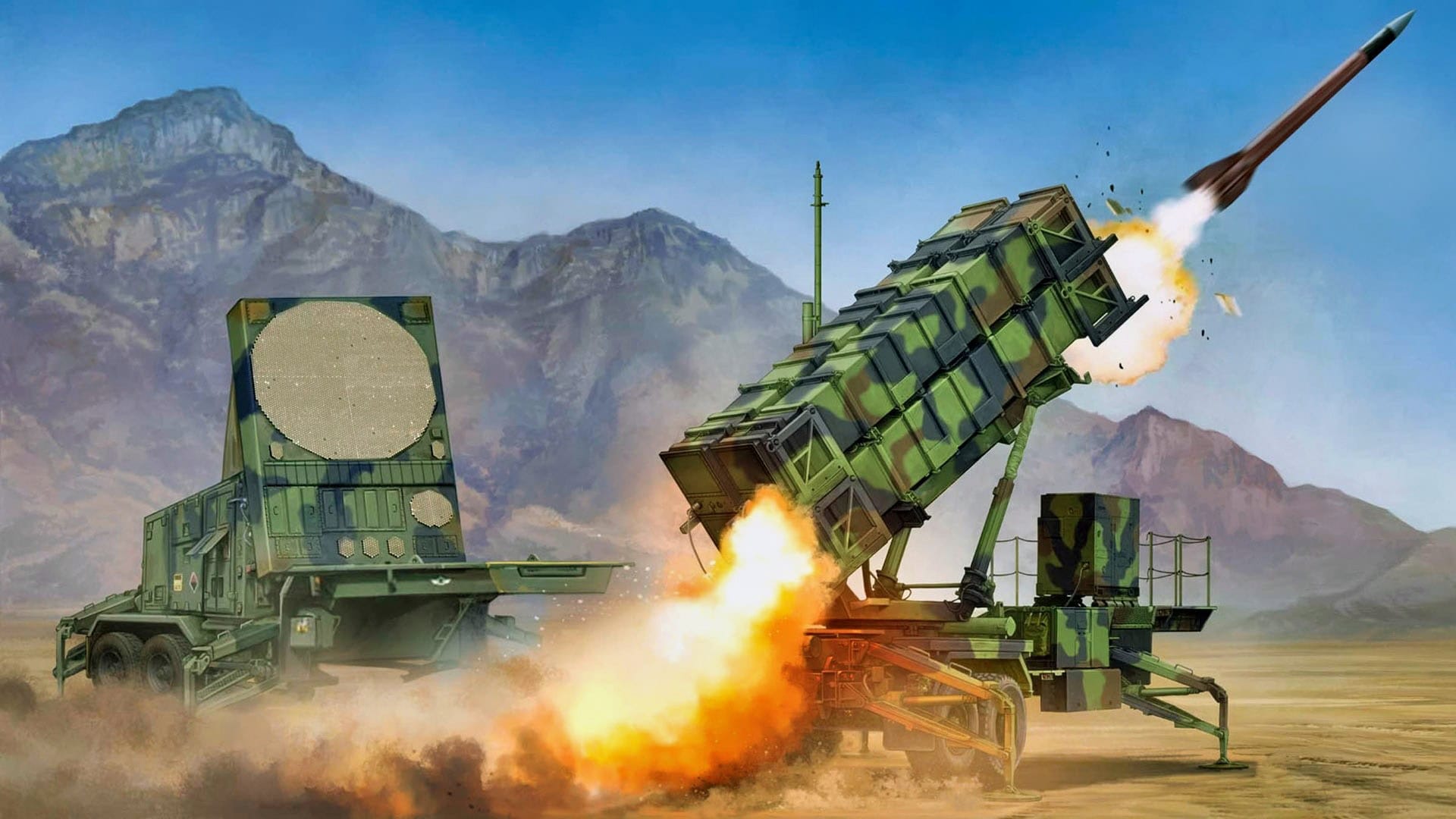
Ukraine’s air-defence requirement is the hardest measure because it cannot be faked with accounting. Kyiv needs Patriot interceptors, PAC-3 class missiles, launchers, spare parts, radar support and integration with other systems such as IRIS-T, NASAMS and SAMP/T. After recent Russian bombardments, Ukrainian officials have again pressed partners to transfer air-defence assets immediately. Reports ahead of Ankara say Ukraine’s defence leadership has approached roughly 40 partner countries about Patriot missiles this month, while the US ambassador to NATO, Matthew Whitaker, has signalled “substantial” announcements for Ukraine at the summit.
The Whitaker remarks are revealing. He emphasised the Prioritised Ukraine Requirements List, or PURL, and said more than $6 billion in US-made systems, including Patriot air-defence missiles and PAC-3 interceptors, had been sold to NATO allies for onward provision to Ukraine. This is the current NATO compromise in one sentence: Europe pays, America supplies, Ukraine receives. It is operationally useful and strategically uncomfortable. For Kyiv, the distinction is secondary if missiles arrive before Russian salvos do. For Europe, the distinction is structural because it exposes how little of the most urgent layer of Ukrainian air defence can be replaced quickly by European production.
Patriot therefore turns the Ankara summit into an execution test. A serious outcome would identify actual transfer routes, financing sources, delivery timing and replenishment contracts for donors. A weak outcome would announce “air defence support” without specifying whether any interceptor stock will move in July, whether the donor will be reimbursed, and whether the United States has cleared the necessary sales and export arrangements. The difference between those two outcomes is not rhetorical. It is measured in destroyed missiles over Kyiv, Odesa and Dnipro.
Europe’s defence pillar still rests on American components
The draft phrase “a stronger Europe in a stronger NATO” is politically elegant. It also contains a contradiction that Weberian institutional analysis cannot ignore. A stronger European pillar is supposed to reduce overdependence on Washington. But the most urgent Ukraine package appears to depend on the United States for precisely the systems Europe lacks: Patriot interceptors, long-range precision stocks, certain intelligence capabilities and parts of the command architecture. European autonomy is being financed through American procurement channels.
This does not make the policy irrational. It may be the only immediate way to protect Ukraine while European production catches up. The institutional danger is different: temporary dependence can become permanent procurement habit. If European governments count PURL purchases of US systems as evidence of European strategic responsibility, they may satisfy NATO burden-sharing language while postponing the industrial decisions needed for autonomy. SAFE loans, national special funds and summit pledges can buy capacity only if they are linked to production lines and common standards. Otherwise they buy political time.
The Defence Industry Forum is therefore the quieter but more consequential half of Ankara. The alliance has spent years learning that defence spending percentages do not equal usable force. The same lesson applies to industrial policy. A forum that aligns demand for air defence, artillery, drones, counter-drone systems and repair capacity would matter. A forum that merely celebrates industry as a “partner” would not. NATO does not need another vocabulary of resilience; it needs signed demand aggregation and predictable procurement horizons.
Türkiye’s host role changes the industrial geography
Ankara is not a neutral backdrop. Türkiye brings three assets that shape the summit: control of Black Sea access under the Montreux framework, a defence industry that has become more export-oriented and operationally visible, and a political habit of transactional alliance management. Turkish drones, naval projects, armoured vehicles and missile programmes give Ankara an industrial voice that is different from the large Western European primes. It is neither a purely EU actor nor an outsider to NATO capability planning.
That matters for the European defence pillar. If “European” is interpreted narrowly as EU-only, Türkiye becomes a complication. If it is interpreted as NATO-Europe plus selected non-EU industrial partners, Türkiye becomes part of the capacity answer. The Black Sea adds urgency. Ukraine’s maritime security, Russian pressure, grain routes, mine warfare and naval drone operations all sit in a theatre where Türkiye’s diplomatic and military position is unavoidable. Ankara can use the summit to present itself not simply as host, but as a bridge between NATO’s eastern war problem and its southern industrial base.
There is also alliance politics. President Trump’s expected attendance and his past ambiguity over Article 5 make the “ironclad commitment” wording valuable, but not sufficient. The draft can reassure markets and governments for a news cycle. It cannot by itself answer whether European allies can finance Ukraine at the promised level, whether Washington will continue releasing scarce systems through PURL, or whether Türkiye will trade its strategic leverage for industrial inclusion. Ankara’s summit diplomacy will therefore be measured by side deals as much as by plenary language.
What remains unconfirmed before opening
Several critical points remain unresolved as of this pre-opening assessment. The final communiqué has not yet been formally adopted by leaders. The exact wording on Russia, Article 5, Ukraine’s role as a provider of European security, and the €70 billion annual pledge could still change. It is also unclear whether the Ukraine pledge will include a transparent burden-sharing formula or merely aggregate national and EU commitments after the fact.
The air-defence package is even less settled. Reports suggest substantial announcements and further PURL-related purchases, but the summit has not yet confirmed quantities, delivery schedules, donor countries, reimbursement mechanisms or US export approvals. The Defence Industry Forum agenda is public, but its contractual output is not. Until those details appear, Ankara should be treated as a summit with a strong draft narrative and an incomplete delivery file.
The paradox is sharp. NATO may enter Ankara with its Article 5 language stronger than skeptics expected and its Ukraine financing number larger than many governments wanted. Yet the alliance’s credibility in 2026 will not be decided by adjectives such as “ironclad.” It will be decided by whether European money can be converted into missiles, factories and repair capacity quickly enough to matter. For Ukraine, the summit’s first question is simple: what arrives next month? For Europe, the harder question follows: why can it still not produce enough of what Ukraine needs most?
NATO leaders are set to meet in Ankara on July 7-8, 2026, to discuss a €70 billion military support pledge for Ukraine. The summit aims to reaffirm commitments to Article 5 and address the urgent need for air-defense systems, including Patriot interceptors. Ukraine's defense leadership has engaged with approximately 40 partner countries regarding air-defense assets.
- NATO leaders are set to pledge €70 billion in military support for Ukraine annually for 2026 and 2027.
- The summit will reaffirm NATO's commitment to Article 5 and address Russia as a long-term threat.
- Ukraine's defense leadership has approached 40 partner countries for air-defense assets, including Patriot missiles.