
NATO Defense Ministers' Council on June 18 Makes Patriot Missiles a Test of European Responsibility
 Dr. Klaus Weber
NATO's Defense Ministers' Meeting on June 18 Makes Patriot Missiles a Test of European Responsibility
By Dr. Klaus Weber, European Defense and NATO Policy
Berlin/Brussels, June 18, 2026
681 Russian airstrike assets in a single night, followed by two Iskander-M and 132 drones: These two numbers explain better than any summit formula why the NATO Defense Ministers' Meeting on June 18 in Brussels is not an ordinary preparatory meeting before the Ankara summit. The Ukrainian air defense reported 70 missiles and 611 drones for the night of June 14 to 15; according to Ukrainian sources, 632 targets were destroyed or suppressed. On the following night from June 15 to 16, another 132 drones and two ballistic missiles were added, with 114 drones intercepted. This is not an episodic escalation. It is an industrial stress test against the West's ability to deliver interceptors faster than Russia produces targets.
Brussels as the Ante-Room of Ankara
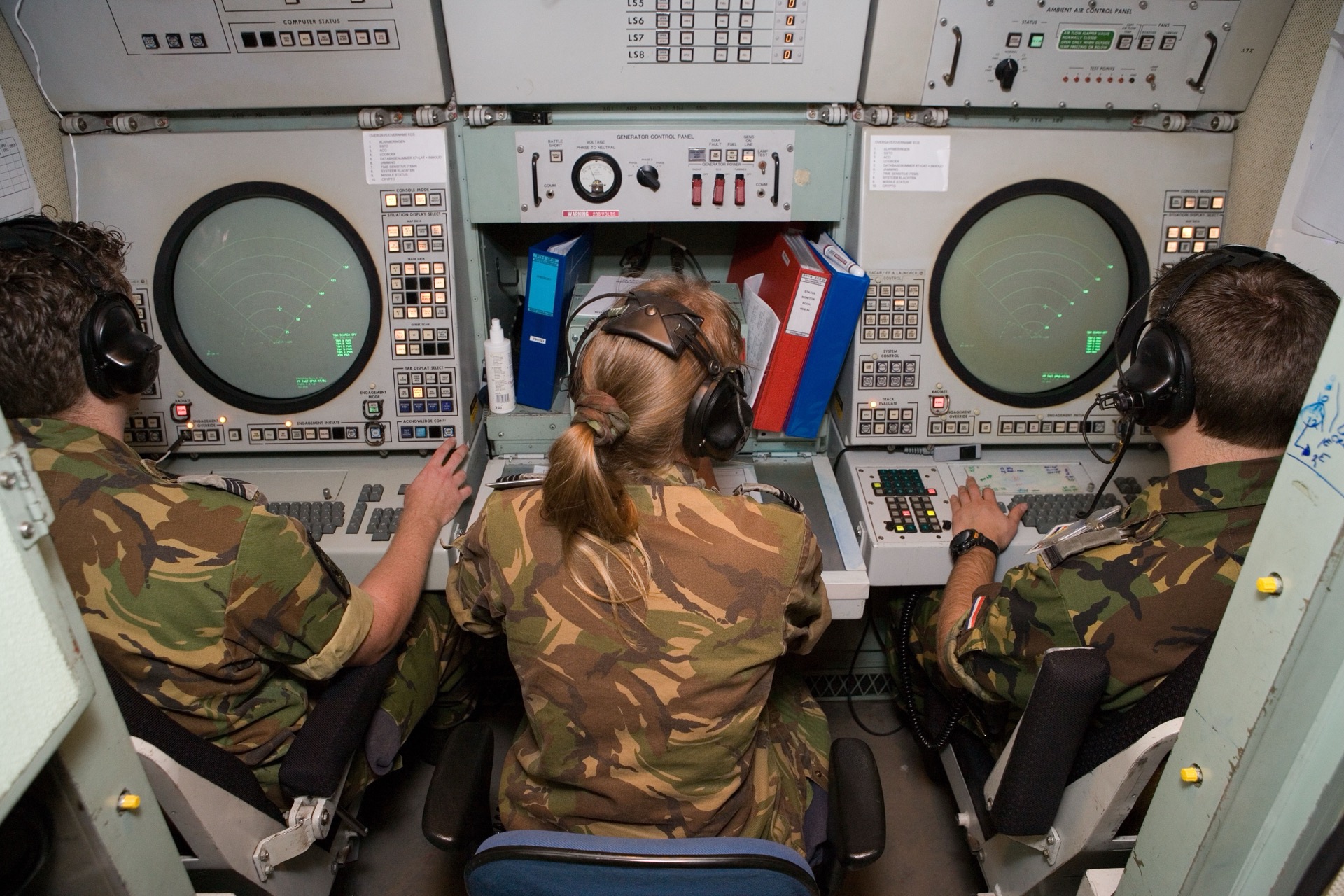
The official NATO agenda appears technical at first glance: in the morning, the Nuclear Planning Group, followed by the North Atlantic Council at the ministerial level, at 3 PM the Ukraine Defence Contact Group, and in the early evening a joint press conference. However, this sequence is politically revealing. The ministers first negotiate nuclear deterrence and alliance planning, then the conventional support for Ukraine. This means that the Ukraine issue is not treated as an external aid case but as part of the deterrence architecture that is to be confirmed by heads of state and government in Ankara on July 7 and 8.
Mark Rutte articulated it unusually succinctly in his pre-press conference on June 17: The Allies must show progress in building a "stronger Europe in a stronger NATO"; more armed forces, more resources, and a significantly stronger industrial base are required. This is not a new idea. What is new is that the formula is now tied to a concrete munitions question. Anyone in Brussels speaking of a European pillar must explain how Europe finances, procures, and eventually produces Patriot, IRIS-T, and other interceptors.
The G7 Made a Promise
The G7 summit in Évian provided the political template on June 17. The heads of state and government declared their intention to increase the delivery of air defense capabilities, additional systems, and interceptors, as well as long-range capabilities. They also indicated that they would make licenses available to Ukraine for expanding its military production. This sounds like an acceleration. In reality, it shifts the problem from the level of announcement to the level of implementation.
European governments have now mastered the rhetoric of production expansion. They talk about joint procurement, the industrial base, readiness, and new credit lines. But interceptors are not press releases. They require explosive supply chains, seekers, solid-fuel motors, certified production lines, and political approvals. For Ukraine, the difference between "promising" and "delivering" is not semantic but physical: Every night it determines whether a power plant, an apartment block, or an airfield will be hit.
The Ukraine Defence Contact Group Becomes More European
The Ukraine Defence Contact Group will be led by Germany and the United Kingdom on June 18. This is institutionally more important than it is perceived in many capitals. Under the Biden administration, Ramstein was essentially an American-led coordination format. Since 2025, it has become more Europeanized, without truly being European autonomous. Germany and the UK can convene meetings, structure packages, and exert pressure on partners. However, they cannot command American Patriot production lines or conjure up European capacities that have not been built up over the years.
This is precisely where the contradiction lies that Ankara cannot cover up. Europe wants to take the political lead in Ukraine support but remains structurally dependent on American technology, American approvals, and American production planning in the most critical category of air defense. This dependence is not morally reprehensible; alliances are based on division of labor. But it becomes dangerous when it is rhetorically sold as European independence.
Industrial Base Instead of Summit Language
The Russian attacks on June 15 and 16 show that Moscow calculates the Western decision time. Russia combines massive Shahed, Gerbera, Italmas, and decoy drones with ballistic missiles to simultaneously burden Ukrainian sensors, air defense teams, and munitions stocks. The Ukrainian interception rate remains impressive, but it creates a paradoxical effect: The more successful the defense is, the faster it consumes the most expensive and scarce components of Western support.
Therefore, the industrial base is not a secondary topic on the NATO agenda but the core. If European states increase their defense investments but the additional funds primarily flow into short-term purchases from existing American stocks, military effect for Ukraine is created, but hardly any European resilience. If they wait too long for European production, Ukraine pays the price in destroyed infrastructure. Brussels must therefore serve two time horizons simultaneously: immediate interceptors for this summer and industrial capacities for 2027, 2028, and beyond.
Ankara Needs a Benchmark
The Ankara summit will likely repeat the familiar language of deterrence, defense spending, and fair burden-sharing. However, it will be crucial whether there is a verifiable benchmark before July 7. How many additional interceptors are actually being financed? Which European states are taking on the financing of which packages? Which license or co-production models are more than mere declarations of intent? And how will it be prevented that national industrial policy slows down the most urgent Ukrainian needs?
Rutte is right when he speaks of a stronger Europe in a stronger NATO. But this formula is only analytically useful if "stronger" is not confused with higher spending. Strength in this case means that Europe identifies bottlenecks, sets priorities, and takes political responsibility where operational dependence is greatest. In air defense, this point has been reached.
The meeting on June 18 is therefore less an administrative act than a preliminary decision on the credibility of Ankara. The G7 have set the direction: more air defense, more interceptors, more Ukrainian production. NATO must now show whether it can turn this into a delivery mechanism. Europe's dilemma remains uncomfortable: It must buy American systems to protect Ukraine immediately while simultaneously building an industrial base that reduces this dependence in the long term. Those who only do the former remain customers. Those who only demand the latter risk Ukrainian cities. European responsibility begins with the ability to not rhetorically resolve this contradiction but to organize it practically.
Sources
- NATO, official program of the Defense Ministers' meeting on June 18, 2026, in Brussels.
- NATO, pre-press conference by Secretary General Mark Rutte on June 17, 2026.
- G7 Évian 2026, statement by the heads of state and government on geopolitical issues from June 17, 2026.
- Ukrainska Pravda citing the Ukrainian Air Force, reports on the Russian attacks from June 15 and 16, 2026.
- NATO, media notice for the Ankara summit on July 7 and 8, 2026.
NATO Defense Ministers convened in Brussels on June 18, 2026, to address air defense capabilities amid escalating Russian attacks, which included 681 air assets in one night. The meeting emphasized the need for European responsibility in military support for Ukraine, with discussions on increasing air defense systems and production capabilities. The G7 also committed to enhancing Ukraine's military production and defense resources.
- NATO Defense Ministers' Council met on June 18, 2026, in Brussels.
- Russia launched 681 air attack assets in one night, including missiles and drones.
- Ukraine intercepted 114 drones and reported the destruction of 632 targets.
- The G7 pledged to increase air defense capabilities for Ukraine.
- European nations are discussing joint procurement and production of air defense systems.