
NATO deploys 2026 additional aircraft to the Black Sea and tests Europe's security promises
 Dr. Klaus Weber
NATO deploys 2026 additional aircraft to the Black Sea and tests Europe's security promises
NATO is responding on October 20, 2026, with additional patrol aircraft and drones to the attacks on merchant ships in the Black Sea. This sounds like a limited surveillance measure. In fact, the decision touches on the core of the European security order: How far does collective defense extend when a war affects civilian shipping without a NATO member being directly attacked?
From the Ukrainian war front to the alliance's flank
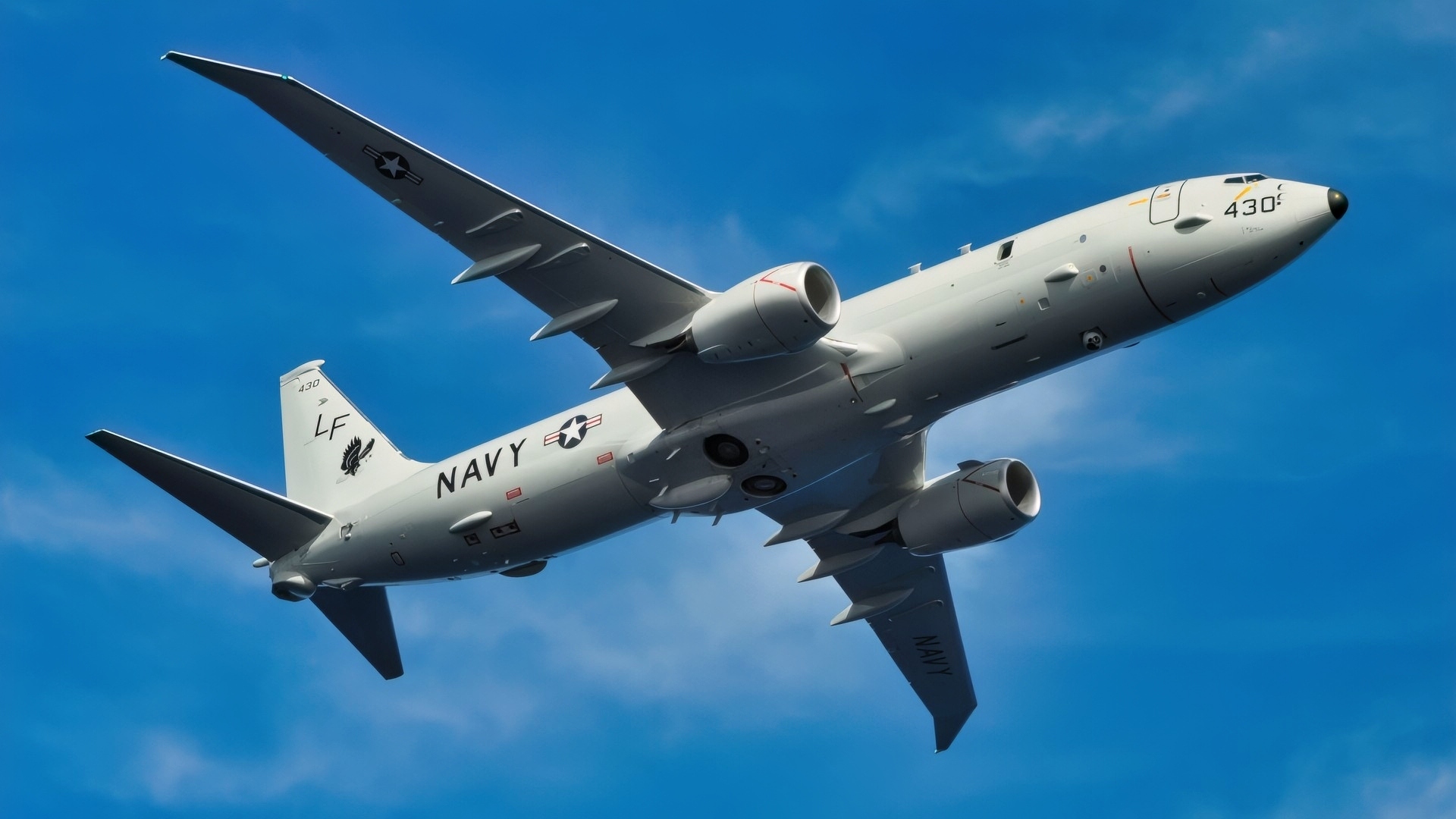
Reuters reported that the alliance plans to deploy additional aircraft and unmanned systems following the recent attacks. Meanwhile, EU foreign policy chief Kaja Kallas stated that the Russian strikes against shipping threaten lives, regional stability, and global food security. Bulgarian authorities also reported the recovery of drone debris after an attack on a ship; another ship sank. Thus, the problem is no longer just the security of Ukrainian ports. It concerns a maritime traffic route that passes near NATO territory, and its disruption directly affects Romania, Bulgaria, and Turkey.
The military logic is initially convincing. Patrol aircraft like the Boeing P-8A Poseidon can monitor large sea areas with radar, electro-optical sensors, and underwater sensors. Drones extend presence and provide data without exposing crews to the same risk. Early detection can warn ships, secure evidence, and improve attribution of attacks. However, it cannot protect a freighter against an incoming swarm of drones. Surveillance is a prerequisite for security, not security itself.
The political gray zone of Article 5
This is where the institutional dilemma lies. An attack on a merchant ship in international or Ukrainian waters does not automatically trigger Article 5 of the North Atlantic Treaty. However, if a ship is hit in Bulgarian or Romanian territorial waters, the political calculus changes. NATO must then decide whether to treat the incident as part of the Ukraine war, as sabotage against the civilian infrastructure of a member state, or as an armed attack.
This ambiguity is strategically useful for Moscow. Russia can increase pressure on Western supplies and Ukrainian sea routes without consciously crossing the threshold into a clear attack on NATO forces. This is not a new tactic, but the geography of the Black Sea makes it particularly dangerous. A single drone attack, a navigation error, or a misunderstood warning can turn a gray area into a crisis for the alliance.
NATO can shorten its reaction time. However, it cannot replace the political decision regarding which red line it wants to defend.
Europe's dependence lies in reconnaissance
The planned reinforcement simultaneously exposes Europe's old dependency. The European NATO states have their own aircraft, coastal radars, and drones. What they lack is a sufficiently dense, permanently networked reconnaissance architecture with satellite access, data fusion, and strategic evaluation. Particularly in the Black Sea, American ISR capabilities remain crucial. A P-8 aircraft is not just a sensor carrier; its value arises only through a network of satellites, communication systems, and situational centers.
This explains why European defense spending does not automatically generate strategic autonomy. States can spend more money on frigates, drones, and ammunition and still remain dependent on Washington for the crucial question: Who sees the attack first, who identifies the perpetrator, and who decides whether a military response is proportional? The NATO measure strengthens deterrence in the short term. However, it does not prove that Europe is reducing its security policy dependence.
The consequence for the EU and NATO
A second conflict arises for the EU. Kallas rightly links the attacks to food security and regional stability. However, Brussels has only limited operational means to protect shipping. NATO can organize reconnaissance and military presence, while the EU manages sanctions, maritime regulation, and economic support. Without shared situational awareness and clear responsibilities, this division of labor remains a bureaucratic construct.
Therefore, the immediate task is not to militarily escort every merchant ship. That would be costly, escalation-prone, and practically unsustainable. What is needed is a coordinated warning system for commercial ships, common rules for drone and debris findings, robust evidence collection, and a political understanding among the coastal states. Above all, NATO must define which attacks on shipping would trigger a collective response. Deterrence does not work through the mere presence of aircraft, but through the credibility of the consequences.
A test case for Europe's security promises
The additional surveillance is therefore sensible, but it is not a breakthrough. It reduces the risk of surprise, not the risk of miscalculation. Europe's security promises will not be measured by how many flight hours NATO aircraft complete in the Black Sea. They will be measured by whether the EU and NATO can turn a recurring pattern of individual incidents into a common political line. More sensors buy time. Only institutions that translate this time into decisions create security.
Sources: Reuters, October 20, 2026; European External Action Service, Statement by the High Representative on the escalation of Russian attacks on shipping in the Black Sea, October 20, 2026; Euronews, Report on Kaja Kallas and the threat to global food security, October 20, 2026; The Maritime Executive, Report on drone debris in Bulgaria and the sunken ship, October 20, 2026.
NATO deployed 2026 additional aircraft and drones to the Black Sea on October 20, 2026, in response to attacks on merchant ships. This action aims to enhance surveillance and deter further threats to maritime security. The situation complicates NATO's collective defense obligations, particularly regarding incidents in Bulgarian or Romanian waters.
- NATO is sending 2026 additional aircraft to the Black Sea.
- The deployment is a response to attacks on merchant ships.
- The situation raises questions about collective defense under NATO's Article 5.
- Bulgarian authorities reported the recovery of drone debris after an attack on a ship.
- The EU is concerned about the implications for regional stability and food security.