
NATO Steadfast Noon 2026 with 17 Nations — F-35 Makes Europe's Nuclear Dependence Visible
 Dr. Klaus Weber
NATO Steadfast Noon 2026 with 17 Nations — F-35s Make Europe's Nuclear Dependence Visible
Berlin, October 10, 2026. Seventeen NATO countries, ten days of exercises, and not a single live warhead — at first glance, Steadfast Noon 2026 appears to be a routine event. The nuclear deterrence exercise begins on October 13 in Italy and ends on October 23. However, this very routine is its political message. In an alliance where Russia has recently threatened the use of nuclear weapons again, deterrence must not only exist but remain visible, predictable, and manageable.
NATO Secretary General Mark Rutte describes the exercise as a contribution to a “safe, secure, effective, and credible” capability. NATO simultaneously emphasizes that Steadfast Noon is not directed against any country and is not related to current events. This is diplomatically necessary. Militarily, however, the crucial fact remains: An alliance is training its nuclear decision-making and deployment chain at a time when Moscow deliberately keeps the threshold between conventional threat and nuclear coercion blurred.
What Steadfast Noon Actually Tests
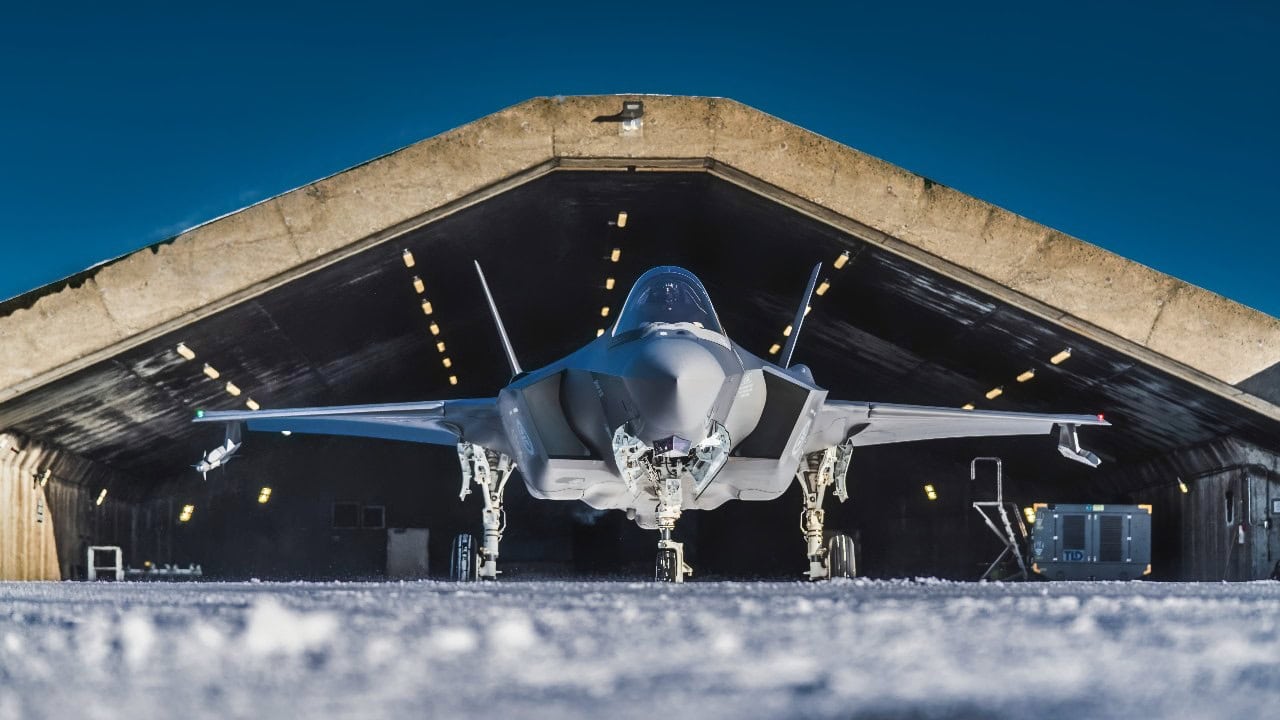
The exercise does not use nuclear weapons and does not publish complete scenarios or the types of aircraft involved. However, from previous iterations, it is known that nuclear-capable fighter jets, bombers, and ground personnel train the procedures. This includes safe handling, communication between national forces and NATO command structures, as well as the ability to deploy aircraft under realistic conditions. The technical core is less spectacular than a rocket launch but strategically more important: Deterrence fails not only due to a lack of weapons but also due to unclear responsibilities, inadequate logistics, and unpracticed procedures.
The choice of Italy as the venue is no coincidence. The Mediterranean connects NATO's southern flank with the European air and sea space. From there, the exercise can be interpreted as a signal to several recipients without explicitly naming a single capital. It shows that the alliance does not limit its nuclear planning to the Baltic Sea region or the immediate Russian border. This corresponds to NATO's broader security picture, in which Russia, instability in the south, and the credibility of the American security guarantee must be considered simultaneously.
The F-35 and the Problem of European Participation
For Europe's defense policy, the crucial contradiction lies not in the exercise itself but in the platform behind it. The F-35A has now become the most modern visible symbol of the nuclear participation of European NATO states. Germany is ordering 35 aircraft, which are to replace the Tornado fleet in Büchel for NATO's nuclear mission starting in 2027. The F-35 enhances reconnaissance, survivability, and integration into allied operational networks. Thus, it is militarily sensible. Politically, however, it also makes clear where sovereignty ends.
Germany is not building its own nuclear-capable fighter aircraft family, does not control the B61-12 integration or the American certification, and initially trains in the United States. Even if a German pilot flies the aircraft, central elements of the capability remain American: software, spare parts chains, maintenance data, approvals, and the nuclear launch decision. This is not a complete European capability but rather a European participation in an American-led architecture.
Here lies the difference between capability and capacity. Europe can achieve more with F-35s than with Tornados. However, this does not automatically grant it more strategic freedom of action. A system can be technically more capable and politically more dependent at the same time. Those who confuse these two levels mistake modernization for autonomy.
Russian Rhetoric and the Limits of the Signal
The temporal proximity to Russia's warnings about Kaliningrad and a possible attempt to isolate the exclave increases political attention. NATO states that it does not observe any concerning changes in Russian nuclear forces. This distinction is important: An aggressive statement is not yet a change in readiness. Nevertheless, the alliance must not underestimate the impact of such threats. Moscow is testing not only military reactions with nuclear rhetoric but also the political resilience of European societies.
Steadfast Noon responds to this challenge with predictability. The exercise has been taking place at roughly the same time of year for more than a decade, is announced, and does not involve live weapons. This reduces the risk of unintended escalation. At the same time, it would be naive to derive ineffectiveness from this. A predictable signal can be more credible than an improvised show of force. Deterrence relies on the combination of capability, political will, and controlled communication.
What Europe Must Learn from the Routine
The exercise initially demonstrates a strength of Europe: Seventeen states can integrate their procedures into a common NATO structure. However, it also shows the structural weakness. The European allies have different aircraft fleets, national approval processes, and unequal investments in air defense, tankers, satellite communication, and secure command systems. The F-35 standardizes part of this gap but does not replace a common European nuclear strategy, let alone the American reassurance.
France possesses its own nuclear dimension with the M51.3 and its national Force de frappe but is not involved in NATO's nuclear planning group. The United Kingdom remains closely nuclear with the USA. Germany, on the other hand, participates in nuclear sharing without having the bomb or certification itself. These three models cannot be easily combined into a European deterrent. Therefore, Europe does not have a purely weapons problem but a constitutional problem of its security policy: Who decides, who bears the risk, and who controls escalation?
Steadfast Noon will not solve these questions. It is not its task. The exercise can test procedures, demonstrate alliance solidarity, and take away the prospect of political division from Russian coercion. However, it cannot transform an American-led nuclear architecture into European autonomy. The F-35 increases Europe's military capability; it simultaneously reveals how far Europe remains from its own strategic control. This is the paradox of nuclear participation in 2026: The better Europe can serve the American capability, the more convincing the alliance appears — and the more visible Europe's dependence becomes.
Sources
NATO is conducting the Steadfast Noon 2026 nuclear deterrence exercise in Italy from October 13 to 23, involving 17 member nations. The exercise aims to enhance nuclear decision-making and operational capabilities without deploying live warheads, amidst rising tensions with Russia. The F-35A aircraft plays a crucial role in demonstrating European participation in nuclear sharing, highlighting the continent's reliance on U.S. capabilities.
- NATO Steadfast Noon 2026 involves 17 nations and runs from October 13-23, 2026.
- The exercise focuses on nuclear deterrence without using live warheads.
- The F-35A is highlighted as a key component of European nuclear sharing.
- The exercise is politically significant amid Russian nuclear threats.
- NATO emphasizes that the exercise is not directed against any specific country.