
NATO's 11-Nation Starlift Plan Exposes Europe's Space Weakness
 Alexandra Reeves
NATO's 11-Nation Starlift Plan Exposes Europe's Space Weakness
NATO is building a launch service because it has finally accepted an uncomfortable fact: an alliance that cannot reliably replace a satellite cannot reliably fight a modern war. The new Starlift programme brings together 10 NATO members and South Korea to secure access to commercial rockets and spaceports. It is a sensible move. It is also an admission that allied space resilience still depends on a market NATO does not control.
The programme is about access, not a new rocket
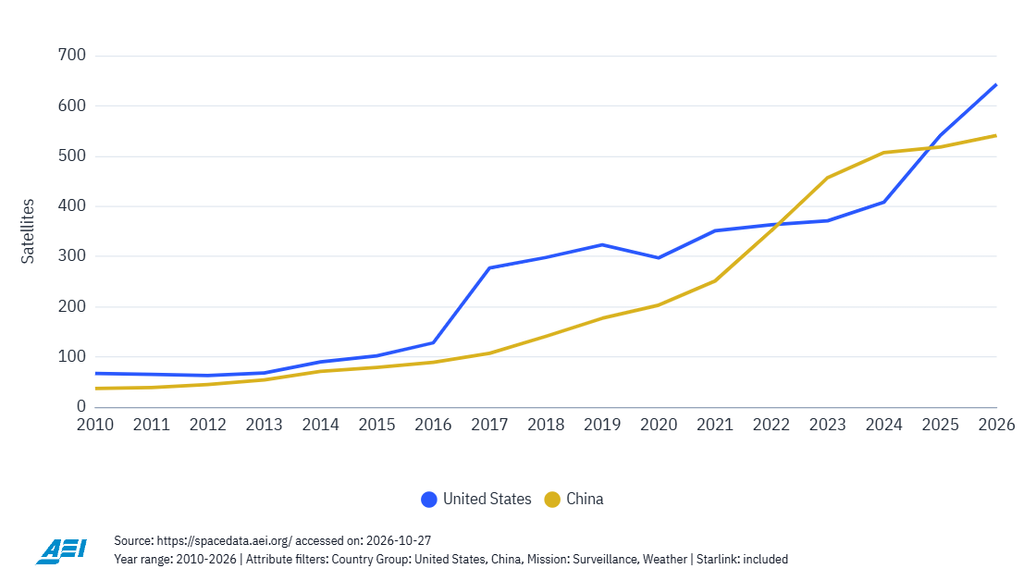
According to NATO's announcement, Belgium, Canada, Finland, Germany, Italy, the Netherlands, Norway, Sweden, Türkiye and the United Kingdom are funding Starlift through the NATO Support and Procurement Agency. South Korea is participating as well. The project was first announced in 2024 and is designed to help participating governments work with commercial launch providers, reserve launch slots and use several spaceports across allied territory and South Korea.
That distinction matters. Starlift is not a NATO-owned launcher, a new military satellite constellation or a promise that every member will receive an independent launch on demand. It is a framework for purchasing launch services and testing more responsive space operations. The practical specifications are therefore organisational rather than aerodynamic: multiple commercial providers, multiple launch sites, pre-arranged access to rockets and an operating forum for urgent missions.
Breaking Defense reported that the programme is now moving from concept to implementation. The same report noted that NATO did not disclose the total cost or the contributions of individual participants. Aviation Week has also identified Norway's Andøya Spaceport and the UK's Spaceport Cornwall among the European sites relevant to the alliance's launch ambitions. Those locations matter because geography is now part of satellite survivability. A single launch site is a single point of failure.
Why replacement speed is becoming a military requirement
For decades, military space planning assumed that satellites would be expensive, long-lived and protected mainly by secrecy. That model is breaking. Russia's war in Ukraine has shown how quickly communications, navigation, imagery and targeting can shape battlefield decisions. It has also shown that commercial systems can become operationally important almost overnight.
A satellite does not need to be physically destroyed to become a liability. Jamming, cyber intrusion, dazzling, orbital interference and attacks on ground stations can degrade a constellation without producing a dramatic launch plume. If a commander knows that replacing a lost spacecraft will take years, the adversary has already gained leverage. If the commander knows that a replacement payload can be launched within weeks or months, the attack becomes less attractive.
Starlift addresses only one part of that problem, but it addresses a neglected one. Launch resilience creates the possibility of replenishment. It does not automatically provide the satellite, the sensor, the secure data link, the ground terminal or the trained operators needed to turn a payload into military power. NATO is creating a door to space. It still needs the house behind it.
The missing Americans and French are the real story
The most revealing detail is who was absent. France, Hungary, Luxembourg and the United States were original participants in the 2024 initiative but were not listed in the latest announcement. NATO did not explain the change.
Washington's absence is especially striking. The United States remains the alliance's dominant military space power and the largest customer for commercial launch services. Its exclusion could reflect a decision to keep national launch arrangements separate, a disagreement over programme governance or a simple change in priorities. Whatever the reason, the result is politically awkward: NATO is advertising space resilience while its most capable space member sits outside the new arrangement.
France's absence raises a different question. Paris has its own launch industry, strategic autonomy ambitions and access to Europe's principal space infrastructure. France may see a NATO purchasing mechanism as too limited, too American or insufficiently connected to European control over satellites and data. If so, Starlift could improve operational access while deepening Europe's institutional fragmentation.
That is the alliance problem in miniature. NATO can coordinate a threat faster than it can coordinate procurement. Members agree that space matters, then preserve separate industrial policies, launch preferences and security rules. The result is not useless. It is simply slower and less coherent than the threat.
Starlift will be judged by the first crisis
The programme's value will not be measured by the number of participating flags or the number of commercial rockets listed in a catalogue. It will be measured when an allied satellite is jammed or lost and a government asks for a replacement mission.
Can Starlift identify an available rocket, move a payload through security approval, reach a launch site and integrate it into the allied network quickly enough to matter? Can the participating states share the data without spending months negotiating classification rules? Can a commercial provider keep serving NATO when Russia or China threatens its ground infrastructure? These are operational questions, not branding questions.
The alliance should also avoid treating commercial access as a substitute for sovereign capability. Private launch companies add capacity and speed, but they operate under national law and market pressure. A war will test whether commercial resilience survives political coercion, export controls and attacks on infrastructure. NATO needs backup launch sites, stockpiled components and common standards before it needs a press release.
Europe is buying time, not yet gaining independence
Starlift is a useful step because it turns space access into a shared military logistics problem. But the programme also exposes Europe's weakness. The alliance is still trying to make a commercial ecosystem compensate for decades of fragmented national planning, while the United States and France appear unwilling to join the latest arrangement.
The next test is simple. NATO should publish a clear target for replacement timelines, identify which payloads can be launched under the framework and explain how the programme connects to missile warning, secure communications and intelligence. Without those details, Starlift risks becoming another catalogue of good intentions.
Space power is no longer about who owns the biggest satellite. It is about who can keep a network alive after the first attack. NATO has started buying access to the launchpad. The uncomfortable question is whether Europe has built enough of the rest of the system to use it.
Sources
- NATO, announcement on the multinational Starlift space initiative and participating nations.
- Breaking Defense, NATO kicks off 11-nation Starlift satellite launch program.
- Aviation Week reporting on South Korea's launch-site plans and European spaceport capacity.
NATO is implementing the Starlift programme, involving 10 member nations and South Korea, to enhance access to commercial rockets and spaceports. The initiative aims to improve satellite replacement speed and operational access amid concerns over space resilience. Notably, France and the United States, key players in military space, are absent from the latest announcement, raising questions about the program's governance and effectiveness.
- NATO's Starlift programme involves 10 member nations and South Korea to enhance space access.
- The programme is designed to work with commercial launch providers and reserve launch slots.
- France, Hungary, Luxembourg, and the United States were originally part of the initiative but are now absent.
- The programme aims to improve satellite replacement speed and operational access.
- NATO's space resilience is still dependent on commercial systems.