
NATO's 16 Counter-Drone Systems Expose Europe's Procurement Problem
 Alexandra Reeves
NATO's 16 Counter-Drone Systems Expose Europe's Procurement Problem
NATO has finally found a way to buy counter-drone technology at something closer to battlefield speed. That is the good news. The bad news is that the alliance needed a war in Ukraine, repeated airspace scares on its eastern flank, and years of warnings before it treated cheap unmanned aircraft as a procurement emergency.
The marketplace is a practical step
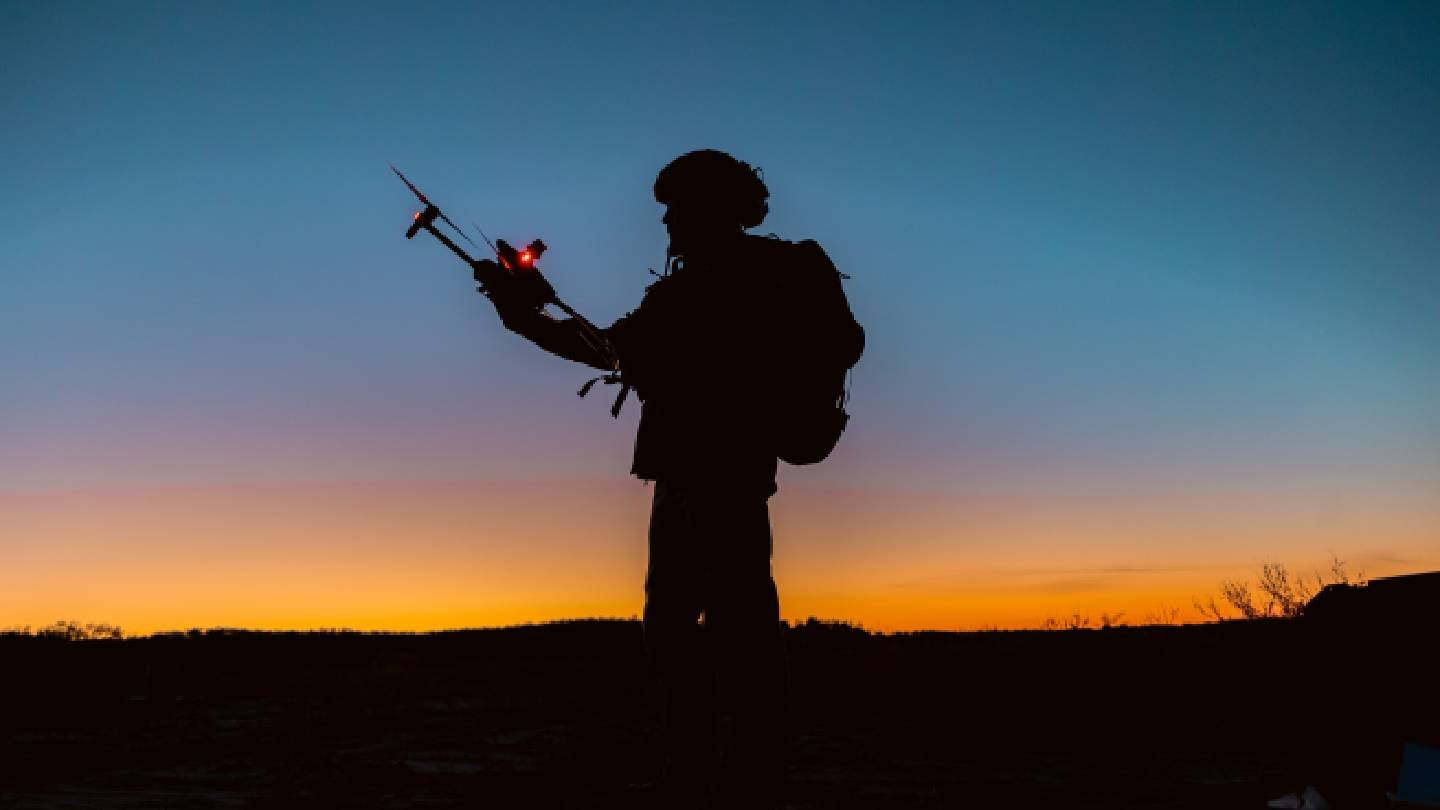
On 5 November, NATO launched a Counter-Unmanned Aircraft Systems marketplace under its Drone Edge initiative. According to NATO, the NATO Communications and Information Agency selected 16 solutions from five companies: Alta Ares, Axon Enterprise, Northrop Grumman, OSL UK, and Quantum Systems.
The important detail is not the number 16. It is the buying mechanism. Allies can select systems from a NATO catalogue without opening a new tender for every urgent requirement. The framework lasts 18 months, with regular competitions intended to keep newer technologies moving into the catalogue. NATO has also allocated €3.1 million for additional testing by national forces or NATO commands.
The chosen capabilities cover static, transportable, and on-the-move systems. NATO says they have already been deployed by Allied countries and in Ukraine. That gives the programme something European defence procurement usually lacks: a link to operational experience rather than a glossy demonstration at an arms show.
Why the technical problem is harder than buying 16 products
Counter-drone defence is not one weapon category. It is a layered fight involving detection, identification, tracking, electronic warfare, cyber effects, guns, interceptors, and command-and-control software. A system that can defeat a slow commercial quadcopter may be useless against a fast jet-powered drone. A jammer can be highly effective in one electromagnetic environment and nearly irrelevant in another.
- Detection: radar, electro-optical sensors, acoustic tools, or networked data must find a small and low-flying target.
- Classification: operators must distinguish a hostile drone from friendly aircraft, civilian traffic, or a decoy.
- Defeat: electronic attack is often cheaper, but kinetic interceptors remain necessary when jamming fails or the target is autonomous.
- Integration: the system has to pass a track and engagement decision across national and NATO command networks quickly enough to matter.
That last layer is where the marketplace will be judged. NATO can catalogue 16 systems, but it cannot catalogue away national data restrictions, incompatible software, or commanders who cannot see the same air picture. A shopping list is not an air-defence architecture.
Ukraine has already exposed the cost curve
Ukraine’s battlefield has made the economics brutal. Russia and Ukraine can launch large numbers of relatively inexpensive drones, while defenders often answer with missiles or high-end aircraft. Even when a missile kill is tactically successful, the exchange can be strategically absurd. The defender may spend tens or hundreds of thousands of dollars to defeat a target assembled for a fraction of that cost.
Recent reporting by the BBC on repeated restrictions affecting Ukraine’s Starshield military connectivity also shows that the problem is broader than airframes. Ukraine’s ability to intercept Russian jet-powered drones depends on communications, targeting data, and resilient networks as much as on the interceptor itself. The lesson for NATO is uncomfortable: a counter-drone system that cannot keep functioning through jamming, satellite outages, or network attack is not a system. It is a demonstration.
This is why NATO’s decision to use operationally tested solutions matters. It does not prove that the selected systems are equally effective, and NATO has not published a universal range, altitude, probability-of-kill, or cost figure for the 16 solutions. Those details will determine whether the programme changes force planning or merely accelerates procurement paperwork.
The alliance still has a quantity problem
NATO says Allies have committed to investing more than $40 billion in counter-drone capabilities and training over the next five years. That sounds large until it is measured against the size of the airspace, the number of bases, ammunition depots, ports, and logistics hubs that require protection. Static sites need one kind of coverage; mobile forces need another. A national system that protects a capital city may not survive beside an armoured brigade.
There is also a political risk. The five selected companies will gain a valuable route into Allied markets, but the marketplace could become another mechanism that rewards a small circle of established suppliers. Ukraine’s experience points in the opposite direction: rapid iteration, cheap expendable systems, and constant adaptation by small teams. NATO should use the 18-month framework to rotate suppliers aggressively, publish realistic test results, and make interoperability a condition of entry rather than a promise for later.
What to watch next
The first test is whether a NATO command or member state places meaningful orders quickly, not whether officials announce another initiative. The second is whether the catalogue includes enough low-cost defeat options to prevent a missile-heavy response to mass drone raids. The third is whether systems from different vendors can share tracks and hand off engagements under jamming.
NATO’s marketplace is a sensible correction to a slow procurement culture. It is not yet proof that Europe has solved the drone problem. The alliance has built a faster checkout lane; now it has to buy enough technology, train enough crews, and accept enough failure to keep up with an enemy that can redesign its weapon every few weeks. If NATO treats 16 systems as the destination, it will lose. They are only the starting line.
Sources
- NATO, “NATO accelerates procurement for counter-drone technologies,” 5 November 2026.
- BBC, “Ukraine says military Starlink disrupted again as US envoys meet Putin in Moscow,” 12 November 2026.
- Reuters via Defense News, reporting on the expanding Baltic airspace and drone-security problem, 12 November 2026.
NATO launched a Counter-Unmanned Aircraft Systems marketplace on 5 November 2026, selecting 16 counter-drone solutions from five companies to enhance procurement speed. The initiative aims to address the urgent need for effective counter-drone technology, particularly in light of operational experiences in Ukraine. NATO has allocated €3.1 million for further testing and aims to streamline the procurement process for its member states.
- NATO launched a Counter-Unmanned Aircraft Systems marketplace on 5 November 2026.
- 16 solutions were selected from five companies for counter-drone technology.
- NATO allocated €3.1 million for additional testing by national forces or NATO commands.
- The marketplace allows allies to select systems without opening new tenders for urgent requirements.
- NATO aims to improve procurement speed for counter-drone capabilities.