
NATO's EUR27 Billion Fuel Bet Exposes Europe's Hardest War Problem
 Alexandra Reeves
NATO's EUR27 Billion Fuel Bet Exposes Europe's Hardest War Problem
Everyone likes to talk about tanks, missiles and air defence batteries. Fuel is less glamorous, which is exactly why it matters. According to Politico Europe, NATO has now sealed a EUR27 billion overhaul of its Cold War-era fuel network, a decision that says more about the alliance's real war planning than another communique about readiness ever could.
The short version is simple. NATO is admitting that deterrence is not just about buying more weapons. It is about whether those weapons can move, fly, refuel and keep fighting once the first week of a Russian crisis has burned through the easy assumptions. That is the part of European defence that has been neglected for years because it sits underground, in depots, ports, railheads and maintenance budgets. It is also the part Moscow would try to break first.
The Pipeline Is the Strategy
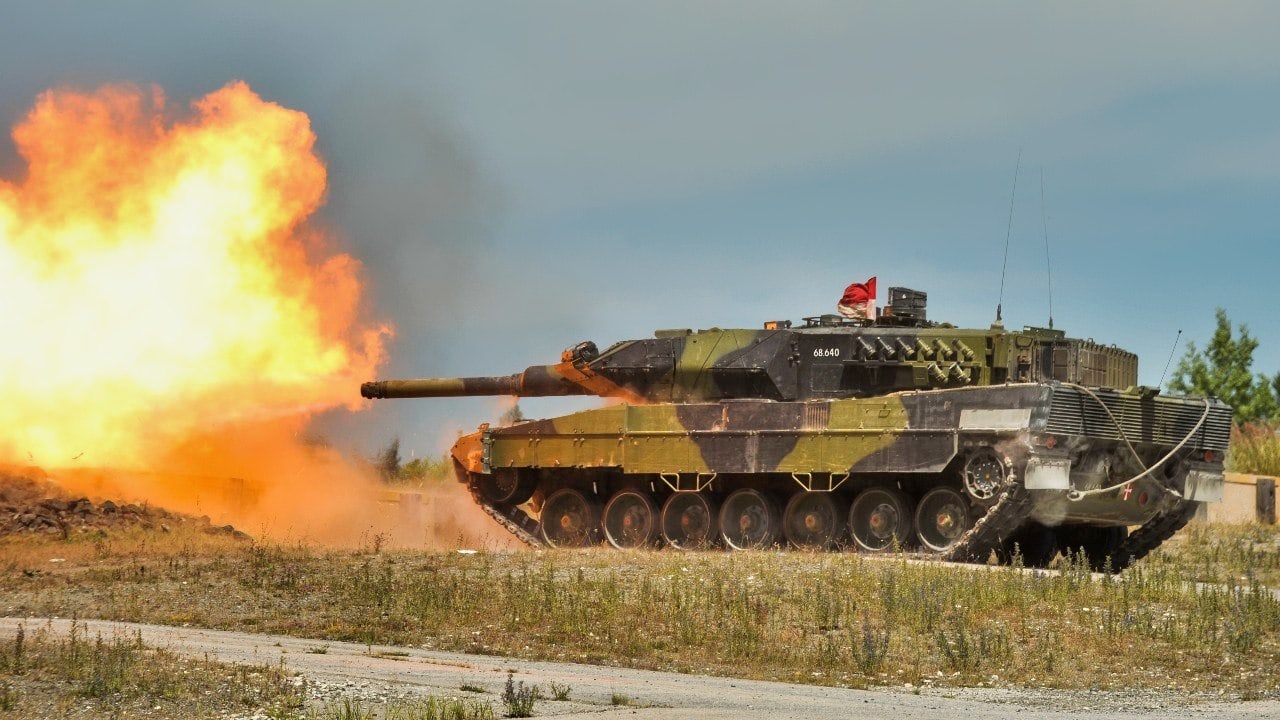
NATO's official description of the Central Europe Pipeline System, or CEPS, calls it the alliance's largest petroleum pipeline system. It crosses Belgium, France, Germany, Luxembourg and the Netherlands, and it was built to move fuel in peace, crisis and conflict. That last phrase is doing a lot of work.
The public NATO data is worth spelling out because it explains why the reported EUR27 billion figure is not bureaucratic clutter. CEPS includes about 5,300 kilometres of pipeline, with pipe diameters ranging from 6 to 12 inches. It connects 29 NATO depots and six non-military depots, with a total storage capacity of roughly 1.2 million cubic metres. It links military and civil airfields, refineries, civil depots and seaports. It can move jet fuel, gasoline, diesel and naphtha.
That means CEPS is not just a fuel system. It is a mobility system. It determines how quickly aircraft can generate sorties, how far armoured units can move without creating road convoys of tankers, and how much punishment the rear area can absorb before frontline units start rationing movement. In a high-end European war, fuel shortages would not look like empty petrol stations. They would look like aircraft waiting on ramps and brigades unable to exploit a gap.
Why EUR27 Billion Now
The timing is the point. Russia's war against Ukraine has made ammunition shortages visible. It has also made logistics attrition unavoidable. Ukraine has survived in part because it dispersed, improvised and accepted inefficiency as the price of resilience. NATO does not have the same luxury if it is trying to reinforce the eastern flank at speed while keeping civilian economies functioning.
Politico's report describes the overhaul as a modernization of a Cold War-era network. That is not a minor maintenance job. It is an implicit answer to a very uncomfortable question: can NATO still fight across the geography it claims to defend? For years, European defence debates treated mobility as a regulatory problem, mostly about bridges, rail gauges, customs paperwork and permits. Those issues still matter. But fuel is more basic. A brigade that cannot be refuelled is just an expensive traffic jam.
The alliance's old fuel infrastructure was designed for a different Europe. The Cold War map was divided, predictable and centred on a relatively fixed inner-German front. Today's problem is wider and messier. NATO now has to think about the Baltic states, Poland, Romania, the Black Sea, the High North and the possibility of simultaneous pressure on several axes. Moving fuel from western European ports and depots to eastern operating areas is no longer a rear-area chore. It is the campaign.
The Vulnerability Moscow Understands
Russia does not need to defeat every NATO battalion if it can slow reinforcement and create political panic. Fuel nodes, storage depots, rail junctions and pipeline control systems are attractive targets precisely because they are boring. They sit below the level of daily politics until they fail. Then they become the only thing anyone talks about.
Ukraine has shown both sides of this lesson. Russian long-range strikes repeatedly targeted energy infrastructure because they understood the link between civilian power, military logistics and political endurance. Ukraine, in turn, has used drones and missiles against Russian oil facilities, ammunition depots and transport infrastructure to impose friction on Moscow's war machine. Neither side needed a lecture on operational art. They simply found the arteries.
That should worry NATO planners. CEPS and related infrastructure must be upgraded not only for capacity, but for survivability. More throughput is useful. Redundant routes, hardened depots, cyber protection, dispersed storage and rapid repair teams are better. A pipeline network that can move vast quantities of fuel in peacetime but cannot tolerate sabotage, cyber intrusion or missile pressure is not a warfighting asset. It is a target list.
Europe's Real Readiness Test
The mainstream assumption is that NATO's readiness problem is mainly about defence spending targets. That is too neat. Money matters, of course, and EUR27 billion is not pocket change. But spending only counts if it buys usable military output. A new fighter squadron that lacks fuel distribution, protected bases and spare parts is a political announcement with wings.
This is where the fuel network becomes a useful honesty test. It forces Europe to confront the dull, expensive, unphotogenic work of war preparation. Pipelines need permits. Depots need security. Civil airports may have to serve military demand. Host nations have to accept that infrastructure built for civilian efficiency must also support alliance defence. None of that fits neatly into a summit slogan.
There is also an alliance politics angle. The CEPS countries sit mostly in Western Europe, while the most exposed NATO territory is farther east. That creates a familiar burden-sharing problem in a new form. Western European infrastructure must enable eastern defence. Eastern allies will notice if it does not. In a crisis, the question will not be whether Brussels issued the right statement. It will be whether fuel reaches Poland, the Baltics and forward airfields fast enough to matter.
What to Watch Next
The key finding is straightforward: NATO is finally putting serious money into the logistics layer that makes deterrence real. The reported EUR27 billion overhaul matters because it treats fuel as combat power, not background plumbing. NATO's own CEPS data shows why the system is central to aircraft, ground vehicles, depots, refineries, seaports and civil airports across Europe.
The next indicators are less flashy than a weapons delivery but more revealing. Watch whether the overhaul expands eastward connectivity, hardens storage sites, improves cyber resilience and integrates fuel planning with NATO's new regional defence plans. Also watch whether national politics slows construction, because pipelines and depots create local resistance long before they create strategic resilience.
The uncomfortable judgment is this: NATO has spent years telling Russia it can defend every inch of allied territory. Now it is paying to prove that those inches can actually be reached, supplied and held. Deterrence begins with credibility. Credibility begins with fuel.
NATO is investing EUR27 billion to modernize its fuel infrastructure across Belgium, France, Germany, Luxembourg, and the Netherlands. This overhaul of the Central Europe Pipeline System (CEPS) aims to enhance logistics and mobility, ensuring that NATO can effectively respond to potential conflicts. The modernization addresses vulnerabilities in fuel supply chains, which are essential for operational readiness and deterrence against threats.
- NATO is investing EUR27 billion to modernize its fuel network.
- The Central Europe Pipeline System (CEPS) is the largest petroleum pipeline system in NATO.
- CEPS connects 29 NATO depots and has a storage capacity of approximately 1.2 million cubic meters.
- The modernization aims to improve NATO's logistics and mobility in response to potential conflicts.
- Fuel logistics are critical for NATO's operational readiness and deterrence capabilities.