
NATO's New Russia Plan Needs More Than a Counterattack
 Alexandra Reeves
NATO's New Russia Plan Needs More Than a Counterattack
Deterrence is easy to announce and hard to stock. NATO's top military commander, U.S. Air Force General Alexus Grynkewich, used a Warsaw appearance on October 12 to warn Moscow that an attack on the alliance would be “utterly futile.” He also laid out a strategy for defeating that attack and counterattacking. The message is blunt. The military problem behind it is not.
Grynkewich's intervention matters because it moves the argument from whether NATO would respond to how quickly and coherently it could do so. Reuters reported the warning, while the Wall Street Journal described the presentation as a plan to thwart a Russian attack on the alliance. That is a different conversation from the familiar reassurance that NATO has a treaty. Article 5 is a political commitment; it is not a ready-made ammunition convoy, air-defence network, or brigade headquarters.
The Plan Is About Speed, Not Slogans
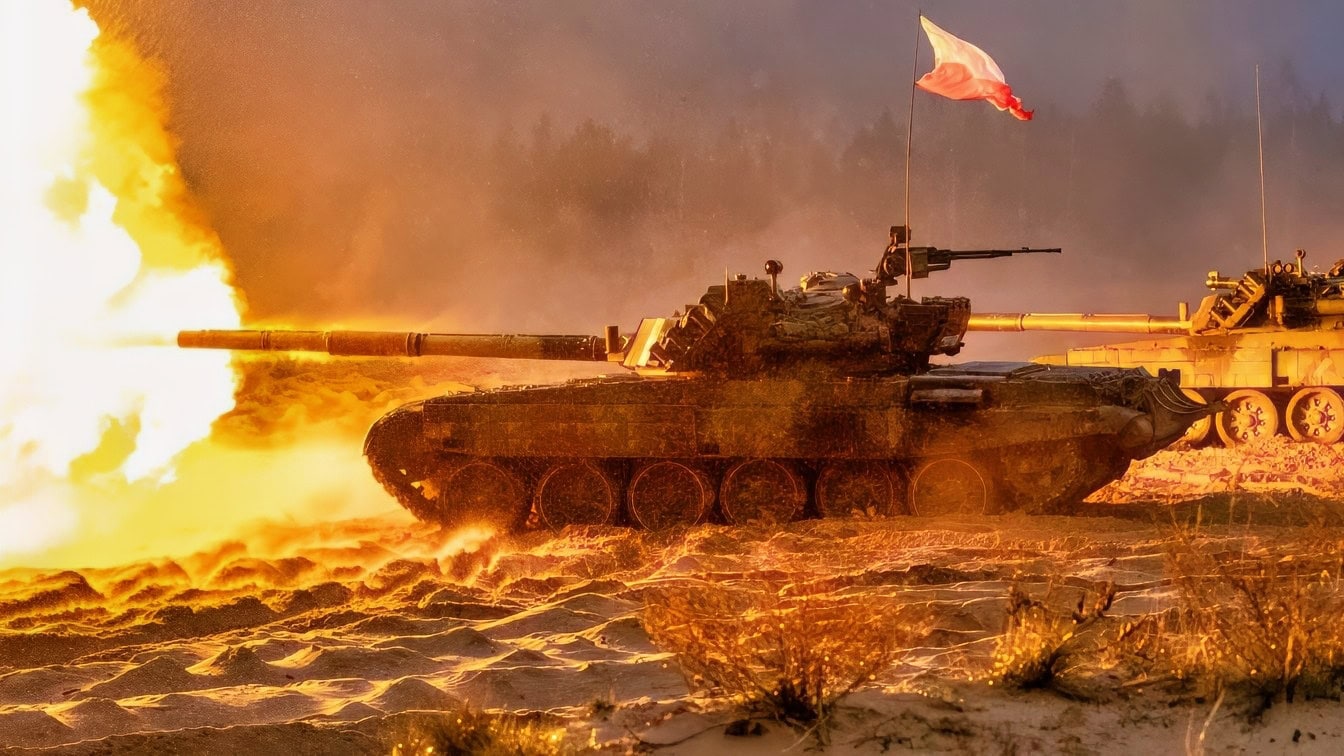
The useful part of Grynkewich's message is its implied sequence. NATO would have to detect a Russian move, keep its forward forces alive, reinforce the threatened sector, and impose costs on Russian formations and command nodes before a limited attack became a political fait accompli. Every step compresses decision time. A plan that assumes a week of orderly consultations is not a plan; it is an invitation to test the alliance.
The equipment list is familiar, but the requirement is not. NATO needs layered air and missile defence, counter-drone systems, long-range fires, protected logistics, electronic warfare, and combat aviation that can operate under jamming. Patriot batteries can defend high-value areas, but they cannot cover every railhead and brigade. Tanks and infantry fighting vehicles can retake ground, but only if fuel, spare parts, engineers, bridges, and air cover arrive with them. The lesson from Ukraine is brutally simple: a platform without a survivable support system is an expensive target.
Russia Does Not Need a Grand Invasion
The central analytical mistake in much Western planning is to picture a Russian attack as a cinematic march across Europe. Moscow would have cheaper options. A limited incursion, a sabotage campaign, a drone and missile barrage, or a manufactured border crisis could be designed to split the alliance before NATO's heavier forces were in position.
That concern is not speculative. The Financial Times reported on October 12 that Poland's officials were urging NATO to prepare for a potentially deadly Russian hybrid attack. Reuters separately reported that the Czech intelligence chief warned Russia could resort to riskier operations in NATO states. Those warnings point to the same vulnerability: ambiguity can be militarily useful to Russia and politically poisonous to NATO.
Hybrid warfare is not a substitute for conventional power. It is the opening move that makes conventional power harder to use. If an undersea cable is cut, a military base is disrupted, or a wave of unmanned aircraft crosses a border, governments first debate attribution, thresholds, and proportionality. Russia gains time while the alliance debates vocabulary.
Ukraine Is the Missing Part of NATO's Deterrence
Grynkewich has repeatedly treated Ukraine as a source of operational lessons, and that is sensible. Ukrainian forces have spent years learning how to disperse command posts, combine drones with artillery, survive electronic warfare, and turn commercial technology into battlefield mass. NATO can buy exquisite systems, but it cannot buy experience off the shelf.
That creates an uncomfortable contradiction. The alliance wants Ukrainian lessons while European governments remain cautious about the level of support that would let Ukraine keep generating them. NATO sources told Ukrainian media on October 12 that U.S. weapons supplies to Ukraine through the PURL mechanism were continuing. That is useful, but continued deliveries are not the same as a long-term industrial plan.
Nor should Ukraine be treated as a laboratory whose lessons can be imported without its participation. The most valuable knowledge is held by units that have adapted under fire. Training exchanges, maintenance cooperation, and systematic data sharing would give NATO more than another conference declaration. They would also make clear to Moscow that Ukraine's defence is part of European defence, not a separate crisis that can be placed on a shelf.
The Political Test Comes Before the Military One
Grynkewich's “futile” warning is designed to deter, but deterrence depends on credibility at three levels. Russia must believe NATO can fight. European publics must believe their governments will sustain the fight. And every ally must believe Washington will not redefine the emergency after the first missile lands.
That last point is the awkward one. NATO's military chiefs can produce plans; governments must fund readiness and accept risk. The alliance still faces uneven stockpiles, uneven air defence, and different national rules for using force. A counterattack also raises escalation questions. Striking launch sites or command nodes may be militarily necessary, but the alliance will need agreed authorities before a crisis, not improvised legal arguments during it.
There is a temptation to measure this development by the force of Grynkewich's language. That would miss the point. The test is whether NATO can turn a Warsaw briefing into pre-positioned munitions, redundant communications, protected bases, and exercises that rehearse the first 72 hours of a war. The alliance has spent years discussing resilience. Russia will judge it by recovery time.
What to Watch Next
Three indicators will show whether this is a real strategic shift. First, watch for new commitments to air defence and counter-drone coverage on the eastern flank, not just headline purchases. Second, watch whether NATO's next major exercises test contested logistics and political decision-making at the same time. Third, watch the treatment of Ukraine in the alliance's planning documents. If Kyiv is described only as a partner, NATO is leaving operational knowledge outside the room. If Ukraine is integrated into the defence problem, the alliance is finally admitting where the modern war is being learned.
The headline from Warsaw is that Russia would lose a war with NATO. The harder truth is that Moscow does not need to win a conventional war to damage the alliance. It only needs to make NATO hesitate at the wrong moment. Grynkewich has named the problem. Now Europe has to pay for the answer.
Sources
- Reuters, “NATO commander Grynkewich warns Russia attack would be ‘utterly futile’,” October 12, 2026.
- Wall Street Journal, “NATO’s Top Commander Lays Out Plan to Thwart a Russian Attack on the Alliance,” October 12, 2026.
- Financial Times, “Nato should prepare for deadly Russian ‘hybrid’ attack, says Poland,” October 12, 2026.
- Reuters, “Czech intelligence chief says Russia could resort to riskier operations in NATO states,” October 12, 2026.
- NATO and Ukrainian media reporting on continuing U.S. weapons supplies through PURL, October 12, 2026.
U.S. Air Force General Alexus Grynkewich warned in Warsaw on October 12, 2026, that a Russian attack on NATO would be futile, emphasizing the need for rapid military response and improved readiness. NATO is urged to enhance its air defense and counter-drone capabilities while preparing for potential hybrid attacks from Russia. The report highlights the importance of integrating Ukraine's operational lessons into NATO's defense strategy.
- NATO's top military commander warned that a Russian attack would be futile.
- NATO needs to improve its military readiness and response capabilities.
- Poland's officials urged NATO to prepare for a potential Russian hybrid attack.
- Czech intelligence warned of riskier Russian operations in NATO states.
- U.S. weapons supplies to Ukraine are continuing through the PURL mechanism.