
Naval Aviation Anti-Submarine Warfare Training: "Manned + Unmanned" Creates an Aerial Anti-Submarine Network
Since submarines were first introduced, they have posed a significant threat to surface vessels due to their stealthy mobility. Thanks to their strong concealment capabilities, anti-submarine warfare has long been a major challenge for navies around the world. In the years of cat-and-mouse games, air forces have become one of the important forces in anti-submarine operations. With the gradual deployment of unmanned equipment into practical training, this confrontation between the sky and the deep sea is ushering in new changes.
Recently, a naval aviation unit organized a realistic anti-submarine training exercise in a certain maritime airspace, using a combination of anti-submarine patrol aircraft and a certain type of drone. This "manned + unmanned" mode constructs a new aerial anti-submarine network, forming a seamless operational loop of "search—track—strike." How will the combination of anti-submarine patrol aircraft and drones enhance operational effectiveness?
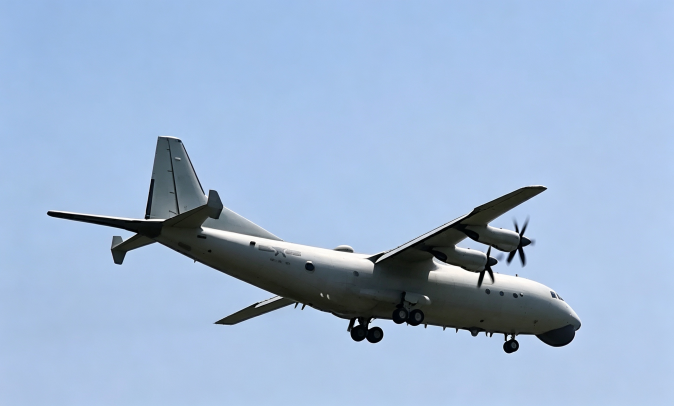
△ The active anti-submarine patrol aircraft of the People's Navy, notable for its tail-mounted magnetic anomaly detector (magnetometer).
Formation Strike: "Manned + Unmanned" Coordination Creates an Aerial Anti-Submarine Search Network
In the recent realistic anti-submarine training conducted by a naval aviation unit, the naval anti-submarine patrol aircraft and a certain type of drone took to the skies to form a network in the mission sea area. The combination of manned anti-submarine patrol aircraft and drones creates an aerial anti-submarine search network with a mix of high and low capabilities, covering both long and short distances:
Military commentator Fu Qianshao from China Voice's "Beacon Line Outlook": Throughout the entire operation, the unmanned anti-submarine drone detects underwater targets and accurately locates them. Then, the relevant data is transmitted to the manned anti-submarine aircraft, which carries anti-submarine weapon systems to conduct precise attacks on the underwater targets. The unmanned anti-submarine patrol drones and manned anti-submarine patrol aircraft, including fixed-wing and helicopters, form a new anti-submarine system. The unmanned anti-submarine drones become the "loyal wingmen" of the manned anti-submarine patrol aircraft.
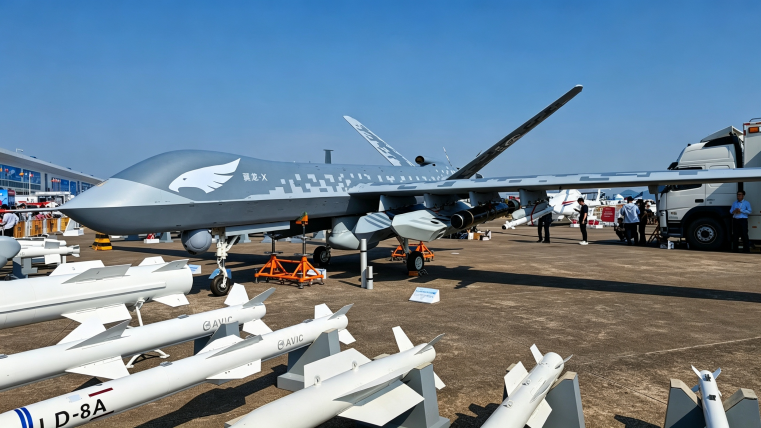
△ The "Wing Loong"-X drone system showcased at the 2024 China Airshow, equipped with anti-submarine torpedoes under its wings.
Pilots participating in the training expressed that "manned anti-submarine patrol aircraft are limited by the physiological limits of pilots and endurance time, making it difficult to achieve large-scale, uninterrupted monitoring of underwater targets. Deploying drones for close inspection at critical stages helps better leverage the rapid response advantages of the 'manned + unmanned' formation."
Bridging the Gap: Long-Endurance Unmanned Platforms Expand Search Boundaries
Military commentator Fu Qianshao believes that despite having advanced detection equipment, manned anti-submarine patrol aircraft face unavoidable shortcomings in terms of the platform's airborne time and the crew's sustained working capacity during combat missions. Long-endurance drones can effectively fill these gaps:
Military commentator Fu Qianshao from China Voice's "Beacon Line Outlook": If we use the previous combat methods, searching a certain sea area with anti-submarine patrol aircraft requires a large search range and consumes a considerable amount of time. If fuel runs low, the anti-submarine patrol aircraft must return to base to refuel before going back, or multiple anti-submarine patrol aircraft must conduct continuous searches over a certain sea area, which incurs high costs. At the same time, it is often difficult to achieve the goals of rapid discovery and rapid attack on targets. With unmanned anti-submarine platforms, both the range and duration of aerial searches have been significantly enhanced.
Division of Labor in Submarine Detection: Drones Undertake Magnetic Detection Tasks, Mitigating Low-Altitude Risks
The magnetometer searches for submarines by capturing changes in the magnetic field. To achieve precise detection, anti-submarine aircraft must fly at low altitudes, which poses significant safety pressures on the crew. In this tactical approach, drones equipped with magnetometers conduct low-altitude magnetic searches, effectively avoiding personnel risks and ensuring the safety of manned aircraft, forming an aerial anti-submarine search network that combines sonar buoy wide-area screening with precise verification by drones carrying magnetometers.

△ Magnetic detection requires low-altitude flight, increasing the safety risks for the platform itself.
Military commentator Song Xiaojun from China Voice's "Beacon Line Outlook": Simply put, sonar buoys are used to broadly assess the approximate location of submarines. Ultimately, manned anti-submarine aircraft equipped with magnetometers lower their altitude to determine the exact position of the submarine. There are significant limitations in adverse weather and sea conditions. Now, using drones to carry magnetometers essentially eliminates those limitations. They can still fly in high sea states and adverse weather, and the number of drones is relatively large. If we have sonar buoys in a certain sea area that detect submarine activity, we can quickly deploy many drones (for magnetic detection), greatly improving the efficiency of precise submarine localization.
As this aerial anti-submarine training exercise enters a critical phase: the drone maintains stable tracking, firmly locking onto the target submarine's trail. Upon receiving the information relayed by the drone, the anti-submarine patrol aircraft quickly adjusts its course, joins the bombing route, and prepares to attack the target submarine. Both sides have clear divisions of labor and seamless cooperation, effectively simulating an attack on the target submarine, forming a seamless operational loop of "search—track—strike."
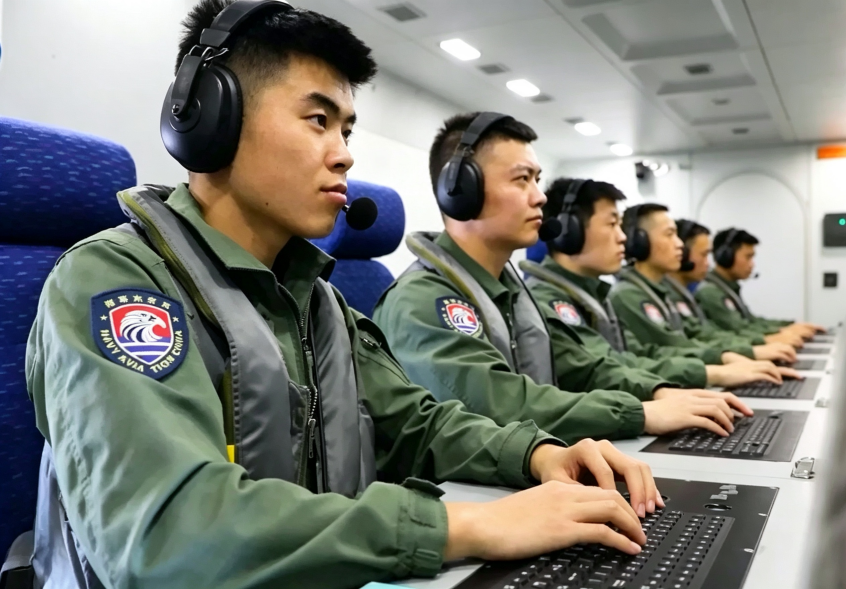
△ Inside the anti-submarine patrol aircraft: executing search and attack missions.
Talent Support: Professional Military Personnel Underpin New Tactics
Military commentator Song Xiaojun believes that synchronizing technology and personnel reserves is essential to rapidly develop the combat effectiveness of the "manned + unmanned" model.
Military commentator Song Xiaojun from China Voice's "Beacon Line Outlook": Anti-submarine warfare requires a very large weapon platform and human resources. Because the operational area is vast and continuous 24 hours a day. China has implemented a professionalization reform for military personnel, training a large number of drone pilots. Among these drone pilots, we have enough specialized personnel with relatively long service times, significantly enhancing our unmanned anti-submarine capabilities.
Future Trends: Manned and Unmanned Integration Reshapes Future Aerial Anti-Submarine Models
Military commentator Fu Qianshao points out that this new anti-submarine tactic, which integrates equipment advantages with personnel advantages, is likely to become a new trend in the development of future anti-submarine operations.
Military commentator Fu Qianshao from China Voice's "Beacon Line Outlook": The anti-submarine combat model of the People's Navy aviation has seen rapid development and upgrades in recent years. The mutual cooperation between manned and unmanned aircraft will enable more precise detection of enemy underwater targets, including manned submarines and unmanned underwater vehicles, over a considerable water area. When necessary, precise strikes can also be conducted, which could change the future anti-submarine combat model.
Reporter丨Huang Xianwen Yang Jun Tian
Naval Aviation recently conducted anti-submarine warfare training in certain sea airspace, utilizing a combination of manned anti-submarine patrol aircraft and drones. The drones performed low-altitude magnetic anomaly detection to locate submarines, enhancing operational efficiency and safety. This exercise reflects a trend towards integrating manned and unmanned systems in future anti-submarine operations.
- Naval Aviation conducted anti-submarine warfare training using manned and unmanned aircraft.
- The training involved a combination of anti-submarine patrol aircraft and drones.
- Drones were used for low-altitude magnetic anomaly detection to locate submarines.
- The exercise aimed to enhance operational efficiency and safety during anti-submarine missions.
- The integration of manned and unmanned systems is seen as a future trend in anti-submarine warfare.