
New calls for lawmakers to override Trump’s anti-union EO at the Pentagon
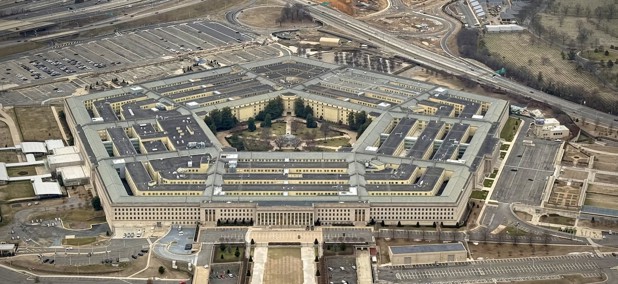
The nation’s largest federal employee union last week urged House lawmakers to once again bar the Defense Department from implementing President Trump’s executive order stripping two-thirds of the federal workforce of its collective bargaining rights.
In March 2025, Trump signed an executive order banning unions at most federal agencies, citing a seldom-used provision of the 1978 Civil Service Reform Act to exempt workforces from federal sector labor law under the auspices of national security. A second order, signed last August, added a half-dozen more agencies to the initial edict.
The measure—and its implementation—have been tied up in a myriad of court cases ever since. While efforts lawsuits challenging the initiative governmentwide have been thus far unsuccessful in halting its rollout, some unions have preserved feds’ collective bargaining rights at particular agencies, including for Defense Department employees represented by the International Federation of Professional and Technical Engineers and the Federal Education Association.
Not so for the American Federation of Government Employees, whose contracts Defense Secretary Pete Hegseth ordered terminated in April. In a letter to the top Democrat and Republican on the House Armed Services Committee last week, Daniel Horowitz, AFGE’s legislative director, urged the committee to once again approve a proposal nullifying Trump’s executive order as it pertains to Defense Department workers.
Last year, the panel voted on a bipartisan basis to include the amendment, proposed by Rep. Donald Norcross, D-N.J., in the 2026 National Defense Authorization Act, and the bill ultimately passed the House with the measure in tact. It did not become law, as the Senate stripped the provision from its version of the bill.
In the letter, Horowitz argued that Trump’s use of the Civil Service Reform Act’s so-called national security exemption greatly exceeded congressional intent.
“The statutory exemption Congress wrote into Title 5 was deliberately narrow, reserved for agencies like the Central Intelligence Agency whose missions are uniquely incompatible with bargaining,” he wrote. “Applying it broadly across the entire Department of Defense departs significantly from that design and longstanding precedent. It is telling that President Trump never invoked [this exemption] during his first term.”
Though Trump did not cite that authority in his first term, he sought to delegate it to then-Defense Secretary Mark Esper in 2020. Esper ultimately declined to use that power.
Horowitz noted that a group of 16 House Republicans urged members of the bicameral conference committee to keep Norcross’ amendment in the NDAA last year, arguing that the edict “jeopardizes” rather than strengthens national security. And the Pentagon already has safeguards to ensure collective bargaining activity does not interfere with national security concerns.
“Restoring collective bargaining is not about expanding rights or constraining management,” he wrote. “Existing agreements already contain robust management rights provisions, emergency authorities, and national security exemptions that allow commanders and program managers to act when mission requirements demand. What collective bargaining provides is a structured channel for identifying and resolving workforce problems before they become operational ones, including improving safety, retention, productivity and accountability.”
The American Federation of Government Employees urged House lawmakers to block the Defense Department from enforcing Trump's executive order that limits collective bargaining rights for federal workers. This order, signed in March 2025, has faced legal challenges and was previously included in a bipartisan proposal for the National Defense Authorization Act, which was ultimately stripped by the Senate. The AFGE contends that the order undermines national security and exceeds the intended scope of the Civil Service Reform Act.
- The AFGE urged lawmakers to nullify Trump's executive order on collective bargaining rights for Defense Department workers.
- Trump's executive order was signed in March 2025 and has faced legal challenges.
- Some unions have preserved collective bargaining rights at certain agencies, but not for AFGE members.
- A bipartisan proposal to nullify the executive order was previously included in the National Defense Authorization Act but was stripped by the Senate.
- The AFGE argues that the executive order exceeds congressional intent and jeopardizes national security.