

Summary and Key Points: As of March 21, 2026, the Dreadnought-class submarine program has reached a critical industrial peak, serving as the silent, undersea twin to the U.S. Navy’s Columbia-class.
-Driven by the “Golden Fleet” initiative and the need for a Continuous At-Sea Deterrent (CASD), this 18,600-ton platform is currently undergoing intensive construction at BAE Systems’ Barrow-in-Furness shipyard.
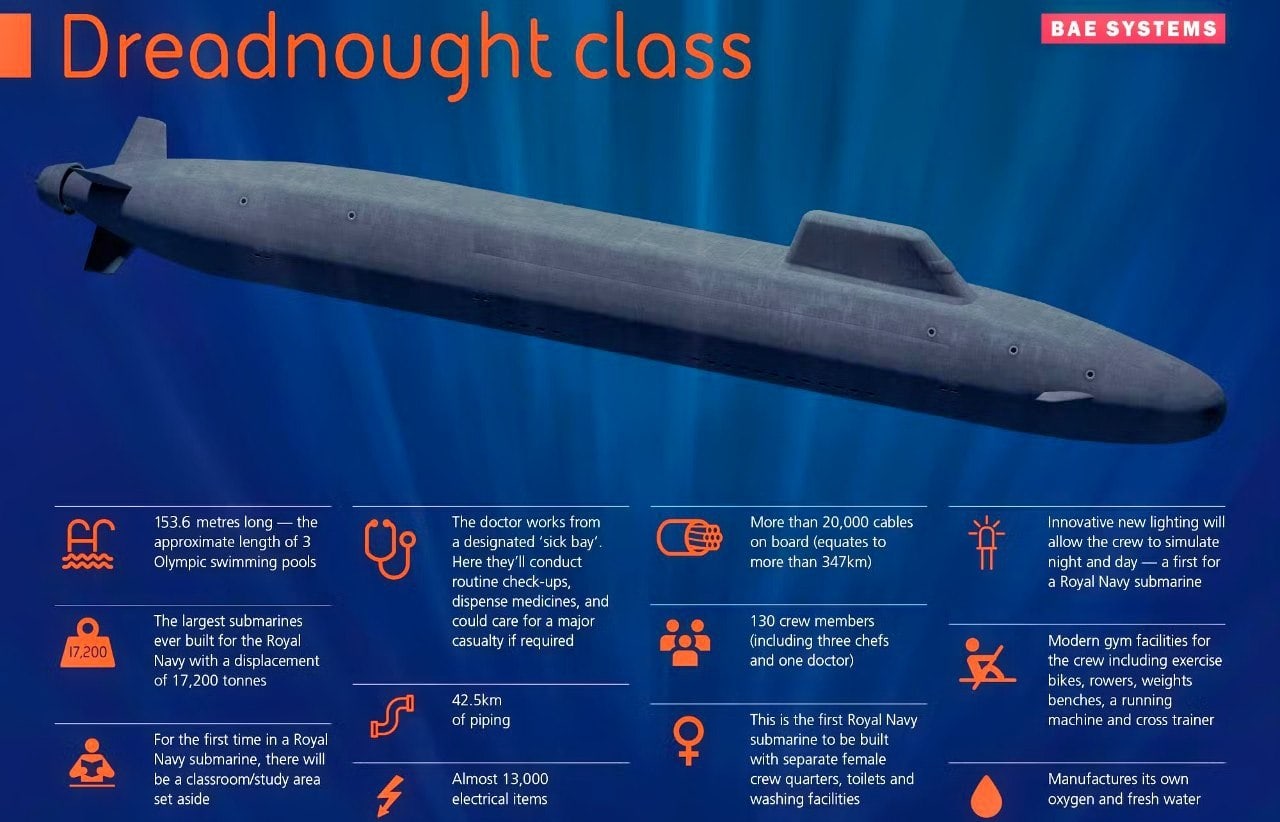
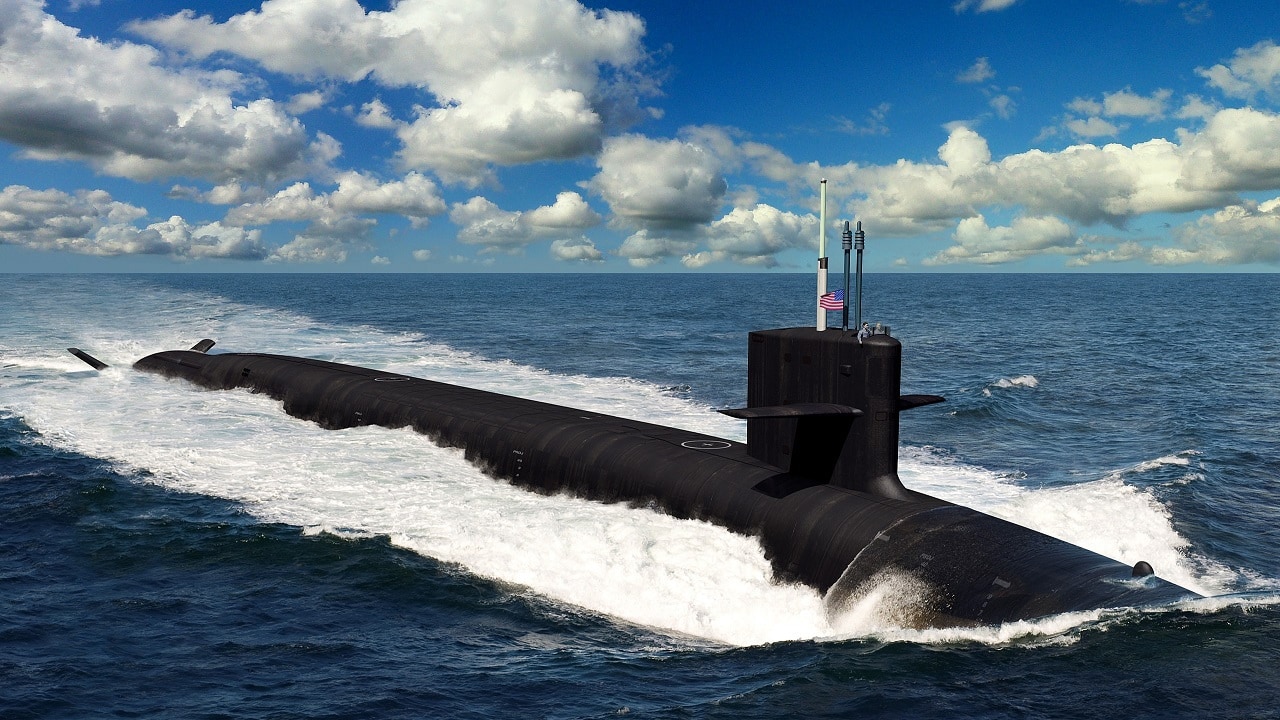
Dreadnought-Class Submarine Royal Navy BAE Systems Image
-By integrating the Common Missile Compartment (CMC) and the newly awarded Trident II D5LE2 life-extension technology, the UK and U.S. are effectively locking in a shared nuclear architecture capable of countering high-end threats from China and Russia through the year 2084.
The Dreadnought-Columbia Axis: Synchronizing the Future of Undersea Deterrence
The United Kingdom is surging ahead with its nuclear-armed Dreadnought-class submarines designed to replace the existing Royal Navy Vanguard class and bring Trident II D5 nuclear missiles to hidden realms of the undersea domain.
The Paradox of Deterrence
This is the essence of undersea deterrence for the U.S. and Britain, a promise of complete retaliatory destruction in the event either country is subject to a nuclear first strike.
The concept of deterrence is ultimately paradoxical, as weapons capable of massive destruction and death are deployed to “keep the peace.”
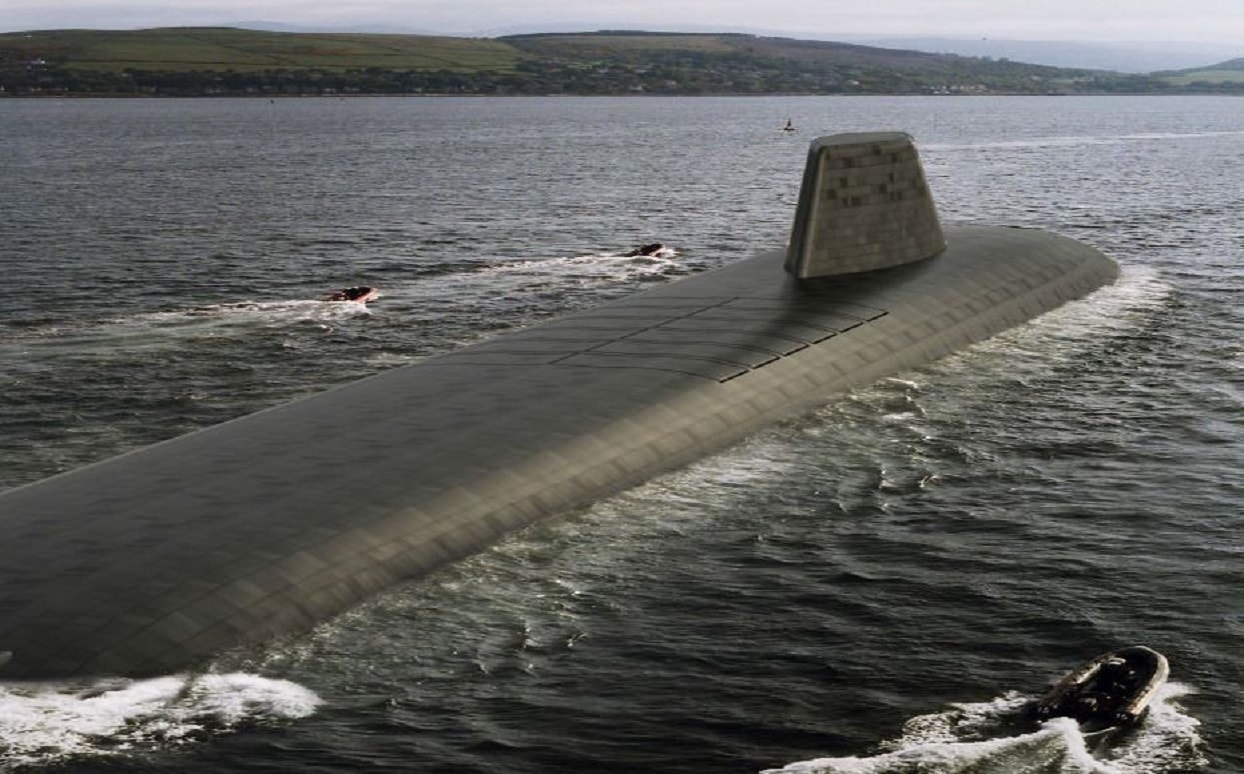
Dreadnought-Class Submarine. Image: Creative Commons.
The assurance of a crippling retaliatory strike is intended to prevent a would-be nuclear-attacking country from thinking it could somehow survive and prevail by launching a first nuclear strike.
Given the rapid pace of China’s nuclear arsenal expansion and technological advances in weapons systems, such as next-generation submarine-detection technology from both Russia and China, the UK and the U.S. both need to modernize undersea deterrence.
Much like the U.S. Navy’s Ohio-class submarines, the UK’s Vanguard-class needs a more modern, higher-tech, quieter replacement.
The Vanguard class entered service in the 1990s with the intent of operating for 25 years, yet, like the U.S. Ohio, it has been extended well beyond its anticipated lifespan.
Therefore, much like the U.S., the UK operates with an urgent need to maintain what it calls a “continuous at-sea” deterrent.
U.S. Navy Columbia-UK Dreadnought Synergy
The technology being built into the UK’s Dreadnought-class boats will align with the U.S. Navy’s emerging Columbia-class submarines, under development to replace the Ohio-class.
Perhaps the most significant element of this alignment is the jointly developed Common Missile Compartment; both the Columbia-class and the Dreadnought-class will use the same midsection module to house Trident II D5 nuclear missiles.
There are likely to be other technologies commonly shared between the two submarines, such as a quieter X-shaped stern and a “fly-by-wire” automated computerized navigational system.
The Columbias are being built with a handful of cutting-edge technologies initially woven into the Virginia-class boats, such as fiber-optic cable, a large-aperture bow sonar, and a “fly-by-wire” joystick-controlled navigational system.
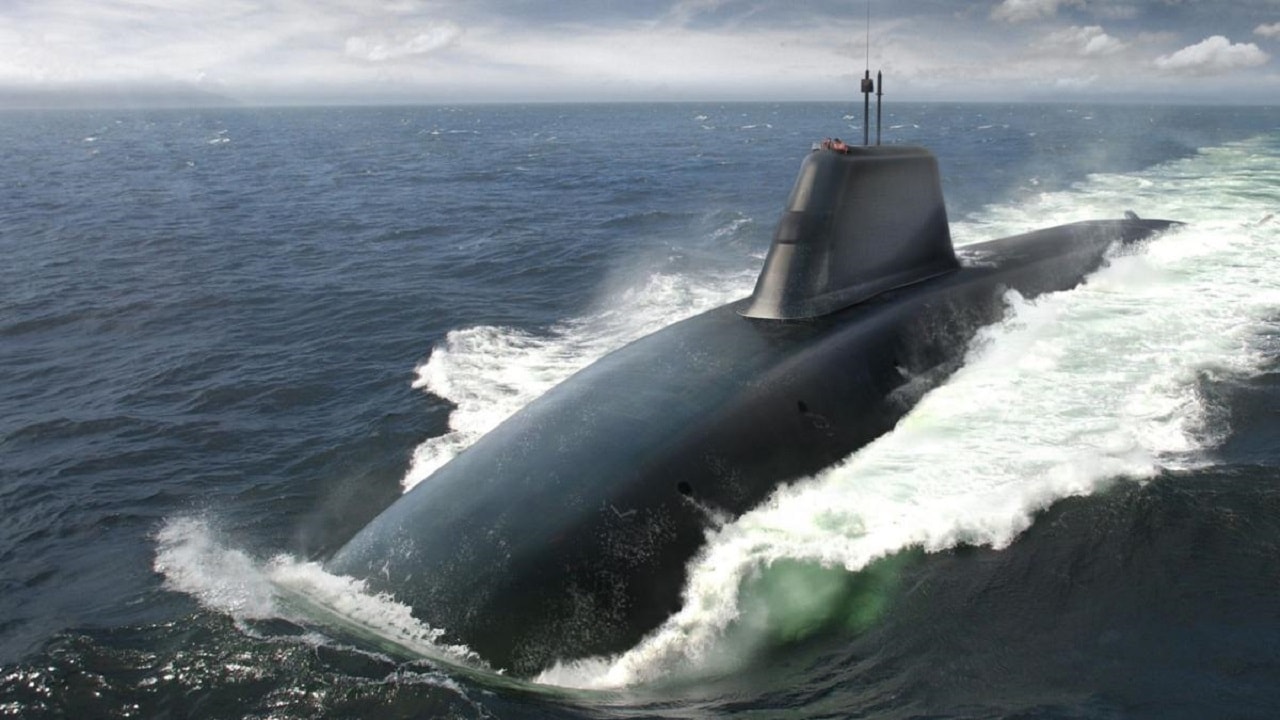
The Dreadnought-class is the future replacement for the Vanguard-class of ballistic missile submarines.
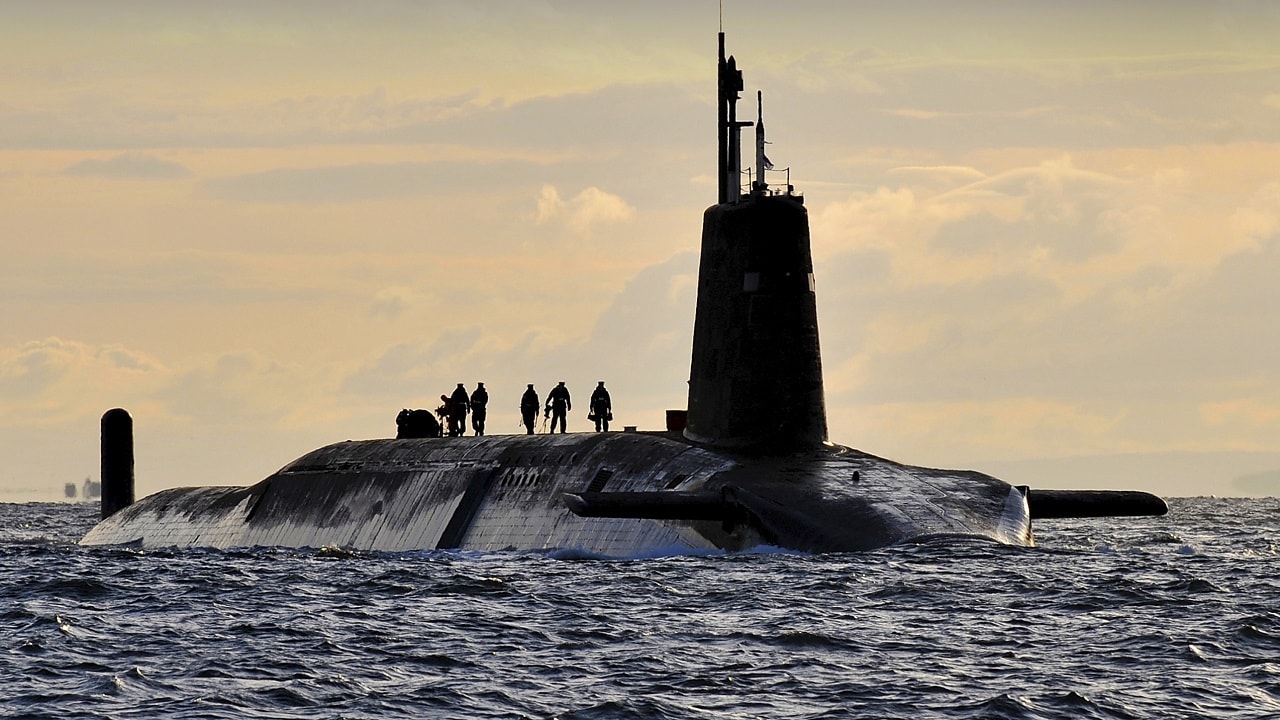
Nuclear submarine HMS Vanguard arrives back at HM Naval Base Clyde, Faslane, Scotland following a patrol.
This “fly-by-wire” navigation uses computer automation and a joystick with graphics to maintain depth, speed, and angle while a human operator performs command and control. This replaces previous hydraulic mechanical systems and adds a new level of navigational precision and stability.
The UK “fly-by-wire” system is a BAE Systems system called Active Vehicle Control Management, an innovation that a BAE essay describes as “adapting controls that are usually used in fly-by-wire aircraft and applying them in a marine environment.
The electronics, developers explain, will be used to control the heading, pitch, depth, and buoyancy of the Dreadnought class.
Electric Drive Propulsion
Like the Columbia-class, the Dreadnought submarines will use a quieter “electric drive” propulsion system that increases propulsion efficiency and stability and helps generate additional power for the boat’s electrical systems.
BAE and the Royal Navy have recently released new design models of the Dreadnought, and they show a revised bow and a different configuration than had been previously planned.
There are a few specifics available; however, the Royal Navy has published limited specifications for the boat, which include a displacement of 18,600 tons and a length of 504ft.
The undersea UK-UK nuclear deterrence collaboration is likely quite significant, as it is something now informing both countries’ plans for the 2030s.
An artist rendering of the future U.S. Navy Columbia-class ballistic missile submarines. The 12 submarines of the Columbia-class will replace the Ohio-class submarines which are reaching their maximum extended service life. It is planned that the construction of USS Columbia (SSBN-826) will begin in in fiscal year 2021, with delivery in fiscal year 2028, and being on patrol in 2031.
The U.S. is, of course, building its new Columbia-class submarines, and it aligns with the UK’s now-developing Dreadnought-class. Both the Dreadnought-class and Vanguard-class submarines will integrate a joint, common missile compartment engineered to house Trident II D5 missiles.
Trident II D5 “Life Extension”
The US Ohio-class boats are now armed with an upgraded Trident II D5 nuclear missile, something which will also arm the UK’s Dreadnought-class boats.
The U.S. Navy has spent years working with Lockheed on a Trident II D5 life-extension program designed to ensure the decades-old weapons are upgraded, modernized, and sustained into future decades.
The Trident II D5 “E,” as they are called, are being engineered to replace the standard Trident II D5 with improved electronics, firing circuitry, and technology intended to arm the Columbia-class boats.
About the Author: Kris Osborn
Kris Osborn is the President of Warrior Maven – Center for Military Modernization. Osborn previously served at the Pentagon as a highly qualified expert in the Office of the Assistant Secretary of the Army—Acquisition, Logistics & Technology. Osborn has also worked as an anchor and on-air military specialist at national TV networks. He has appeared as a guest military expert on Fox News, MSNBC, The Military Channel, and The History Channel. He also has a Master’s Degree in Comparative Literature from Columbia University.