
Russia’s Mi-8 Breached Poland’s Airspace and Exposed NATO’s 2026 Dilemma
 S.W
S.WRussia’s Mi-8 Breached Poland’s Airspace and Exposed NATO’s 2026 Dilemma
A Russian military helicopter briefly entered Polish airspace this week, and Polish fighters scrambled. That sounds like a small incident. It is not. The Mi-8 crossing came as Russia was launching another large attack on Ukraine, forcing NATO aircraft to react across the alliance’s eastern flank. The episode shows how quickly a war below the threshold of open NATO-Russia combat can turn into an alliance readiness test.
The Mi-8 Incident Was Small but Strategically Loud
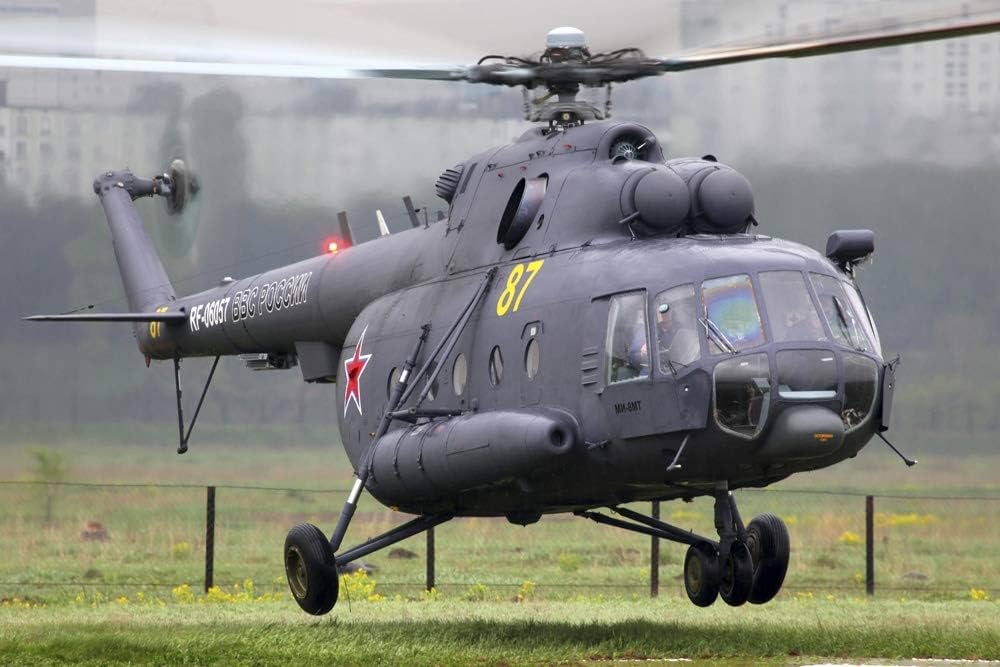
According to Reuters, the Polish army said a Russian military helicopter entered Polish airspace briefly before leaving. Polish officials identified the aircraft as an Mi-8, a workhorse transport helicopter used by Russian forces for troop movement, logistics, command support and a range of specialized missions. It is not a stealth platform and it is not a credible weapon for attacking Poland by itself. That is precisely why the incident matters: the military effect was limited, but the signalling effect was not.
Poland is a NATO member, and its eastern airspace sits beside the main corridor connecting Russia’s Kaliningrad region, Belarus and the war in Ukraine. Any unexplained Russian aircraft crossing that boundary forces Warsaw to answer three questions immediately: was this navigation error, deliberate probing or a cover for something else? The first explanation may eventually prove correct. Air defence cannot assume it in real time.
Air Defence Is Now an Escalation Ladder
The helicopter crossing happened alongside a major Russian strike on Ukraine. ABC News reported that NATO aircraft were scrambled in Poland and Romania as the attack unfolded, while Polish and Ukrainian reporting described repeated alerts and disruption to aviation. Those reactions are not evidence that Moscow has decided to attack NATO. They are evidence that NATO members are already spending operational capacity on Russian activity outside Ukraine.
That distinction is becoming harder to maintain. A fighter scramble is a controlled response. Intercepting an aircraft is more escalatory. Forcing it down, firing a warning shot or destroying it would be another step entirely. The problem is that Russian pressure is arriving in forms that are easy to deny and difficult to ignore: drones that cross borders, aircraft that test airspace, jamming, sabotage and missile debris. Each event can be described as isolated. Together they create a permanent decision problem for alliance commanders.
NATO’s air-policing model was designed for identifiable aircraft and predictable rules of engagement. The Ukraine war has produced a messier environment, where low-cost drones and electronic interference can saturate sensors while crewed aircraft exploit gaps in attention. A Mi-8 is an old design, but the operational question it creates is modern: how much evidence does a frontline state need before treating a border violation as an attack?
Russia Gains Even When Nothing Is Hit
Moscow does not need to destroy a Polish target to gain something from this pattern. A brief incursion can collect information about radar coverage, fighter response times and political thresholds. It can also force NATO governments to explain why an aircraft crossed the border, whether it was challenged and what would happen next time. That is cheap reconnaissance with an expensive diplomatic afterlife.
There is a second advantage. Repeated incidents make extraordinary alert conditions feel ordinary. Poland must keep aircraft, crews and air-defence units ready while Russian missiles and drones strike Ukraine next door. Romania faces a similar burden along the Black Sea. The cost is measured not only in fuel and maintenance but in fatigue, ammunition expenditure and the diversion of scarce surveillance assets from other missions.
Denmark’s intelligence service has warned that the risk of Russian military action against a NATO country is rising, while European officials have separately described an increase in Russian sabotage and hybrid activity. Those warnings do not establish an imminent invasion. They do establish the context in which a helicopter crossing cannot be dismissed as a harmless curiosity.
What Poland and NATO Should Do Next
Warsaw needs a public but disciplined response. It should demand clarification from Moscow, document the flight path and publish enough evidence to make the incident difficult to manipulate. It should also make clear that future airspace violations will trigger immediate interception under pre-announced rules. Ambiguity may preserve room for diplomacy, but ambiguity without a visible response invites repetition.
NATO, meanwhile, should treat these incidents as a network problem rather than a series of national embarrassments. Poland and Romania need shared air tracks, faster cross-border authority and a common procedure for identifying slow aircraft, drones and decoys. The alliance also needs more counter-drone capacity close to the border. Scrambling expensive fighters against every small or ambiguous object is not a sustainable defence plan.
The alliance should resist the temptation to dramatize every incursion as the beginning of World War III. That gives Moscow too much control over NATO’s political tempo. But the opposite mistake is worse. Calling every violation an accident until the pattern becomes undeniable simply rewards the probing.
The Uncomfortable Conclusion
The Mi-8 did not start a NATO-Russia war. It exposed how little space exists between routine air policing and a crisis that could kill someone. Russia can test that space repeatedly because the cost of each individual move is low, while the alliance pays to remain ready.
The next incident will matter less for the aircraft involved than for NATO’s response: how quickly it sees the intruder, how clearly it communicates the rules and whether every member understands the same escalation ladder. Europe has spent years discussing deterrence as a military posture. On the eastern flank, deterrence is now a daily judgement call. The uncomfortable truth is that NATO may be prepared to fight a war, yet still be badly organised for the ambiguous minutes that come before one.
Sources
- Reuters, “Russian military helicopter entered Polish airspace briefly, Polish army says,” September 23, 2026.
- ABC News, “NATO jets scrambled in Poland, Romania as Russia strikes Ukraine,” September 2026.
- BBC reporting on Polish airspace and the Russian helicopter incident, September 2026.
- Radio Free Europe/Radio Liberty, “Amid Russian Provocations And Warnings Over Possible Attack, Europe Mulls Contingency Plans,” September 2026.
A Russian Mi-8 helicopter breached Polish airspace in September 2026, prompting a scramble of Polish fighters. This incident occurred alongside a significant Russian offensive against Ukraine, highlighting the escalating tensions and operational challenges for NATO in the region. The breach raises critical questions about airspace violations and NATO's response protocols.
- A Russian Mi-8 helicopter briefly entered Polish airspace.
- Polish fighters were scrambled in response to the incursion.
- The incident occurred during a major Russian attack on Ukraine.
- NATO aircraft were also scrambled in Poland and Romania during this time.
- The Mi-8 is used for troop movement and logistics by Russian forces.