

In September this year, the U.S. Navy reported that a California-class submarine completed its first loading and unloading of Mark 48 torpedoes. Today’s submariners, though, use very different weapons from those used by their predecessors — including those carried into the Pacific War — and there is a long, storied, and complicated history of the U.S. Navy’s use of torpedoes. For almost two years after Japan’s infamous Pearl Harbor attack, American submarines were firing torpedoes that frequently failed.
Some of those torpedoes went underneath enemy ships, while others just exploded before they arrived.
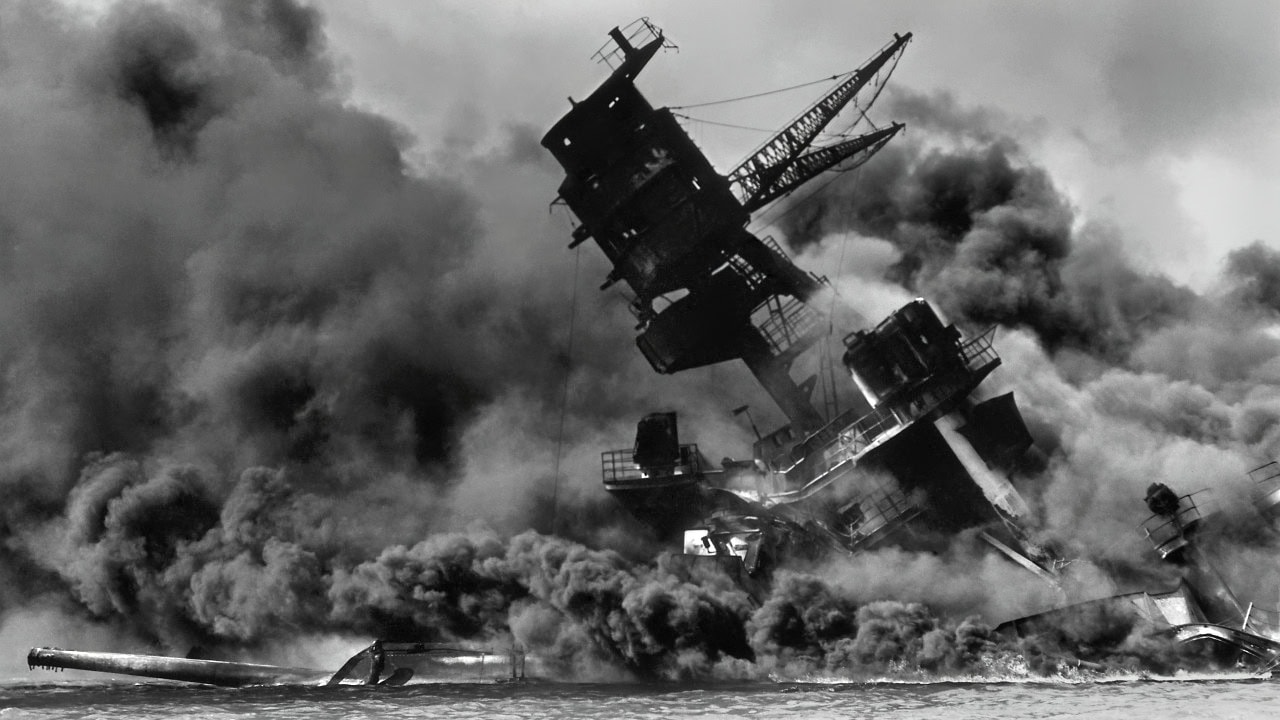
The USS Arizona (BB-39) burning after the Japanese attack on Pearl Harbor, 7 December 1941.
And even when a torpedo hit a ship squarely, it didn’t necessarily detonate — instead, it acted as a sort of cannonball.
Submarine crews knew it was going on and reported the problems, but the Navy’s Bureau of Ordnance was slow to accept that the weapon itself might be the cause of the problems.
The Mark 14 Torpedo
The weapon in question was the Mark 14, a projectile developed in the 1930s and carried by American fleet submarines as the United States entered World War II.
A crew would use them after locating ships and tracking where they would be when the torpedo arrived, then set the weapon’s course and depth before firing.
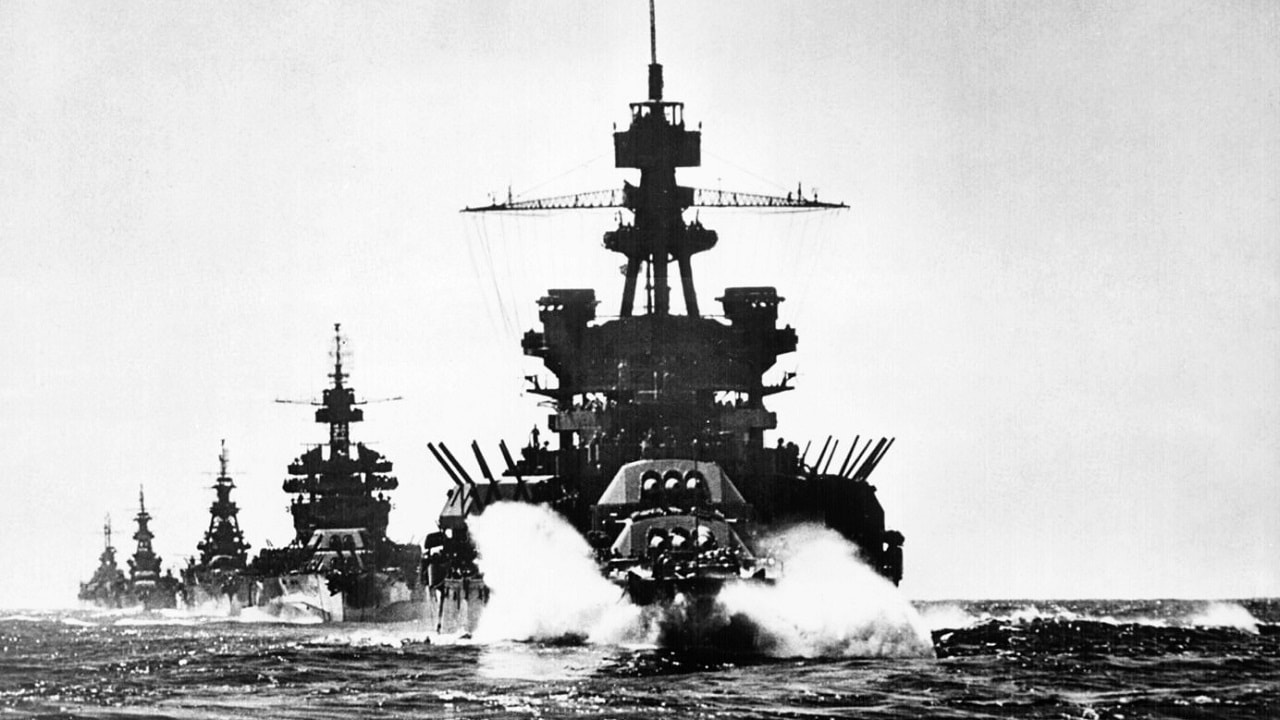
USS Pennsylvania, which was attacked at Pearl Harbor. Creative Commons Image.
Getting the torpedo into position could sometimes take hours, and after the shot, the submarine might have only moments to dive away from the target’s escorts, which might try to retaliate.
The Mark 14 had two different ways it could explode.
It could either detonate on impact or its magnetic device could detect a metal hull overhead and trigger the warhead as the torpedo passed beneath the ship.
It was designed, with the technology of the time, to know when a ship was nearby and detonate — whether or not it was a direct hit.
On paper, it meant that a submarine had more than one chance to sink its target, and that the hours spent positioning the torpedo weren’t wasted.
But in practice, neither of those methods was dependable.
Before joining the war, the Navy had not fired production torpedoes with live warheads against any actual targets — and it showed.
The Torpedoes Ran Too Deep
As the story goes, submarine captains began to report misses that didn’t make any sense.
The torpedoes had been fired from the right positions under good conditions, and at targets that the captains believed they should have hit.
In May 1942, for example, the commander of USS Skipjack reported that he had personally witnessed a torpedo pass under the stern of a Japanese ship.
So, what was going on?
Well, the torpedoes, it turned out, were running about ten feet deeper than the depth their crews set, meaning they would pass straight under the ships they were supposed to strike.
The magnetic device would not trigger, and the missile would keep moving on its trajectory until it ran out of fuel and momentum or hit another target.
The problem was pervasive, and in 1942 Rear Admiral Charles Lockwood took command of American submarines in the Southwest Pacific and ordered a series of tests to determine what was going on.
During those tests, the submarines fired torpedoes through nets to measure their depth, and the results proved the Navy crews were not imagining the problem.
It was real.
The findings confirmed the problem, but they didn’t immediately explain it.
Exploding Before Impact
The Mark 14’s magnetic exploder also sometimes detonated the warhead before the torpedo reached the ship, leaving the target ships unharmed and alerting their escorts to the submarine’s presence.
Lockwood pressured to disable the magnetic feature, and on June 24, 1943, the Pacific submarine force ordered all crews to switch it off.
The torpedoes would need to strike the ship to explode, but that revealed another problem.
Some of them would strike the hull without exploding.
A Direct Hit Wasn’t Sufficient
As it turned out, the contact exploder could fail even on perfect hits.
The force of the impact distorted internal components of the torpedo and prevented the firing pin from detonating the warhead.
After USS Tinosa returned with evidence that the missiles were still failing, Lockwood ordered more tests, which again confirmed the problem. And so, the mechanism was changed.
It took until September 1943, roughly 21 months after Pearl Harbor, for the Mark 14’s major faults to be fully addressed — and for much of that time, American submariners were risking their lives trying to reach firing positions only to find that their perfectly timed torpedoes were failing.
About the Author: Jack Buckby
Jack Buckby is a British researcher and analyst specializing in defense and national security, based in New York. His work focuses on military capability, procurement, and strategic competition, producing and editing analysis for policy and defense audiences. He brings extensive editorial experience, with a career output spanning over 1,000 articles at 19FortyFive and National Security Journal, and has previously authored books and papers on extremism and deradicalization.