
"Niamey Shakes the Niger Junta — The Mutiny of August 29 Exposes Tchiani's Weakness"
 Marie Dubois
Niamey shakes the junta of Niger — the mutiny of August 29 exposes Tchiani's weakness
On August 29, in Niamey, the gunfire did not just wake a Sahelian capital accustomed to security alerts. It struck at the nerve center of the regime. According to the Nigerien Ministry of Defense, a group of soldiers targeted "sensitive" sites during the night, including base 101 near the Diori Hamani International Airport, while attempting to breach the security perimeter around the presidency. Public television was briefly cut off. Order was eventually restored, but the main point lies elsewhere: when a junta promises stability through military centralization and faces a mutiny in the heart of its capital, its foundational argument begins to crack.
On the ground, this detail matters more than a martial communiqué. Since the coup d'état of 2023, General Abdourahamane Tchiani has built his power on a simple idea: the survival of Niger depends on the sword, and the sword must respond to the presidential guard. This architecture can contain civil opposition for a time. It protects much less well against fatigue, rivalries within the ranks, and distrust within the security apparatus itself. A mutiny is not yet a counter-coup. But it is already a signal of erosion.
Base 101 and the regime's center of gravity
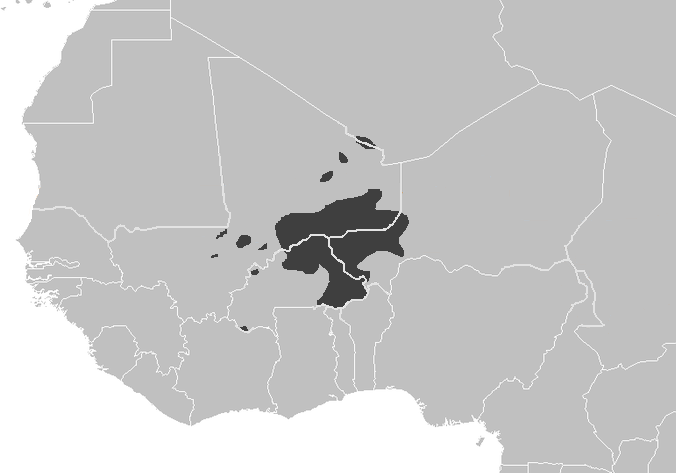
The most revealing target is base 101. In the recent history of Niger, this site is not just another military point. It is linked to the capital's airport, thus to the mobility of forces, the protection of power, and the demonstration of control over the only city that immediately matters for the regime's survival. When mutineers take soldiers hostage there, even briefly according to initial reports relayed by Tempo via DW and other regional outlets, they remind us of a brutal truth: the junta controls the country far less solidly than it controls its own slogans.
This sequence must be read with memory. Niamey has already been targeted twice this year by jihadist groups, first by the Islamic State in the Sahel, and then in June by JNIM, a rival affiliated with Al-Qaeda. The capital is therefore no longer protected solely by the geographical depth that once reassured Sahelian leaders. What is changing today is that the threat does not come from an external raid on the periphery or from a clandestine infiltration claimed by a katiba. It arises from within the military apparatus supposed to lock down the city.
What this mutiny really says
The government has asked the population to remain calm and to go about their business freely. This is the classic language of a regime that wants to show it is still in control. But the interruption of the Télé Sahel signal, even briefly, tells the opposite story: in crisis, the first reflex of a weakened system is not only to regain territory, but to regain the screen. In Sahelian armies, state communication often serves as proof of command. When it falters, even for an hour, doubt spreads faster than bullets.
I would remain cautious about the exact scale of the mutiny. We do not yet know how many soldiers participated, which units are affected, or whether the action stemmed from an isolated core or a broader malaise. This uncertainty matters. It currently prevents us from speaking of an imminent collapse. However, it does not prevent us from making an operational diagnosis: a regime already struggling against a diffuse insurgency across a vast theater of operations cannot afford to doubt its own capital garrison.
For Tchiani, the problem is twofold. On one hand, he must prove to his officers that he is still capable of paying, protecting, and commanding. On the other hand, he must convince the population that the militarization of power has not turned Niamey into a nervous fortress, cut off from the rest of the country and vulnerable to the slightest internal break. Yet these two objectives often collide. The more the junta locks down, the more it fuels internal resentments. The more it purges, the more it reduces its command depth.
Why the enemy also comes from within
Niger is not Mali, and Niamey is not Bamako. But Sahelian juntas ultimately encounter the same limit: they promise discipline at the top while war wears down men, salaries, loyalties, and supply chains. The external enemy then thrives on this exhaustion. In a country where fronts stretch towards Tillabéri, the tri-border area, and the routes leading to the Lake Chad basin, every battalion immobilized to secure the capital is a battalion missing elsewhere. This is the old trap of military regimes in the Sahel: protecting the palace ultimately costs ground.
Marie Dubois would have said it without unnecessary rhetoric: on this theater, a panicking capital is a capital that consumes its reserve. The mutiny in Niamey does not yet offer a victory to the jihadists. However, it opens something precious for them: time, attention, and disorganization. JNIM and the Islamic State in the Sahel always observe these moments. They do not need to take Niamey. It is enough for them that Niamey diverts its forces, its planes, and its officers from the provinces where the real war is fought every day.
The signal for the Sahelian theater
The immediate risk is not only political. It is operational. If this matter is resolved through targeted arrests and a quick return to discipline, Tchiani will gain a few weeks of breathing room. If, on the other hand, it reveals deeper fractures between units, clans, or command circuits, Niger will enter a more dangerous phase: one where the state must simultaneously reassure its capital, monitor its barracks, and contain the insurgency on the periphery. Few Sahelian armies can hold this triptych for long.
The lesson from Niamey is simple: a junta can survive a jihadist attack; it survives much more difficultly at the moment when its own soldiers cease to believe that the center still holds.
The next indicator to watch is therefore not only the official version of events. It is the movements of units around the capital, the frequency of rotations to the western fronts, and how the regime will speak, or remain silent, about base 101 in the coming days. In the Sahel, when the center tightens, the periphery immediately tests the seam. This is where Niger can lose more than its night of August 29.
```On August 29, 2023, a mutiny occurred in Niamey, targeting sensitive military sites and attempting to breach security around the presidency. This incident exposed weaknesses in the regime of General Abdourahamane Tchiani, raising concerns about the stability of the Nigerien military. The government urged the population to remain calm following the unrest, which highlights internal challenges within the armed forces.
- A mutiny occurred in Niamey on August 29, 2023, targeting sensitive military sites.
- The mutiny exposed weaknesses in the regime of General Abdourahamane Tchiani.
- The Nigerien government requested calm from the population following the incident.
- The mutiny raises concerns about the stability of the Nigerien military and its ability to control the capital.