
Niger: 37 civilians killed in the west — the shadow of JNIM reveals the failure of territorial control in 2026
 Marie Dubois
Niger 37 civilians killed in the west — the shadow of JNIM reveals the failure of territorial control in 2026
In western Niger, on a trade route near the Malian border, at least 37 civilians were killed on November 13 in an ambush against a convoy heading to the market, according to local sources cited by The Hindu and The New Indian Express. Another estimate mentions 38 dead. The exact location and the identity of the attackers remain to be confirmed. This caution is not a detail: in this area, information often arrives after the survivors have left, and military authorities publish few verifiable data.
An attack against mobility, not just against villagers
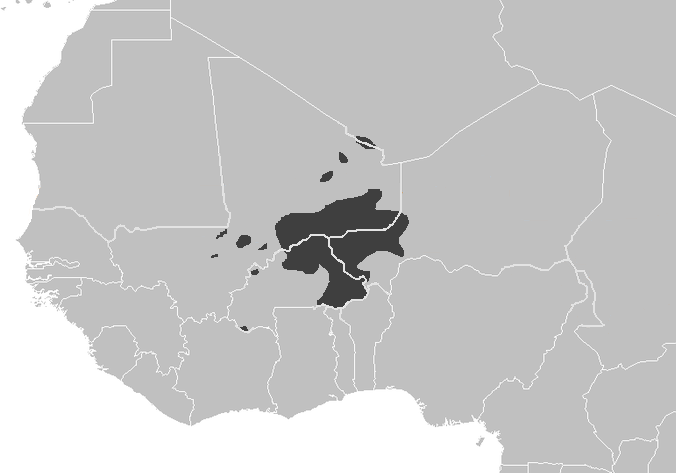
The important point is the target. A market convoy connects villages to food, fuel, and administrative services. Hitting it amounts to transforming a road into an invisible border. Armed groups do not need to occupy every village: they only need to control the schedules, secondary tracks, and the price of passage. This is the model of the three-border area, where the official map assigns the territory to Niamey but where real authority is measured by the ability to move without escort.
The reported modus operandi — intercepting a civilian convoy in a wooded area with little coverage from security forces — corresponds to a logic of attrition. It is not necessarily an operation aimed at taking a base. It is about making trade too dangerous, pushing transporters to negotiate with armed men, and generating a regular income through taxation, theft, or extortion.
Attribution to JNIM remains a hypothesis
The Support Group for Islam and Muslims, or JNIM, is the most established jihadist actor in western Sahel. However, no credible public claim has, at this stage, established its responsibility for this ambush. The Islamic State in the Sahel, local criminal groups, or a mixed operation cannot be ruled out. Confusing any attack in western Niger with JNIM would be an intelligence error: networks overlap, alliances change, and fighters move faster than official statements.
Nevertheless, the regional dynamics make the signal serious. An analysis published by Al Jazeera on November 13 describes rival armed groups in Burkina Faso turning against each other while the state loses ground. In such an environment, violence does not decrease when two factions fight. It shifts to roads, villages, and markets, as each group seeks to punish communities suspected of trading with its adversary.
The junta's promise clashes with the ground reality
Niamey has made the departure of French forces and the partnership with Russia a symbol of regained sovereignty. On the ground, sovereignty is not proclaimed: it escorts a truck, repairs a track, and returns to a village after an attack. The reported massacre shows the gap between the junta's strategic communication and the depth of its deployment. Drones can monitor a column of dust, but they do not replace human intelligence or a permanent presence along the routes.
Since 2025, Tillabéri and neighboring departments have already been described as a theater where jihadist attacks and forced displacements are intensifying. A mass attack against a civilian convoy adds an operational constraint: the army must simultaneously protect garrisons, bridges, markets, and supply routes. It does not have sufficient personnel to hold every kilometer. In this type of war, concentrating forces on regional capitals mechanically leaves predation spaces between two posts.
The Malian corridor is the true center of gravity
The western Niger cannot be analyzed as an isolated crisis. Trafficking, families, and fighters cross the border into Mali according to the seasons and the state of the tracks. Closing one route shifts flows to another. The new alliances of the Sahel States Alliance have improved political coordination, but they have not yet created a command chain capable of sustainably securing rural corridors.
The immediate question is therefore not whether Niamey will announce a new sweeping operation. It is whether Nigerien forces can hold the road after the passage of military columns. A one-off operation can kill attackers and recover motorcycles. It does not automatically restore transporters' trust, weekly trade, or the alert given by residents before the attack.
On the ground, an abandoned road often holds more value for an armed group than a media victory over a military base.
What needs to be monitored now
- A claim or material evidence allowing the identification of the responsible group.
- The suspension of markets and convoys on the routes connecting Tillabéri to Mali.
- The presence of reprisals against villages accused of intelligence or collaboration.
- The shift of violence towards secondary roads and border areas of Benin.
The toll of 37 dead still needs to be consolidated, but the mechanism is already readable. If civilian convoys cease to circulate, JNIM — or its local competitor — will not need to conquer a city to gain ground. It will only need to charge for each movement. This is the war that Niamey risks losing first: that of daily control, just a few kilometers from the official maps.
Sources
The Hindu, “Armed men kill at least 37 civilians in western Niger, say local sources”, November 13, 2026; The New Indian Express, “Armed men kill at least 37 civilians in western Niger”, November 13, 2026; Al Jazeera, “Burkina Faso’s rival armed groups turn on each other as state loses ground”, November 13, 2026; Truth Nigeria, “Boko Haram Hunts ISWAP for Control of Lake Chad’s Taxation Corridors”, November 13, 2026.
At least 37 civilians were killed in an ambush by an unknown armed group in western Niger on November 13, 2026, while traveling to a market. The attack underscores the deteriorating security situation in the Tillabéri Region, where armed groups are increasingly targeting civilian movements. The identity of the attackers remains unconfirmed, but the involvement of the jihadist group JNIM is suspected.
- At least 37 civilians were killed in an ambush in western Niger.
- The attack occurred on November 13, 2026, while civilians were traveling to a market.
- The assailants' identity remains unconfirmed, but JNIM is suspected.
- The attack reflects a broader pattern of violence affecting trade routes in the region.
- The situation highlights the challenges of territorial control and security in Niger.