
Niger mobilizes its youth against France — the Tchiani junta turns a security failure into a rhetorical war
 Marie Dubois
Niger mobilizes its youth against France — the Tchiani junta transforms a security fiasco into a rhetorical war
At the General Seyni Kountché Stadium in Niamey, on February 11, 2026, General Amadou Ibro, chief of staff to General Abdourahamane Tchiani, addressed hundreds of young Nigeriens. His statement immediately flooded social media: “This mobilization is made, it is decreed so that we prepare for war with France.” And then, even more directly: “Know this, we are going to war with France. We were not at war, it is now that we are going to war.”
The hall applauded. The shouts of “Down with France” drowned out the end of the speech.
Twenty-four years after Barkhane, two and a half years after the coup that expelled French soldiers from Niger, Paris is reaping what it has sown — or at least, what the Nigerien junta makes it bear.
Niamey airport, the detonator of the war speech
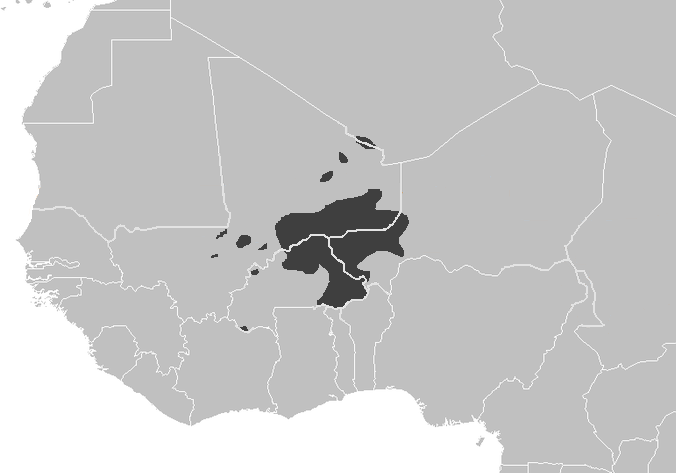
To understand General Ibro's speech, we must go back to January 29, 2026. On that day, about forty armed fighters attacked Niamey International Airport. The assault was repelled — with the assistance, according to Niamey, of Russian soldiers deployed at the base. About twenty assailants were killed.
The next day, General Tchiani accused France, Benin, and Côte d'Ivoire of having “sponsored” this attack. He named Emmanuel Macron as the “sponsor” of the jihadists. These accusations were not supported by any publicly released evidence.
France categorically denied it. Its Ministry of Foreign Affairs had already suspended the activities of the embassy in Niamey in January 2024. The spokesperson for the French military staff, Colonel Guillaume Vernet, described Ibro's statements as “information warfare.” A French military intervention in Niger? “That is out of the question,” he added.
Uranium, debts, and post-colonial resentments
The junta's rhetoric does not come out of nowhere. It is based on real grievances, even if their exploitation is openly instrumental.
Niger is one of the largest uranium exporters in the world. Before the coup in July 2023, the French group Orano — heir to Areva — had been operating the Somaïr mine for decades. The junta nationalized the subsidiary at the end of 2024. Orano has initiated several international legal proceedings. For Niamey, this legal battle illustrates exactly what they want to show their population: France “plundering” Niger's natural resources and refusing to leave.
This narrative works. It works because it is not entirely false — at least not on the geology of post-colonial resentment. But it is turned into a weapon.
The logic of the manufactured enemy
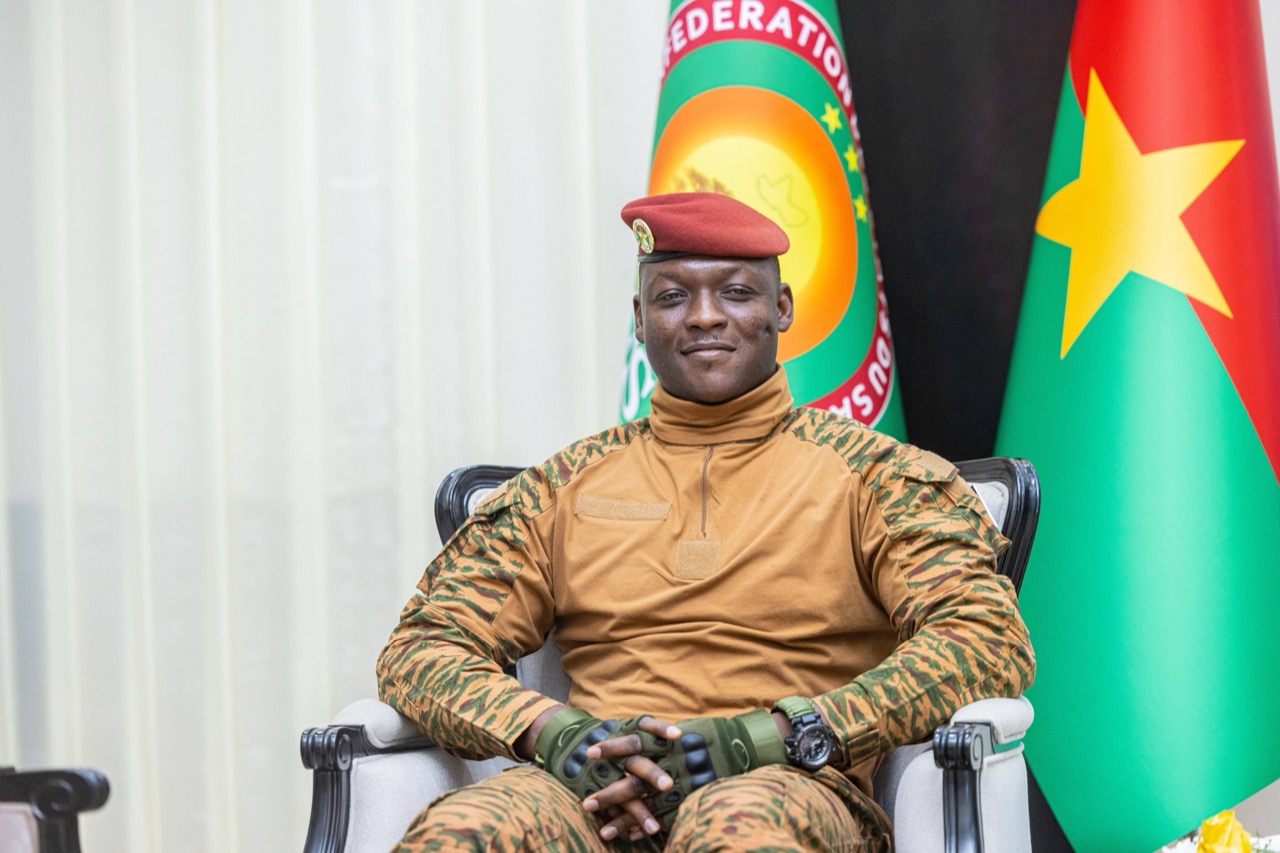
Why now? Why this rhetorical escalation in February 2026, more than two years after the expulsion of French soldiers?
Short answer: because the junta is in trouble. The attack on Niamey airport was a security disaster — the capital itself is no longer out of reach of armed groups. Power outages are worsening. The informal embargo from neighboring countries is driving up food prices. In this context, pointing to Paris as responsible is politically effective.
This is the classic mechanism of the manufactured enemy: when internal legitimacy erodes, an external threat is designated. France is, for the Sahel juntas, an infinitely convenient target. It has two centuries of colonial presence to account for, an erratic African policy under Macron, and enough real economic interests that accusations of neo-colonialism never sound entirely false.
General Ibro is not preparing for a war. He is preparing a loyalty election — or rather, in the absence of elections, a street validation.
Moscow in the background
What Ibro's speech does not say is that it was Russian soldiers who participated in the defense of Niamey airport during the attack on January 29. This information, confirmed by the Russian Ministry of Foreign Affairs, reveals the depth of Niger's strategic pivot.
The junta has replaced a French military presence with a Russian one — Africa Corps (formerly Wagner), trainers, intelligence resources. This is not a break from foreign military dependence; it is a change of supplier. But this point does not interest the crowd at the Niamey stadium.
In Moscow, Ibro's scene was met with discretion — neither public approval nor disavowal. Russia prefers that its Sahelian allies maintain a certain facade of autonomy. A formal declaration of war against France would be diplomatically cumbersome.
What it changes — and what it does not change
A direct armed conflict between Niger and France is very unlikely in the immediate future. France maintains no combat presence in Niger. Paris has no interest in a military confrontation in West Africa amid tensions in Eastern Europe. And Niger does not have the military capabilities to seriously threaten French interests outside its territory.
What is likely, however:
- New incidents at the Niger-Benin and Niger-Côte d'Ivoire borders, two pro-French states targeted by Tchiani's accusations
- Actions against remaining French mining interests, beyond the nationalization of Somaïr
- A verbal escalation if Orano wins international arbitration proceedings
- Information manipulation operations targeting French nationals or NGOs active in the region
Niamey airport is just a few kilometers from the city center. This space — a mixed civil-military area, accessible from several routes — remains a structural vulnerability. If the junta continues to weaken, other armed groups are watching.
In this type of war rhetoric, the real risk is not that the two armies confront each other — it is that a poorly managed incident, a blunder, a wrongly attributed attack, puts both capitals in a position from which it is difficult to back down without losing face.
The Nigerien junta needs a French enemy to hold on. France needs Niger to remain stable to protect its interests beyond Niamey. These two contradictory needs coexist until the next incident.
And the next incident, in the Sahel, never waits long.
General Amadou Ibro announced the mobilization of hundreds of young Nigeriens against France during a speech in Niamey on February 11, 2026. He declared preparations for war, following accusations that France sponsored a recent attack on the airport. The junta's rhetoric aims to consolidate power amid internal challenges, leveraging historical grievances against France.
- General Amadou Ibro announced mobilization against France on February 11, 2026.
- The Nigerien junta accuses France of sponsoring an attack on Niamey's airport.
- Russian soldiers reportedly assisted in defending the airport during the attack.
- The junta has nationalized French mining interests, fueling anti-French sentiment.
- The rhetoric serves to distract from internal challenges faced by the junta.