
Nigeria and the AES close in 2026 — the JNIM gains the border area
 S.W
S.WNigeria and the Sahel Alliance Close in 2026 — JNIM Gains Border Space
In Katsina, Sokoto, and Kebbi, the issue is not a new front line drawn on a map. It is a 1,608-kilometer border that neighboring states continue to monitor separately while armed groups cross it like a secondary track. Incursions attributed to Jama’at Nusrat al-Islam wal-Muslimin (JNIM) and the Islamic State Sahel Province (ISSP) in northern Nigeria come at a time when Abuja and the Sahel States Alliance (AES) are communicating less and less.
The available elements do not allow for attributing each incident to a single chain of command. This reservation is important. But the trend is confirmed by several recent sources: violence is descending towards the coastal states, while regional coordination mechanisms are unraveling.
An Operational Blind Spot at the Border
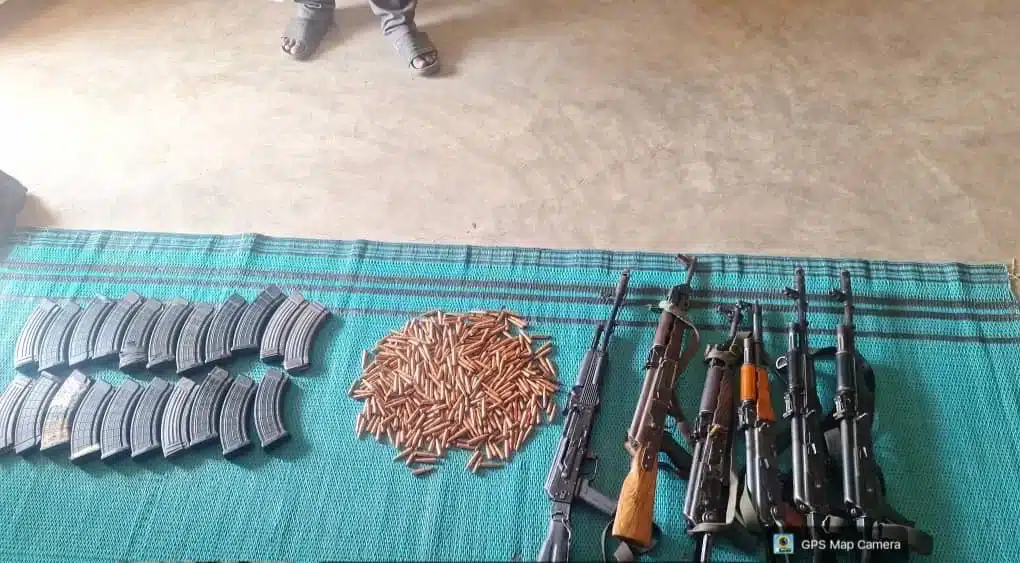
Northern Nigeria accumulates three vulnerabilities. The rural areas of Sokoto and Kebbi are far from major command centers, smuggling networks are well-established, and armed banditry is already mobilizing men, motorcycles, and informants. For a jihadist organization, it is more effective to graft a religious discourse and group discipline onto these circuits than to create an entirely new infrastructure.
The GIS Reports describe this push as a search for labor, resources, and logistical routes, rather than a simple retreat under military pressure in the Sahel. The W-Arly-Pendjari, straddling Benin, Burkina Faso, and Niger, offers an example of what insurgents are seeking: few roads, long distances, intermittent aerial surveillance, and protected spaces where a unit can disappear after an attack.
The south is not an empty backyard. It connects markets, cattle corridors, and gold mining sites. Organized crime provides vehicles, false papers, and taxation mechanisms. Jihadism then brings a hierarchy, coercive capacity, and a claim to govern. On the ground, the distinction between fighter, bandit, and transporter is not always stable.
The Abuja–AES Break Complicates Every Response
Since the coup in Niger in July 2023, the relationship with Nigeria has deteriorated. Niamey, Bamako, and Ouagadougou left ECOWAS in 2025, and Niger withdrew from the Multinational Joint Task Force combating armed groups around Lake Chad. The borders remain open to armed men, but the staffs exchange less intelligence and plan fewer joint operations.
The paradox is brutal. Nigerien and Nigerian military forces sometimes continue to cooperate at the local level, particularly because soldiers know each other and border villages need an immediate response. But this ground cooperation no longer has the political framework that allows for sharing images, pursuing a fleeing unit, or closing a corridor for several days.
Nigeria sees in the AES a neighbor that transforms sovereignty into a refusal of coordination. The Sahelian juntas accuse Abuja of relaying Western pressure and seeking to destabilize their regimes. Public statements matter less than their practical effects: each aerial incident, each cross-border arrest, and each contested patrol increases the political cost of a joint operation.
“On the ground, we continue to exchange,” said Nigerian Chief of Staff Olufemi Oluyede in May, while acknowledging that cooperation is no longer as structured as it should be.
JNIM, ISSP, and ISWAP Do Not Play the Same Game
It would be dangerous to speak of a unified jihadist front. JNIM, affiliated with al-Qaeda, generally seeks to establish a lasting local influence, negotiate with certain communities, and impose regular levies. ISSP favors a more direct competition with authorities and its rivals. In the Lake Chad basin, Boko Haram and the Islamic State West Africa Province (ISWAP) maintain their own networks in Borno and Yobe.
These factions fight each other, but their areas of action can touch, and their trajectories can cross. There are even indications of personnel transfers between Islamic State factions in northern Nigeria. This does not prove a permanent operational alliance. It rather shows that fragmentation does not guarantee security: it multiplies the groups capable of testing a poorly coordinated border.
The number of attacks is not enough to measure the danger. GIS Reports notes that Sub-Saharan Africa recorded 221 terrorist incidents in 2025, compared to 111 the previous year, with fewer attacks in some countries but more deadly ones. For Nigerian forces, the most concerning signal is the combination of incursions, banditry, and attacks on infrastructure. A road cut for 48 hours can produce more strategic effect than a spectacular assault on a base.
The Next Test Lies North of Benin
Benin is the most exposed link in the coastal belt. Its attacks rose from 5 in 2021 to 155 in 2024 according to figures cited by GIS Reports. The W-Arly-Pendjari park makes movement difficult for an army that relies on roads, fixed bases, and late intelligence. Togo, Côte d'Ivoire, and Ghana have stronger defenses or better administrative integration, but none can treat the border as a simple barrier.
The operational priority is therefore not to proclaim a new regional force. It is necessary to enable limited and verifiable action: quickly share alerts, allow pursuit along a few agreed axes, secure border markets, and protect communities that refuse jihadist taxation. Without this minimum, armies will continue to win local battles while losing control of the intervals between their areas of responsibility.
From my experience in the Sahel, I am wary of maps that color a region in uniform red. The decisive question is more concrete: which unit can reach a village before nightfall, and who will open the road for them? In 2026, the fracture between Nigeria and the AES gives JNIM and ISSP a troubling answer. Their maneuvering space does not need to be conquered all at once; it is enough that no one is politically authorized to close it.
Sources
In 2026, armed groups, particularly Jama’at Nusrat al-Islam wal-Muslimin (JNIM) and Islamic State Sahel Province (ISSP), increased incursions across the Nigeria-Sahel border, notably in Katsina, Sokoto, and Kebbi. The relationship between Nigeria and the Sahel States Alliance (AES) has deteriorated, complicating military coordination. The region has seen a rise in terrorist incidents, with a notable increase in violence and operational challenges for local forces.
- JNIM and ISSP are increasing their activities in northern Nigeria.
- The relationship between Nigeria and the Sahel States Alliance (AES) has deteriorated since the July 2023 coup in Niger.
- There is a lack of coordination among military forces in the region, complicating responses to incursions.
- The number of terrorist incidents in sub-Saharan Africa has increased significantly in 2025 compared to the previous year.
- The situation in the border areas is characterized by a mix of jihadist, bandit, and organized crime activities.