
North Korea's Drone and Missile Combined Attacks Changing the Air Defense Design of Japan, the United States, and South Korea
 Tanaka Takashi
North Korea's Drone and Missile Combined Attacks Change the Air Defense Design of Japan, the U.S., and South Korea
The report from a U.S. newspaper dated September 27 highlighted information that North Korea is testing a "swarm attack" that simultaneously combines drones, missiles, and long-range artillery. South Korean media also reported on the 28th that such combined attacks would impose new burdens on air defense in the Korean Peninsula. It is not yet at the stage to conclude that North Korea has a fully developed system ready for operational deployment. However, even when separating capability and intent, the direction of training cannot be ignored.
The Aim is Not the Number of Destruction but Air Defense Saturation
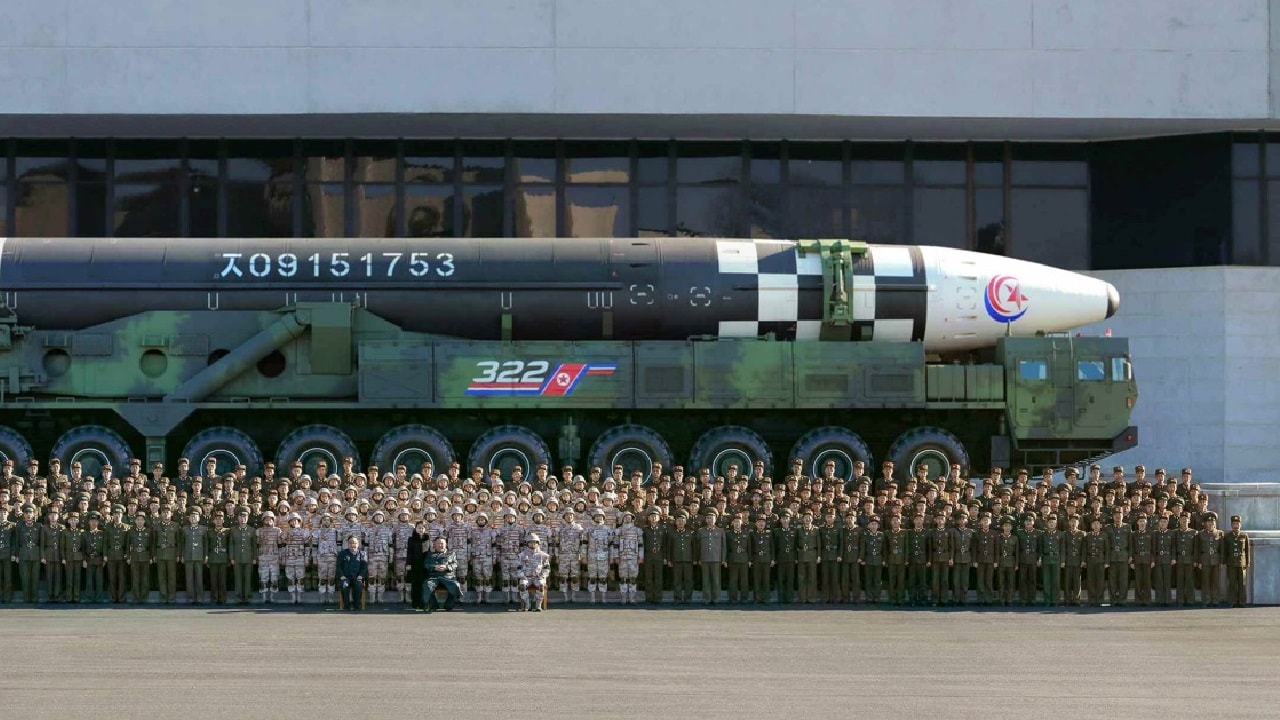
By sending drones ahead to elicit responses from radar and command communication centers, short-range ballistic missiles and artillery fire can then be layered on top. In this order, even if the destructive power of individual drones is small, it can simultaneously exhaust the interception missiles, artillery shells, and engagement control processing capabilities. What makes it difficult for the South Korean military is that low-altitude targets and high-speed targets approach from different directions, rather than the ballistic missiles themselves. Even if the U.S.-South Korea alliance's intelligence, surveillance, and reconnaissance capabilities are superior, it is necessary to identify and prioritize all targets within a few minutes after launch.
The Combination with Tactical Nuclear Weapons is a Separate Issue
South Korean reports also included expert views that the wave attack of drones and missiles increases the likelihood of successful follow-up strikes after a tactical nuclear attack. This does not mean that North Korea has immediately decided to use nuclear weapons. Rather, it is the idea of paralyzing part of the air defense network with conventional forces and enhancing the credibility of nuclear threats. This aligns with reports of joint fire training by North Korea's long-range artillery and missile units in September, but the actual number of drones, control methods, and nighttime hit accuracy have not been confirmed. This is a part where exaggeration should be avoided.
Implications for Japan
For Japan, the issue is not only whether North Korea's attacks will directly target the Japanese archipelago. In the event of a crisis on the Korean Peninsula, U.S. military bases in Japan, ports, and supply bases will become rear hubs, and the Japan Maritime Self-Defense Force's escort ships and Japan Air Self-Defense Force's base air defense may be required to supplement South Korea's air defense shortcomings. While Aegis ships have high ballistic missile defense capabilities, it is not rational to handle inexpensive drones with the same expensive interception systems. Without combining close-range air defense, electronic warfare, passive sensors, and dispersed operations of bases, it will not be possible to adequately protect ammunition depots and radars.
The weakness of air defense appears in command systems that cannot simultaneously handle targets at different speeds and altitudes, rather than the fastest missiles.
Cooperation among Japan, the U.S., and South Korea is not sufficient with just the sharing of launch information. It is necessary to align rules of engagement, the interchangeability of interception missiles, and alternative means to prepare for communication disruptions between bases during peacetime. Even if North Korea's swarm attack is still in the demonstration phase, the lessons learned from it are clear. The real risk is not the performance of the drones, but the three countries trying to defend the same airspace with separate air defense philosophies.
Main sources: The Wall Street Journal (September 27, 2026), Chosun Ilbo (September 28), SBS South Korean reports (September 27), Ministry of Defense and Self-Defense Forces' Korean Peninsula security materials.
North Korea is testing a combined attack strategy using drones, missiles, and artillery, which poses new challenges for air defense on the Korean Peninsula. This swarm attack approach aims to overwhelm defenses rather than achieve high kill counts. The implications for South Korean and Japanese defense systems are significant, necessitating improved coordination among U.S. and allied forces.
- North Korea is testing swarm attacks combining drones, missiles, and artillery.
- The combined attack strategy aims to saturate air defenses rather than achieve high kill counts.
- There are concerns about the implications for South Korean and Japanese air defense systems.
- The report highlights the need for improved coordination among U.S., South Korea, and Japan in response to these threats.
- The actual capabilities of North Korea's drone and missile systems remain unverified.