
North Korea's New Air Defense Missile Test Reveals Blind Spots in US-Japan-Korea Missile Defense for 2026
 Tanaka Takashi
North Korea's New Air Defense Missile Test Reveals Blind Spots in US-Japan-South Korea Missile Defense for 2026
On November 4, North Korea launched multiple missiles off its east coast. According to the South Korean military, this marks the fourth launch in a month. On the same day, KCNA reported on the testing of a newly designed air defense missile system and training for cruise missile attacks. Many details regarding the types of missiles launched and their flight parameters remain undisclosed, making it premature to determine individual performance. However, when viewing the consecutive launches and air defense training as part of the same trend, it is noteworthy that Pyongyang is simultaneously developing defensive capabilities that complicate the surveillance and interception networks of the US, Japan, and South Korea, in addition to its offensive missile capabilities.
Significance of the New Air Defense Missile
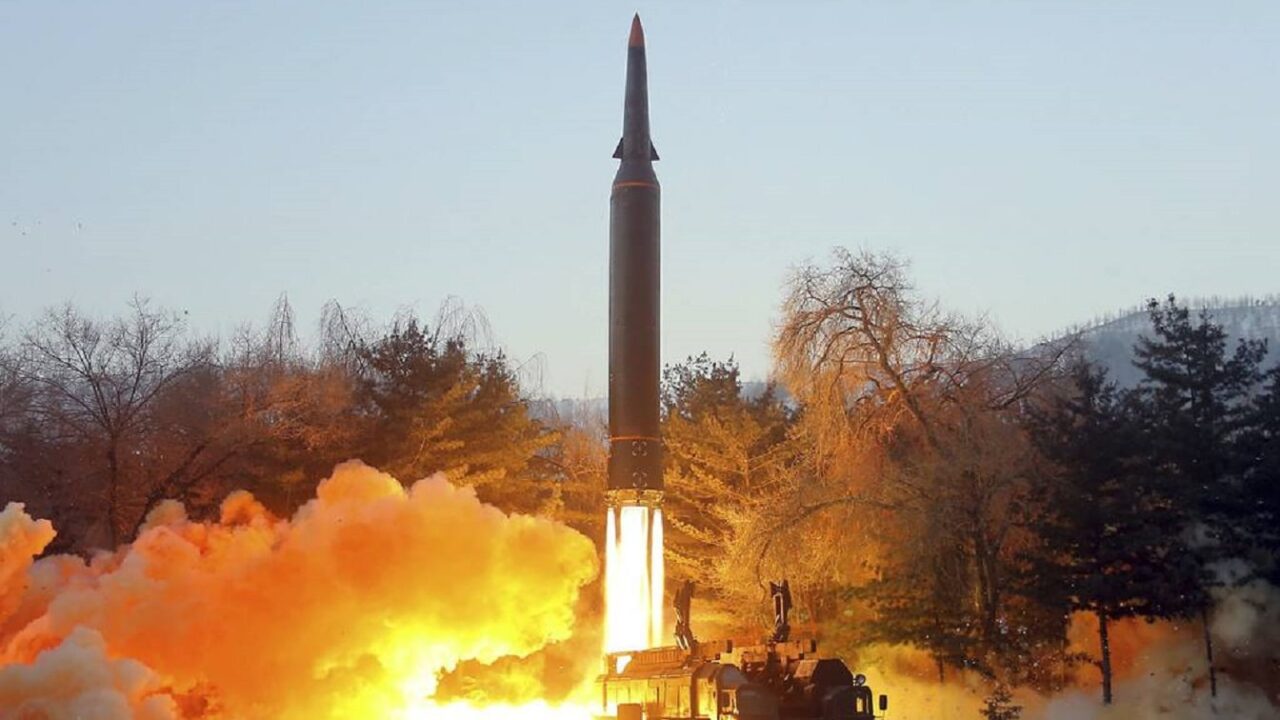
According to KCNA information reported by Reuters, this air defense missile is said to be a newly designed system. The range, simultaneous engagement capability, and radar configuration are not clear. Therefore, it is premature to immediately label this as equipment that counters South Korea's THAAD or Japan's Aegis-equipped SM-3. However, there is practical significance in North Korea conducting cruise missile attack training alongside air defense tests. It is possible that they are transitioning to integrated training that deploys air defense forces after the launch of attack units to disrupt the opponent's air and missile operations.
Challenges Facing the Japan Maritime Self-Defense Force
For Japan, the issue is not just the impact point of ballistic missiles. If cruise missiles and low-flying targets are mixed, the Japan Maritime Self-Defense Force's escort ships, the Japan Air Self-Defense Force's warning and control, and US military satellite and aerial sensors must be integrated into a single situational picture. The ballistic missile defense that the Ministry of Defense has prioritized is strong in dealing with targets coming from a vertical direction, but detecting low-flying targets utilizing coastlines and islands requires different sensor arrangements and engagement rules.
The Japanese government and the United States are advancing cooperation that includes not only ballistic missile defense but also space, cyber, and maritime security. However, even if information sharing is possible, it does not necessarily mean that the time from identifying launch signs to moving escort ships and fighter jets will be shortened. Whether the trilateral cooperation among Japan, the US, and South Korea functions politically, and whether the Japanese frontline units can immediately utilize South Korean military data, will be the actual litmus test.
Separating Capability and Intent
North Korea's intent is believed to encompass external intimidation, domestic propaganda, and practical training. However, even if the intent changes, the accumulation of equipment and troop operations remains. If this launch is treated as a one-off demonstration, it would underestimate the burden when cruise missiles, drones, and ballistic missiles appear simultaneously next time. In the author's view, the true blind spot lies not in the number of interceptors but in the command speed to classify multiple threats within the same maritime and aerial situational picture. Even if the performance of the air defense missiles remains unclear, North Korea's display of air defense capabilities already has the effect of dispersing the surveillance resources of the US, Japan, and South Korea.
Reference Information
North Korea launched multiple missiles and conducted tests of a new air defense missile system off its east coast on November 4, 2026. This marks the fourth missile launch in a month, indicating a continued focus on enhancing its military capabilities. The simultaneous training for cruise missile attacks suggests a strategic approach to complicate the defense systems of Japan, the U.S., and South Korea.
- North Korea launched multiple missiles on November 4, 2026.
- This was the fourth missile launch in a month.
- North Korea conducted tests of a newly designed air defense missile system.
- The air defense tests coincide with cruise missile attack training.
- The report highlights potential gaps in Japan, U.S., and South Korea's missile defense capabilities.