
Northrop gets $475M to speed up development of new U.S. hypersonic missile killer
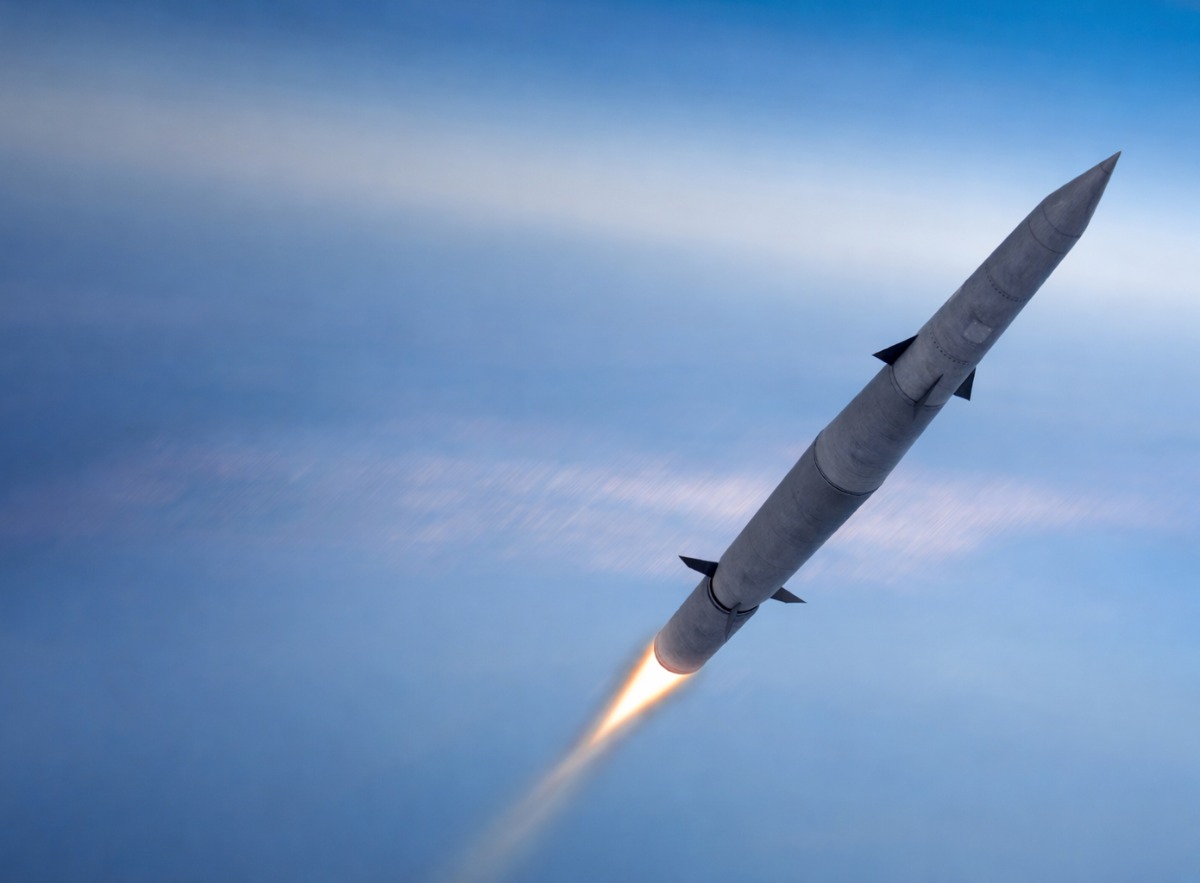
The Missile Defense Agency awarded Northrop Grumman Systems Corporation a $475 million modification to an existing prototype agreement on April 3, 2026, accelerating development of the Glide Phase Interceptor — the United States’ primary program to defeat hypersonic glide vehicles in flight.
The modification pushes the total value of the agreement from $832 million to $ 1.3 billion, more than doubling the original investment and signaling a significant escalation in program urgency.
The Glide Phase Interceptor — commonly referred to as GPI — is designed to address one of the most technically demanding problems in modern missile defense: killing a hypersonic glide vehicle during its unpowered glide phase, after it has separated from its boost rocket but before it reaches its terminal approach to a target. That window is precisely where existing U.S. interceptor systems struggle most. Hypersonic glide vehicles travel at speeds exceeding Mach 5 while maneuvering unpredictably across the upper atmosphere, making them fundamentally harder to track and engage than traditional ballistic missiles that follow predictable arcing trajectories.
The Ground-Based Midcourse Defense system is designed for the midcourse phase of intercontinental ballistic missiles. Terminal High Altitude Area Defense, known as THAAD, engages threats in their terminal descent. Neither system was optimized for a weapon that flies fast, flat, and maneuvering at altitudes between the two engagement envelopes. GPI is intended to close that gap by providing a dedicated intercept capability during the glide phase itself, before the weapon has descended into terminal approach geometry.
Northrop Grumman has been developing its GPI design concept under the original agreement since 2022. The company is one of multiple performers the Missile Defense Agency has engaged on the GPI problem set, though this modification represents a substantial commitment of resources to Northrop’s specific design approach.
Russia has fielded the Avangard hypersonic glide vehicle on intercontinental-range missiles, and China has demonstrated the DF-17 medium-range hypersonic glide vehicle in multiple parades and tests. Both nations have invested heavily in hypersonic strike capabilities explicitly framed as tools to defeat U.S. missile defense systems. North Korea has also tested weapons it describes as hypersonic glide vehicles, though independent assessments of their actual performance vary. The convergence of hypersonic development programs across multiple adversaries has driven the Missile Defense Agency to treat GPI as a high-priority response.
The $1.3 billion total agreement value places GPI among the most significant missile defense development investments currently active within the Missile Defense Agency’s portfolio. With a June 2028 completion date for the current agreement, the program is on a trajectory that could support a transition decision toward engineering and manufacturing development within the current decade — a timeline that aligns with the broader sense of urgency the Department of War has attached to hypersonic defense across multiple program offices and combatant commands.
Whether Northrop Grumman’s design concept ultimately advances to full production will depend on how the interceptor performs against the agency’s technical requirements, but the scale of this latest investment makes clear that Washington is betting heavily on getting that answer as quickly as possible.
Content preview only. Full article available at source. View Full Article
Northrop Grumman Systems Corporation received a $475 million modification on April 3, 2026, to accelerate the development of the Glide Phase Interceptor in the United States. This investment raises the total agreement value to $1.3 billion, reflecting a significant commitment to counter hypersonic glide vehicles. The GPI is designed to engage these threats during their glide phase, addressing a critical gap in current missile defense capabilities. The program is expected to be completed by June 2028.
- Northrop Grumman received a $475 million modification to accelerate GPI development.
- The total agreement value for GPI is now $1.3 billion.
- GPI aims to intercept hypersonic glide vehicles during their glide phase.
- The program is a high priority for the Missile Defense Agency due to threats from Russia and China.
- Completion of the current agreement is expected by June 2028.