
Northrop Grumman tests Lumberjack strike drone
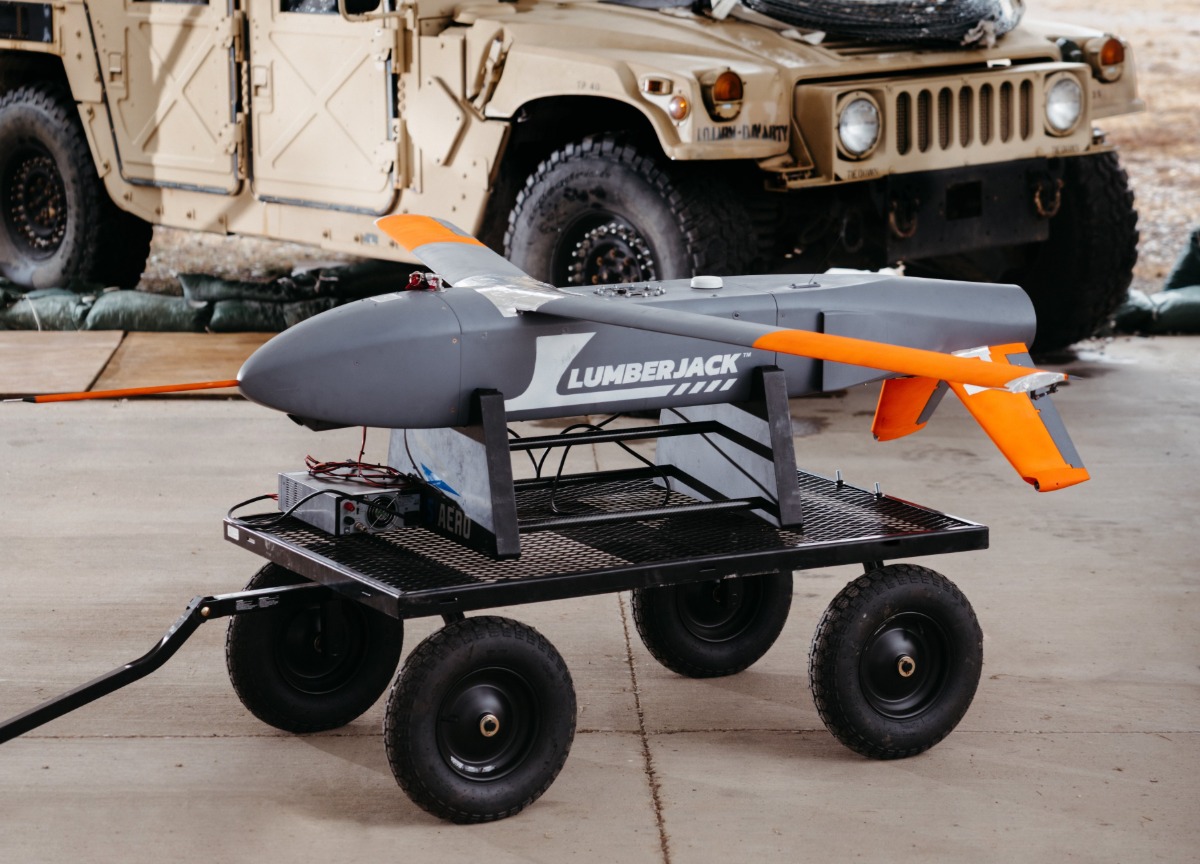
Northrop Grumman on March 31 showcased the autonomous mission capabilities of its Lumberjack Group 3 uncrewed aircraft system during the United States Army 101st Airborne Division’s Operation Lethal Eagle exercise.
According to NG, the Lumberjack drone demonstrated full autonomous mission control through the U.S. Army’s Maven Smart System, allowing Army personnel to test how the platform can operate with limited operator input under human supervision.
The demonstration also included simulated deployment of Northrop’s Hatchet miniature precision strike munition, a six-pound weapon designed to deliver precision effects traditionally associated with larger guided munitions.
In a statement, Michael Bastin, director of distributed systems at Northrop Grumman, said: “After going from concept to flight in under 14 months, we demonstrated Lumberjack’s ability to adapt across diverse missions and payloads at the U.S. Army’s Operation Lethal Eagle exercise.”
He added: “This highly attritable system represents a practical approach to cost-effective uncrewed platforms – changing not just how they operate, but how they dominate the battlefield.”
Maj. Jonathon Bless, public affairs officer for the 101st Airborne Division, said the exercise also served as a venue for evaluating new emerging systems from across the defense industrial base.
“While primarily focused on readiness training, Operation Lethal Eagle also provided a unique opportunity to test and evaluate multiple new emerging systems from across the defense industrial enterprise,” Bless said.
He added: “Northrop Grumman’s Lumberjack was one of many systems tested during the exercise that provided insight into how collaboration between military and industry can drive innovation in defense.”
A key feature demonstrated during the event was adaptive targeting supported by artificial intelligence tools integrated through Palantir’s Agentic Effects Agent. According to the company, the system used automated target detection tools to rapidly adjust to changing battlefield conditions under human oversight.
Northrop said the drone also maintained beyond-line-of-sight communications through satellite datalink, enabling real-time mission updates and battle damage assessment reporting.
Lumberjack is a low-cost one-way attack drone designed as an attritable platform, meaning it is intended to be expendable in combat while maintaining low cost per effect.
The system’s modular center bay allows operators to switch between different payloads, including kinetic strike effects and non-kinetic mission kits.
This modularity is operationally important because it allows the same airframe to be used for strike, surveillance, and intelligence-gathering roles depending on mission requirements.
According to the company, after completing simulated precision strike tasks, the drone transitioned into surveillance mode to collect additional battlefield intelligence, highlighting its multi-role flexibility.
Lumberjack can be launched from both air and ground platforms, increasing deployment options for maneuver forces and enabling use from standoff distances.
Northrop said the system was developed in partnership with Empirical Systems Aerospace and Palantir, progressing from concept to first flight in under 14 months.
Content preview only. Full article available at source. View Full Article
Northrop Grumman demonstrated the capabilities of its Lumberjack drone during the U.S. Army's Operation Lethal Eagle on March 31. The drone showcased autonomous mission control and simulated the deployment of the Hatchet precision strike munition. It utilized AI for adaptive targeting and maintained beyond-line-of-sight communications for real-time updates. The exercise evaluated multiple emerging systems from the defense industrial base, highlighting collaboration between military and industry.
- Northrop Grumman showcased the Lumberjack drone's capabilities during Operation Lethal Eagle.
- The drone demonstrated full autonomous mission control with limited operator input.
- The Hatchet munition was simulated for deployment during the exercise.
- The system allows for adaptive targeting using AI tools.
- Lumberjack can be launched from both air and ground platforms.