
Northrop Grumman’s Jackal missile passes key flight test
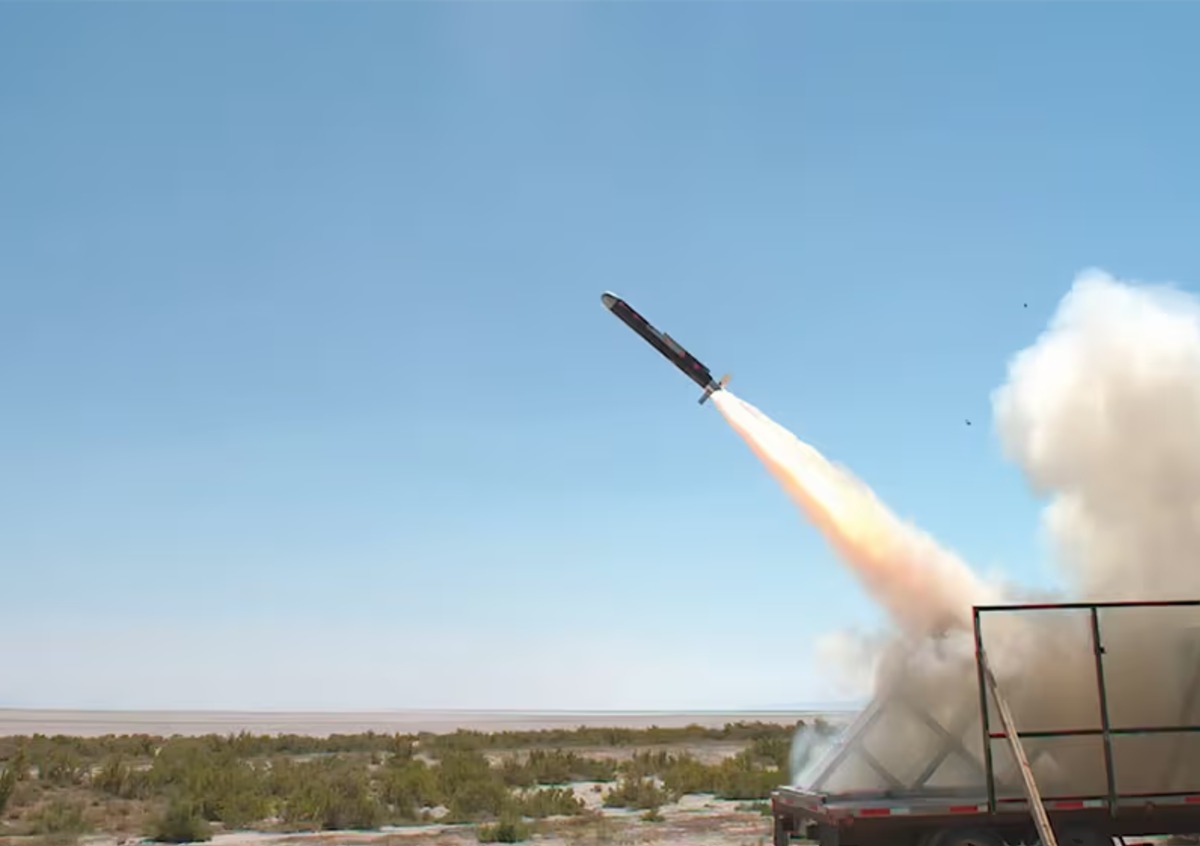
Northrop Grumman completed a successful flight test of its Jackal precision strike missile on June 1, demonstrating the core systems that will define how American ground forces deliver long-range strikes in the most contested environments they are likely to face.
The test validated the missile’s automated turbojet engine startup, autopilot-controlled flight, and high-speed maneuvering, confirming that the airframe, propulsion, navigation, and autopilot systems have reached a level of technical maturity sufficient to support continued development toward operational fielding.
The Jackal addresses a capability gap that has become increasingly urgent as potential adversaries have invested heavily in air defense systems designed specifically to prevent the kind of direct air support that American forces have relied on for decades. An aircraft delivering a precision strike must approach close enough to a target area to release its weapons, and in a heavily contested environment that means penetrating radar coverage, surface-to-air missile engagement zones, and fighter interceptor orbits that a peer adversary maintains specifically to keep strike aircraft away from high-value targets. A ground-launched cruise missile that can be fired from a light tactical vehicle 100 kilometers (62 miles) from the target, flying an optimized low-altitude route designed to minimize its radar detection, changes the calculus for the defender without requiring a crewed aircraft to fly into the threat area at all.
The performance specifications Northrop Grumman has disclosed give a concrete picture of where Jackal fits in the precision strike ecosystem. The missile sustains speeds over 300 mph (480 km/h), which positions it in the subsonic cruise missile category alongside weapons like the Joint Air-to-Surface Standoff Missile and the Tomahawk cruise missile. That speed range allows the weapon to cover 100 kilometers (62 miles) from a surface launch in roughly 12 to 15 minutes, fast enough to strike time-sensitive targets before they can relocate but slow enough to allow the fuel-efficient turbojet propulsion that gives the weapon its range. The air-launch variant extends that reach to 125 kilometers (78 miles), opening a pathway for integration with fixed-wing or rotary-wing aircraft that can position the launch point closer to the target area or in directions that the ground launcher cannot reach.
The AI-driven targeting capability described for Jackal addresses a requirement that distinguishes the current generation of precision strike weapons from their predecessors. Earlier cruise missiles flew to GPS coordinates and detonated at a fixed point, which was effective against stationary targets but struggled against adversaries that learned to move mobile assets between the time a strike was planned and the time the weapon arrived. Jackal’s ability to autonomously identify and engage threats without direct line-of-sight uses on-board AI algorithms to recognize target characteristics during the terminal phase of flight, allowing the weapon to engage targets that have moved from their planned coordinates or to select the most appropriate aim point on a complex target rather than striking a fixed coordinate regardless of what is actually there. Operating in GPS-denied conditions removes the vulnerability to GPS jamming and spoofing that has become a standard part of adversary electronic warfare playbooks.
The integration with light tactical vehicles supporting up to eight launch canisters provides a mobility and firepower concentration that significantly changes what a ground force can threaten without air support. Eight Jackal rounds on a single vehicle, with a 100-kilometer (62-mile) range from the surface, means a small formation can generate precision strike threats across an area of more than 31,000 square kilometers (12,000 square miles) from a single launch position, complicating an adversary’s ability to locate and suppress the launch platform before it repositions. The light tactical vehicle integration also means the launcher does not require a dedicated specialized platform but can be fielded on vehicles that ground forces already operate, reducing the logistical footprint and training burden compared to a purpose-built launcher.
The automated turbojet engine startup validated during the flight test is a detail that carries operational significance beyond its technical description. A cruise missile that requires manual engine preparation before launch introduces time and procedural complexity into what needs to be a rapid-response capability. Automated startup means the weapon can be ready to fire quickly after a fire mission is ordered, supporting the kind of responsive fire support that ground commanders need when targets of opportunity appear rather than waiting for the deliberate targeting cycle that fixed infrastructure strikes allow. Combined with the rapid-fire capability that eight canisters on a single vehicle provides, the combination gives a ground force a tool that can respond to emerging threats with the speed that modern combined arms operations demand.
Northrop Grumman confirmed that additional testing and evaluation are planned as the Jackal program progresses toward operational readiness, indicating the program is in an active development phase rather than approaching immediate fielding. The successful validation of turbojet startup, autonomous waypoint navigation, and propulsion represents the foundational technical milestones that must be established before the more demanding tests of guidance accuracy, target recognition performance, and employment concept validation can proceed.
Content preview only. Full article available at source. View Full Article
Northrop Grumman successfully conducted a flight test of the Jackal precision strike missile on June 1. The missile, capable of being launched from a light tactical vehicle 100 kilometers away, demonstrated advanced features including AI-driven targeting and automated turbojet startup. This development addresses a critical capability gap for U.S. ground forces in contested environments, enhancing their long-range strike capabilities without the need for crewed aircraft.
- Northrop Grumman completed a successful flight test of the Jackal missile on June 1.
- The missile can be launched from a light tactical vehicle 100 kilometers away from the target.
- Jackal features AI-driven targeting capabilities for engaging moving threats.
- The missile sustains speeds over 300 mph and can cover 100 kilometers in 12 to 15 minutes.
- The automated turbojet engine startup allows for rapid response capabilities.