

Sweden’s upcoming Blekinge-class submarines are tailor-made for the Baltic’s cramped, crowded waters. They will offer a significant capability boost over their predecessor submarine class and will be capable of long underwater endurance without needing to surface. Long submerged patrols, a very low acoustic signature, and the ability to operate close to the seabed, where larger submarines are at a disadvantage, are among its core capabilities.
The Blekinge-class and its Anticipated Capabilities
The Blekinge-class is expected to conduct anti-submarine and anti-surface warfare, intelligence collection, mine laying, and the clandestine insertion and recovery of divers and unmanned underwater drones. Saab, the Swedish defense prime that builds the country’s submarines, says the subs combine stealth, advanced sensors, Stirling air-independent propulsion, and a modular combat system on a single platform. Some material from Saab about the Blekinge-class states that its underwater time will be measured in weeks rather than days.
Crucial to these missions is the Blekinge-class size. Though longer than the Gotland-class submarines, they are significantly smaller than their counterparts in, say, the United States Navy, where nuclear propulsion facilitates globe-spanning and nuclear strike capabilities. But in littoral waters, the Blekinge-class will likely shine.
The Blekinge-class Distinction
Perhaps one of the more unusual features of the Blekinge-class is its Multi Mission Portal, a system for launching and recovering special forces, manned vehicles, and unmanned underwater vehicles.
The portal, in essence, transforms the submarine into a mothership, enabling it to deploy sensors or divers without needing to surface or relying on the limited capacity of torpedo tubes.
But another significant element of the Blekinge-class design is its emphasis on stealth. Saab describes reduced noise, a lowered magnetic signature, and reduced visibility to adversary sonar.
Practically speaking, these should make the Blekinge-class more difficult to detect during patrols near maritime chokepoints and coastal approaches.
The Blekinge-class is thought by experts to be among the most advanced non-nuclear submarine designs in the world. H I Sutton, one submarine and maritime exports, explains that “the A-26 is one of the new generation of submarines with hull lines designed to reduce target strength. This is most visible in the sail which incorporates a distinctive chinned profile.” Sutton adds that “the AIP is apparently quieter than on previous boats allowing more of the patrol phase of the mission to be conducted on AIP than current AIP boats.”
The Gotland-class Proving Ground
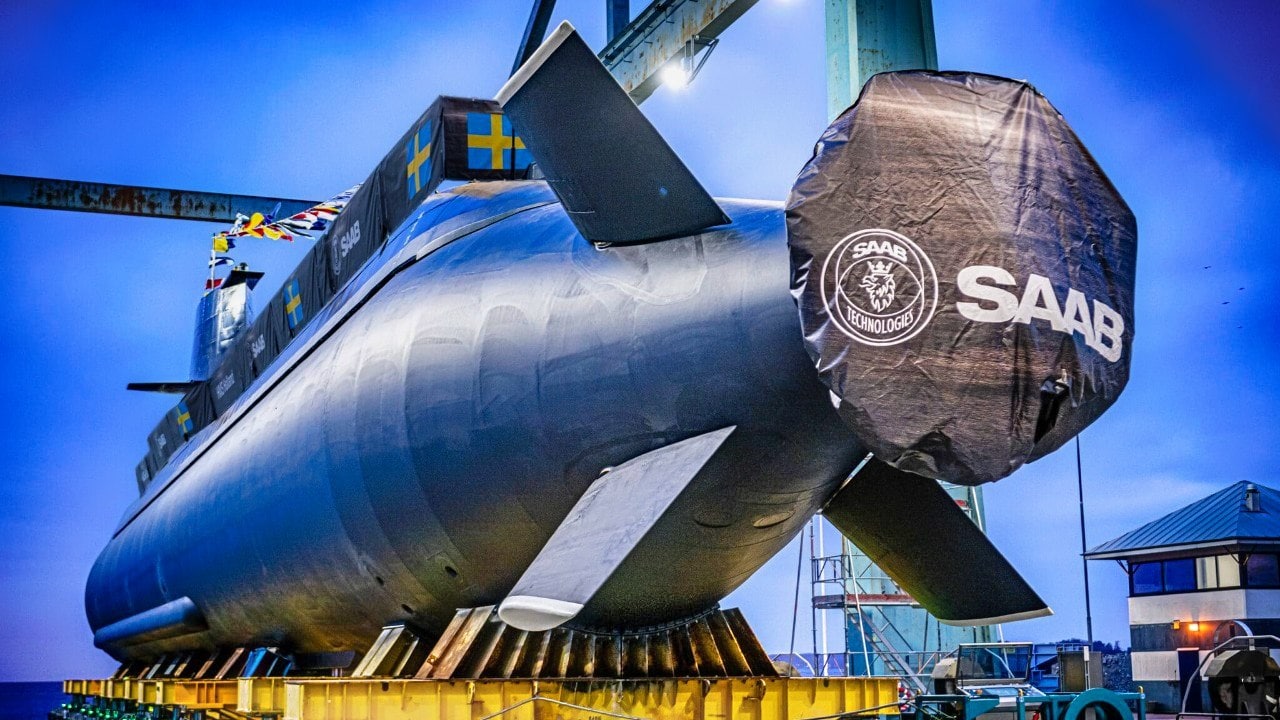
Gotland-Class. Image Credit: Saab.
A number of the technologies that will ultimately be incorporated into the Blekinge-class design are not untested, but will be extensively validated on the Gotland-class. These subs are famous for ‘sinking‘ a US Navy aircraft carrier in combat simulations years ago.
Saab explains that the Gotland-class midlife upgrades pave the way for the Blekinge-class by qualifying new systems before they are introduced on the new submarine class.
Those upgrades include command-and-control functions, modernized sensors, the aforementioned Stirling AIP systems, and a new optronic mast in lieu of the older optical periscope.
The Gotland-class therefore served as a de-risking program for the Blekinge-class.
Both Saab and Swedish procurement officials have used the upgraded Gotland boats as a proving ground, with more than 20 systems implemented on the Gotland-class that will ultimately be deployed on the Blekinge-class as well.
The Baltic as an Operating Environment
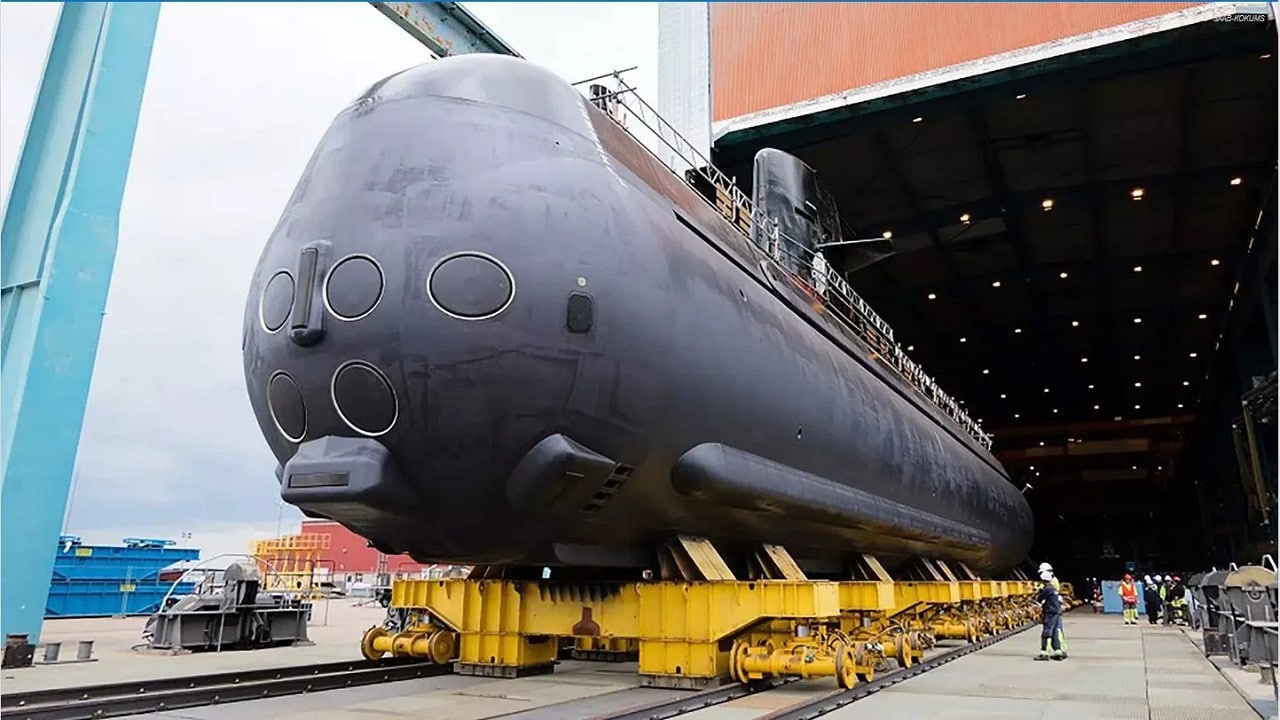
Gotland-Class. Image Credit: Creative Commons.
The Baltic waters where the Blekinge-class is expected to operate are a complex environment, both poetically and geographically.
It is shallow, its salinity gradient complicates acoustics, and maritime traffic density is high. Since Sweden joined NATO, the sea has also become more relevant to NATO’s security and more exposed to Russian pressure campaigns.
Shadow fleet activities and fears of sabotage have also increased. In response, NATO implemented Baltic Sentry, a maritime activity focused on protecting critical undersea infrastructure following damage to undersea cables and pipelines in the area.
The Blekinge-class, therefore, becomes a strategically pertinent choice for Sweden. It is designed to monitor seafloor and surface activities and, if needed, to sit on the ocean floor to launch small underwater vehicles and divers that can inspect underwater infrastructure and, if necessary, defend it.
Though Sweden’s submarines would not guard or escort infrastructure, their presence would make sabotage riskier and surveillance more persistent.
Practically speaking, that means covert monitoring of cable corridors and approaches to Gotland and other areas, including the Danish straits. In a crisis, that could mean hunting enemy submarines, flying mines, or inserting teams or equipment.
About the Author: Caleb Larson
Caleb Larson is an American multi-format journalist based in Berlin, Germany. His work covers the intersection of conflict and society, focusing on American foreign policy and European security. He has reported from Germany, Russia, and the United States. Most recently, he covered the war in Ukraine, reporting extensively on the war’s shifting battle lines in the Donbas and writing on the war’s civilian and humanitarian toll. Previously, he worked as a Defense Reporter for POLITICO Europe. You can follow his latest work on X.