Gotland-class

🇸🇪Sweden
Kockums
1996 – Present
Spotlight

First submarine class in service with Stirling AIP, and the Baltic's ASW benchmark

The Gotland-class Submarine — One of the Most Silent Submarines in the World (Saab)

Watch on YouTube
Overview
Gotland-class
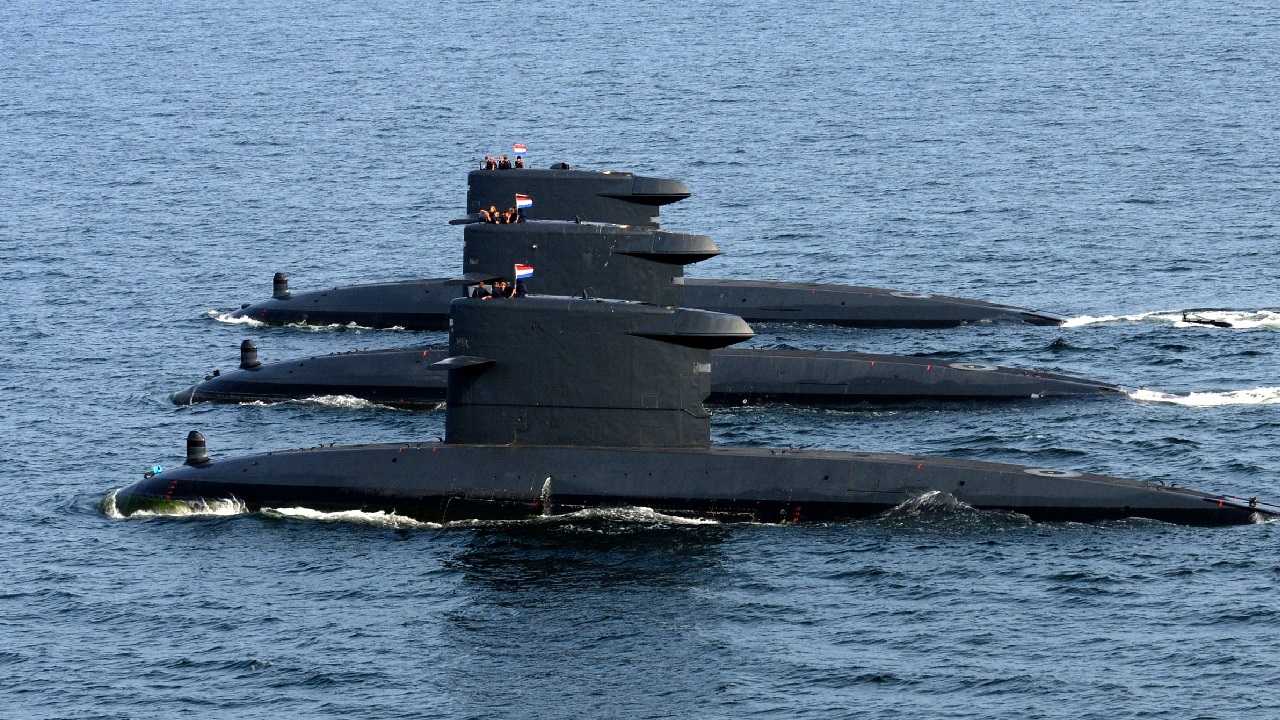
HSwMS Gotland is the first of a group of 3 Gotland-class submarines, designed for missions such as antiship/antisubmarine warfare, intelligence collection, and mine-laying.
Specifications

General

Crew32
Beam M6.2 m
Length M60.4 m
Aip SystemKockums v4-275R Stirling
PropulsionTwo diesel engines, two Stirling engines, one electric motor
Torpedo Tubes6
Endurance Days14 days
Speed Submerged Knots20 knots
Displacement Submerged Tons1,599 tons

Other

Sonar SuiteCSU 90-2 integrated suite; Kongsberg SA9510S added during MLU (reported)
Mine Capacityup to 48 mines in an external girdle (reported)
Boats In Class3 (Gotland, Uppland, Halland)
Length Post Mlu M62 (Saab official); ~62.7 reported after a 2 m hull plug
Speed Surfaced Knots11 (reported)
Stirling Aip Output Kw2 x 75 (v4-275R); upgraded to Stirling Mk III during MLU
Displacement Surfaced Tons1,580 (Saab, post-MLU)
Torpedo Tube Configuration4 x 533 mm plus 2 x 400 mm, swim-out bow tubes
Latest Developments
Sep 19, 2026strong signal
Not Made in the USA: Sweden Is Planning to Build A New AIP Submarine That Might Be One of the Most Quiet on Earth and Was Built Upon a Sub That Sunk a US Navy Aircraft Carrier in a Simulation

The Gotland-class submarines are famous for ‘sinking’ a US Navy aircraft carrier in combat simulations years ago.

Jul 4, 2026strong signal
America’s $13 Billion Aircraft Carriers Keep Getting ‘Sunk’ by Cheap Diesel Submarines. China Is Building Dozens of Them

The Navy wanted the Gotland because it posed a threat that American sonar could not reliably detect, and the exercises that followed confirmed that fear in the most direct way possible.

Mar 24, 2026strong signal
A $20,000,000,000 U.S. Navy Aircraft Carrier Strike Group Was ‘Sunk’ by a $500,000,000 Dutch Submarine

the Swedish Gotland repeatedly “killed” US carriers in another joint-exercise

Mar 11, 2026strong signal
‘Captain, We Have Been Hit’: Tiny NATO Nuclear Submarine ‘Sunk’ $4.5 Billion U.S. Navy Aircraft Carrier in a Wargame

In 2004, the Swedish diesel-electric air-independent propulsion (AIP) submarine, the Gotland, performed a similar feat to what Saphir achieved a decade later.

Mar 7, 2026strong signal
$6,000,000,000 Nuclear U.S. Navy Aircraft Carrier Was ‘Sunk’ By $100,000,000 Diesel Stealth AIP Sub from Sweden

the Gotland exercise—where a Swedish diesel submarine “sunk” a U.S. aircraft carrier—is often cited as the death knell of the supercarrier

Mar 2, 2026strong signal
‘Sir, We Have Been Hit’: A Tiny NATO Nuclear Submarine ‘Sunk’ $4.5 Billion U.S. Navy Aircraft Carrier

In 2004, the Swedish diesel-electric air-independent propulsion (AIP) submarine, the Gotland, performed a similar feat to what Saphir achieved a decade later.

Featured Coverage
Research Notes

Swedish AIP submarine built for Baltic conditions

high

The Gotland class is important because it helped prove air-independent propulsion in a modern non-nuclear submarine force.

The Gotland class is a Swedish diesel-electric submarine family designed around coastal and regional undersea warfare. Its importance comes from the use of Stirling air-independent propulsion, which allows longer submerged endurance than traditional battery-only diesel-electric operation.

Saab describes Sweden as a leader in non-nuclear AIP submarine development and states that Kockums delivered the three Gotland-class submarines in 1995-96. NTI notes that the Swedish Navy operates Gotland-class vessels as part of its diesel-electric submarine force.

For HiWars, this page should explain the class as a regional undersea capability rather than a small version of a nuclear submarine. Gotland is optimized for a different problem set: quiet operations, coastal waters, intelligence, and denial in constrained seas.

Stirling AIP and quiet regional denial

high

Gotland-class value comes from quiet non-nuclear operations, AIP endurance, sensors, torpedoes, and suitability for shallow or crowded waters.

AIP changes the tradeoff for non-nuclear submarines. It does not give the sustained speed and endurance of a nuclear boat, but it can greatly reduce the need to expose masts or snorkels, improving stealth in the submarine's intended operating area.

For the Gotland class, that operating area is strongly linked to Sweden's maritime geography. The Baltic and nearby waters reward quietness, local knowledge, mine and torpedo tactics, intelligence collection, and the ability to operate in shallow or cluttered environments.

This means Gotland should be evaluated by mission fit rather than global reach. A small AIP submarine can be strategically serious when used in waters where it can hide, observe, and threaten higher-value ships.

Mid-life upgrade and A26 technology bridge

high

Gotland modernization matters because upgraded systems also feed into Sweden's next-generation A26 submarine program.

Saab's mid-life upgrade coverage states that HSwMS Gotland received important system updates, including work connected to Stirling AIP and combat systems, to keep the submarine operational beyond 2025. Saab also notes that more than 20 systems from the upgraded Gotland class would be implemented in Sweden's new A26 submarine.

That makes the class a bridge as well as an operational asset. It keeps current Swedish submarines relevant while reducing risk for the next generation of Swedish undersea platforms.

HiWars should connect Gotland records to mid-life upgrade status, A26 development, Swedish naval basing at Karlskrona, and regional security changes in the Baltic after Sweden's NATO accession.

Key parameters at a glance

high

Figures follow Saab's official post-upgrade data sheet where available; open-source values are marked as reported.

Role
Coastal/littoral attack submarine: ASW, anti-surface warfare, ISR, mining
Origin
Sweden (Kockums, now Saab Kockums), Type A19
Class size
3boats (Gotland, Uppland, Halland)
Length overall (post-MLU)
62m (Saab); ~62.7 m reported
Displacement, surfaced
1,580t (Saab, post-MLU)
Hull layout
Single pressure hull, two pressure-tight compartments
AIP
2 x Kockums v4-275R Stirling, ~75 kW each; Mk III standard after MLU
Submerged endurance on AIP
~2weeks at low speed (reported)
Armament
4 x 533 mm and 2 x 400 mm bow tubes; up to 48 mines in external girdle (reported)
Crew (post-MLU)
25(Saab); 32 cited pre-upgrade

Program milestones

high

Milestones drawn from Saab/Kockums releases and reputable reporting.

1990A19 construction begins

Kockums starts building the three-boat A19 class in Malmo; the design pairs a small single-hull littoral submarine with a Stirling closed-cycle plant.

1996HSwMS Gotland commissioned

Gotland enters Swedish Navy service as the first submarine built from the outset around an air-independent Stirling engine; Uppland and Halland follow by 1997.

2005-03US-Sweden lease agreement signed

After a US request granted by Stockholm in October 2004, both navies sign a memorandum of understanding. Gotland is shipped to San Diego and operates as an opposing-force asset, remaining Swedish-flagged and Swedish-crewed.

2005Carrier engagement claim during Pacific exercises

Gotland is reported to have penetrated a carrier screen and photographed USS Ronald Reagan, i.e. reaching a firing position (reported). No official US or Swedish account confirms the details of the engagement.

2006-06Lease extended a further year

Sweden approves a 12-month extension for continued exercises with US, Canadian and Australian forces; Kockums keeps a support team in San Diego. Gotland departs for Sweden in July 2007.

2015-06Mid-life upgrade contract

FMV and Saab sign a SEK 8.6 billion package: two A26 Blekinge-class boats (SEK 7.6 bn) plus a mid-life upgrade of two Gotland-class submarines (SEK 2.1 bn).

2018-06HSwMS Gotland relaunched after MLU

The hull was cut in two and a new section inserted; more than 20 systems were replaced, including a Stirling Mk III plant, new sonar and an optronic mast in place of the optical periscope. Sea trials began in October 2018; Uppland relaunched June 2019 and was delivered December 2020.

2025-02HMS Halland launched after MLU

The third and final boat is launched at Karlskrona following a SEK 1.1 billion upgrade contracted in March 2022, completing the class-wide modernisation and de-risking systems for the A26.

Strategic significance

medium

The Gotland class matters less for its size than for what it proved. It was the first submarine class to enter service designed around air-independent propulsion, and the Kockums Stirling plant gave a 1,500-tonne boat the ability to stay submerged for roughly two weeks without snorkelling. In the Baltic — shallow, acoustically layered by salinity and temperature gradients, and cluttered with shipping and seabed infrastructure — that combination of small size, low signature and patient endurance is a better fit than a large nuclear boat.

The 2005-2007 US Navy lease turned the class into a reference point in the wider debate about conventional submarines. Sweden supplied a Swedish-flagged, Swedish-crewed boat to San Diego to serve as an opposing force, and reporting from the period credits Gotland with reaching a firing position against USS Ronald Reagan and photographing the carrier (reported). Neither navy has published an authoritative account, and exercise conditions — constrained water space, safety rules, scripted objectives — limit how far any single result can be generalised. What is documented is that the US Navy considered the training valuable enough to extend the arrangement by a further year and to run it alongside Canadian and Australian participants.

The mid-life upgrades have converted the class into a bridge to the A26 Blekinge class rather than a terminal design. Cutting the hulls open to insert a new section, fitting a Stirling Mk III plant, an optronic mast and a new combat system put more than twenty A26 systems to sea early, which lowers integration risk on the successor programme while keeping three capable boats available through the 2020s. For Sweden inside NATO, that continuity matters: the Baltic requires persistent, quiet undersea presence for seabed-infrastructure monitoring as much as for classic anti-submarine work, and the Gotland class remains the force that provides it until the A26 is delivered.

Videos

The Stirling AIP — Redefining Sea Time (Saab)

Watch on YouTube

Sweden's Gotland-class Subs: AIP Pioneers of the Baltic Sea (U.S. Naval Institute)

Watch on YouTube

AIP Pioneer — Sweden's Gotland-class Submarine (Bilibili)

Watch on Bilibili
Sources & References
UNITS
NameCountryStatusService YearDescription
HMS Uppland (Sgd)
🇸🇪Sweden
ACTIVE1997 – PresentGotland-class AIP submarine
HMS Halland (Sgd)
🇸🇪Sweden
ACTIVE1997 – PresentGotland-class AIP submarine
HMS Gotland (Sgd)
🇸🇪Sweden
ACTIVE1996 – PresentLead Gotland-class AIP submarine
Related Discussions

No discussions about Gotland-class yet

Start the first discussion