Kilo-class

🇷🇺Russian Federation
1982 – Present
Spotlight

The "Black Hole": a quiet Soviet-era SSK turned Kalibr carrier, now vulnerable in port

Kilo Class Submarine: What You Need To Know (H I Sutton)

Watch on YouTube
Overview
Kilo-class - Image 1
Kilo-class - Image 2
Kilo-class - Image 3
Kilo-class - Image 4
Kilo-class - Image 5
The Improved Kilo-class is a modernized version of the Kilo-class diesel-electric attack submarines, featuring enhanced stealth, advanced sonar systems, and modern missile capabilities.
Specifications

General

Crew52 (Project 636.3, reported)
Beam M9.9 m
Length M73.8 m
Range Nm7,500 at 7 kn snorkelling; ~400 submerged at 3 kn (Russian figures)
Propulsiondiesel-electric
Endurance Days45 (Russian figure)
Speed Submerged Knots19.8 knots
Displacement Submerged Tons3,100 tons

Other

SonarMGK-400 series digital suite (MGK-400EM export / MGK-400W1 on Project 636.3)
Armament6 x 533 mm bow tubes; 18 torpedoes or 24 mines; 4 x 3M14 Kalibr per salvo on Project 636.3; Strela-3/Igla-1M MANPADS
Draught M6.2 (reported)
Test Depth M240 operating, 300 maximum (Russian figures)
Surfaced Displacement T~2,350 (Project 636); ~2,300 (Project 877) (Russian figures)
Latest Developments
Oct 13, 2026strong signal
Russia Built the ‘Black Hole’ Kilo-Class Submarine as a Stopgap Until the Lada-Class Was Ready. The Stopgap Became One of Russia’s Most Important Submarines and Now Fires Kalibr Missiles at Ukraine

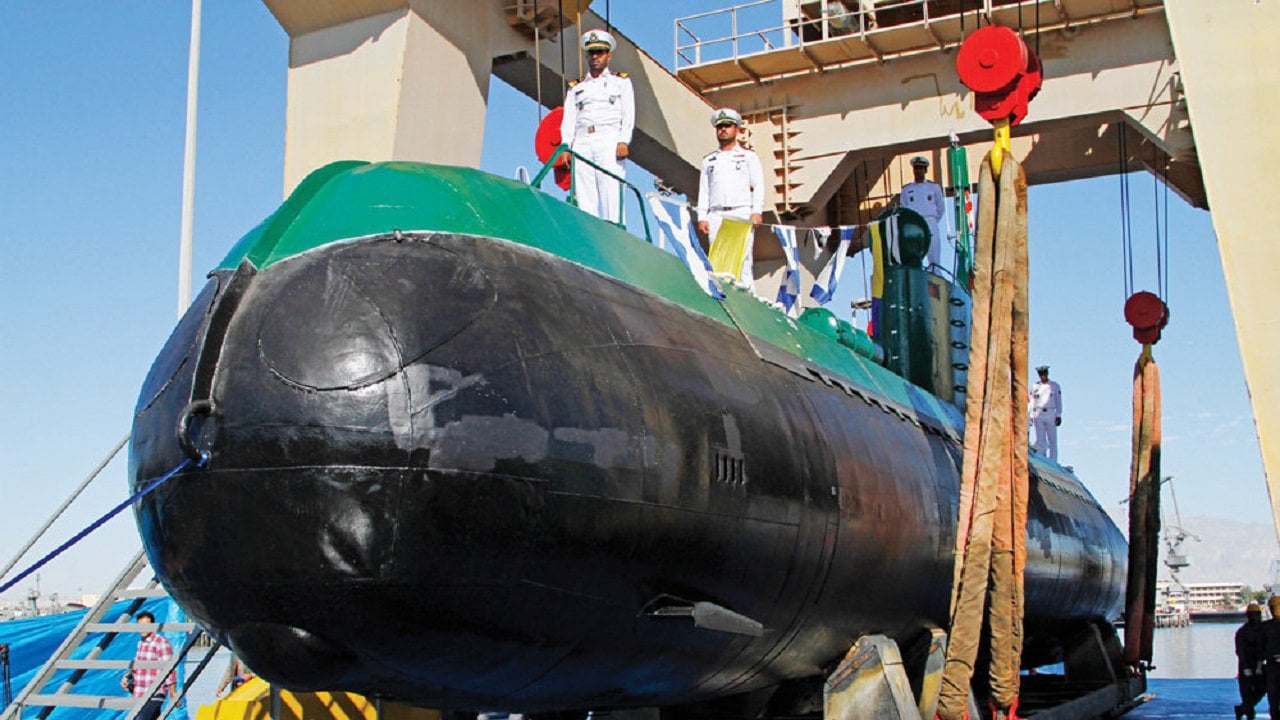
A Russian-built, Kilo-class diesel submarine purchased by Iran, is towed by a support vessel in this photograph taken in the central Mediterranean Sea during the week of December 23.

Sep 22, 2026strong signal
World’s Most Heavily Armed Submarines Fortified with New Anti-Drone Protection ‘Shield’ at Russian Navy’s Key Pacific Base

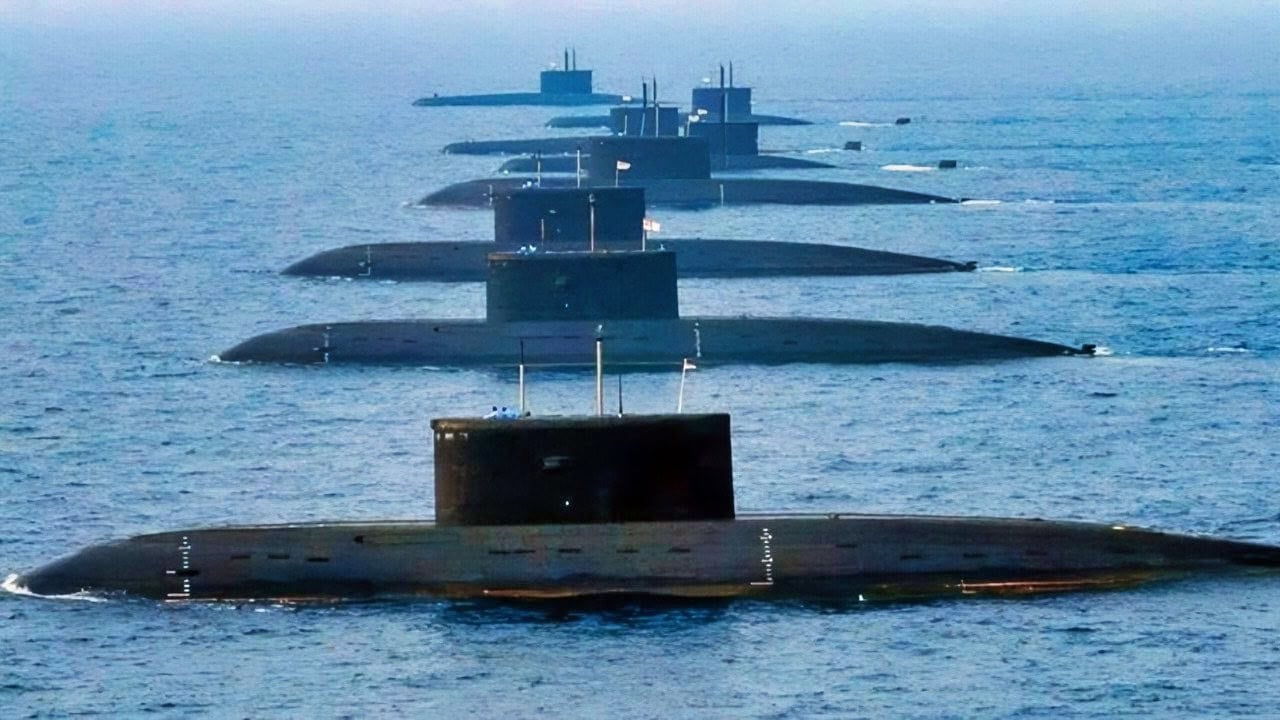
At Novorossiysk on the Black Sea, satellite imagery from June 13 showed cages over the conning towers of three Kilo-class submarines.

Sep 17, 2026strong signal
Russia’s New ‘Diesel’ Lada-Class Submarine Summed Up in 4 Words

Entity 'Kilo-class' mentioned in report

Sep 9, 2026strong signal
A Canadian Oberon-Class Diesel Submarine Built in the 1960s and Worth About $80,000,000 Slipped Past an Entire US Navy Carrier Group. The Umpire Declared the $5,500,000,000 Nuclear Aircraft Carrier USS Dwight D. Eisenhower Sunk.

there have been around eight instances of submarines, mostly diesel-powered, successfully “sinking” American carriers in exercises from 1972 to 2005

Aug 11, 2026strong signal
Iran Had As Many As 23 Mini-Submarines That North Korea Helped Build. No One Knows if the US Military Destroyed Them All

As of August 11, the Pentagon had not released a serial-number list for the 11 submarines it said were gone.

Aug 11, 2026strong signal
Ukraine’s Drones Have Created a New Problem: Russia Is Protecting Its Nuclear Ballistic Missile Submarines With Nets Hiding Half-Submerged

The Russian Black Sea Fleet has equipped three of its four Kilo-class submarines with counter-UAS cages covering the vessels’ conning towers.

Featured Coverage
Research Notes

Diesel-electric submarine optimized for littoral denial

medium-high

Kilo-class boats became widely exported because they offered quiet conventional-submarine capability at manageable cost.

The Kilo class is one of the most successful Soviet/Russian diesel-electric submarine designs. It was built for coastal defense, sea denial and anti-shipping operations where quiet battery-powered running can be dangerous to surface forces. Its broad export record made it a common reference point for conventional submarine capability.

Quiet patrols and torpedo/cruise missile threat

medium-high

Kilo submarines are most useful in chokepoints, coastal waters and regional seas where endurance demands are lower than blue-water SSN patrols.

A Kilo-class submarine is not designed to sprint across oceans like a nuclear attack submarine. Its strength is quiet operation in regional waters, where it can threaten ships, gather intelligence or launch weapons from concealed positions. Later variants with cruise-missile capability increase the class’s land-attack and anti-ship reach.

Exported conventional submarine with persistent regional impact

medium-high

The class matters because many navies can use quiet diesel-electric submarines to complicate stronger fleets’ operations.

Kilo’s importance comes from availability and diffusion. Countries that cannot operate nuclear submarines can still field a credible undersea threat with diesel-electric boats. In confined waters, that can force larger navies to devote substantial anti-submarine resources, making Kilo-class submarines strategically useful beyond their individual specifications.

Key parameters at a glance

medium

Figures are Soviet/Russian or open-source estimates unless stated. The Kilo label covers two distinct generations - Project 877 Paltus and the longer, quieter Project 636/636.3 Varshavyanka - and published values differ between them.

Role
Diesel-electric attack submarine (SSK) for anti-surface, anti-submarine and, on later boats, land-attack missions
Designations
NATO "Kilo"; Soviet/Russian Project 877 Paltus, Project 636/636.3 Varshavyanka ("Improved Kilo")
Builders
Admiralty Shipyards (St Petersburg); earlier hulls also from Krasnoye Sormovo (Gorky) and Komsomolsk-on-Amur
In service since
1982 (Project 877); Project 636.3 from 2010 for the Russian Navy
Displacement
~2,350 t surfaced, ~3,100-3,950 t submerged depending on project (Russian figures)
Crew
~52 (Project 636.3, reported)
Diving depth
240m operating, 300 m maximum (Russian figures)
Armament
6 x 533 mm tubes; 18 torpedoes or 24 mines; Project 636.3 fires up to 4 Kalibr 3M14 in one salvo
Endurance and range
45 days; ~7,500 nm snorkelling at 7 kn, ~400 nm submerged at 3 kn (Russian figures)
Export operators
India, China, Vietnam, Algeria, Iran; Poland and Romania operated single boats (both now retired or non-operational)

Program milestones

medium

Publicly reported milestones across the Kilo family, from Soviet introduction to recent combat losses in the Black Sea.

1982Project 877 enters Soviet service

The first Project 877 Paltus boat is commissioned. Its teardrop hull, anechoic tiling and slow-turning seven-blade propeller give it a radiated-noise signature low enough that Western observers later attach the "Black Hole" nickname to the class.

1986Export program begins

Project 877EKM boats are delivered to India, beginning the Sindhughosh class. Poland, Romania, Algeria and Iran follow over the next decade, making the Kilo the most widely exported Soviet-designed conventional submarine.

1997First Chinese deliveries

China takes delivery of its first Russian-built Kilos, later expanding the order to Project 636M boats fitted with the Club-S (export Kalibr) missile system - the class's first anti-ship missile capability in foreign hands.

2010Project 636.3 ordered for the Black Sea Fleet

Admiralty Shipyards begins a batch of six Improved Kilo boats for the Black Sea Fleet, delivered 2014-2016. These are the first Russian conventional submarines built around the Kalibr land-attack missile.

2013Vietnam receives its first Kilo

The first of six Project 636.1 boats is handed over to Vietnam, forming the core of a new undersea deterrent in the South China Sea; the last of the six arrives in 2017.

2015-12Kalibr combat launch from Rostov-on-Don

Rostov-on-Don fires Kalibr cruise missiles from the Mediterranean against targets in Syria - the first combat use of the weapon from a Russian submarine, and the demonstration that established the Improved Kilo as a strike platform rather than purely a coastal defence asset.

2023-09Rostov-on-Don crippled at Sevastopol

On 13 September a cruise-missile strike, assessed as Storm Shadow/SCALP-EG, hits the submarine in dry dock at Sevastopol, blowing holes forward and aft. Analysts judged it a likely total loss despite Russian claims it would be repaired.

2024-08Rostov-on-Don sunk in harbour

Ukraine's General Staff reports that on 2 August the submarine was struck again at Sevastopol and "sank on the spot" - the first Russian submarine lost to enemy action since the Second World War, and a loss that removed one of four Improved Kilos from the Black Sea Fleet.

Strategic significance

medium

The Kilo's enduring value rests on acoustics rather than performance. A conventional boat running on batteries in shallow, acoustically cluttered water - the Baltic, Black Sea, Persian Gulf, South China Sea - is a genuinely difficult target, which is why the class earned its "Black Hole" reputation and why it sold to India, China, Vietnam, Algeria and Iran. That reputation should be read carefully: it describes a well-handled boat operating submerged in favourable conditions, not an inherent immunity. The design dates from the 1970s, lacks air-independent propulsion, and must still snorkel, which is when it is most detectable.

What changed the class's strategic weight was the Kalibr missile. Project 636.3 turned a defensive coastal submarine into a mobile land-attack platform, and Russia used that capability against Syria from 2015 and against Ukraine from 2022. A handful of relatively cheap conventional boats able to hold targets hundreds of kilometres inland at risk is a disproportionate return on investment, and it is the main reason the Black Sea Fleet's submarine force remained militarily relevant after its surface ships were pushed out of the western Black Sea.

The counterpoint is the loss of Rostov-on-Don. Struck by cruise missiles in September 2023 and sunk at Sevastopol in August 2024, it demonstrated that a submarine's survivability advantage disappears alongside a pier, and Ukraine has since pressed the point with an uncrewed underwater vehicle attack on another Improved Kilo at Novorossiysk in December 2025. The lesson is about basing rather than the design: quietness at sea does not compensate for a base within reach of precision strike, and navies operating Kilos in contested littorals face the same exposure.

Videos

Russian Submarine: Improved Kilo II (Sub Brief)

Watch on YouTube

Ukraine war: The Sevastopol strike explained (Sky News)

Watch on YouTube

Why the Kilo class became a hot seller on the export market (CCTV Online)

Watch on Bilibili
Sources & References
UNITS
NameCountryStatusService YearDescription
RFS Petropavlovsk-Kamchatsky (B-274)
🇷🇺Russian Federation
ACTIVE2019 – PresentProject 636.3 Pacific Fleet submarine
RFS Veliky Novgorod (B-268)
🇷🇺Russian Federation
ACTIVE2016 – PresentProject 636.3 submarine
RFS Kolpino (B-271)
🇷🇺Russian Federation
ACTIVE2016 – PresentProject 636.3 submarine
RFS Krasnodar (B-265)
🇷🇺Russian Federation
ACTIVE2015 – PresentProject 636.3 submarine, Kalibr capable
RFS Stary Oskol (B-262)
🇷🇺Russian Federation
ACTIVE2015 – PresentProject 636.3 submarine
RFS Rostov-on-Don (B-237)
🇷🇺Russian Federation
ACTIVE2014 – PresentProject 636.3 Varshavyanka submarine
RFS Novorossiysk (B-261)
🇷🇺Russian Federation
ACTIVE2014 – PresentImproved Kilo-class (Project 636.3) submarine
RFS Varshavyanka (B-871)
🇷🇺Russian Federation
ACTIVE1980 – PresentKilo-class (Project 877) submarine
Related Discussions

No discussions about Kilo-class yet

Start the first discussion