
November 2026: Two U.S. Air Force F-15EX Aircraft Deployed to Kadena to Restructure Japan-U.S. Air Defense
 Tanaka Takashi
November 2026: U.S. Air Force Deploys Two F-15EXs to Kadena, Restructuring U.S.-Japan Air Defense
On November 15, the U.S. Air Force's F-15EX Eagle II arrived at Kadena Air Base for the first time as a permanently assigned aircraft. Kadena is the first overseas U.S. Air Force base to accept combat-coded F-15EXs, with two aircraft joining the 18th Wing. This is not merely an aircraft upgrade; it is a move to fill the gap left by the phased withdrawal of F-15C/Ds since November 2022 with a permanent force rather than a rotational unit.
Capabilities Brought by the F-15EX to Kadena
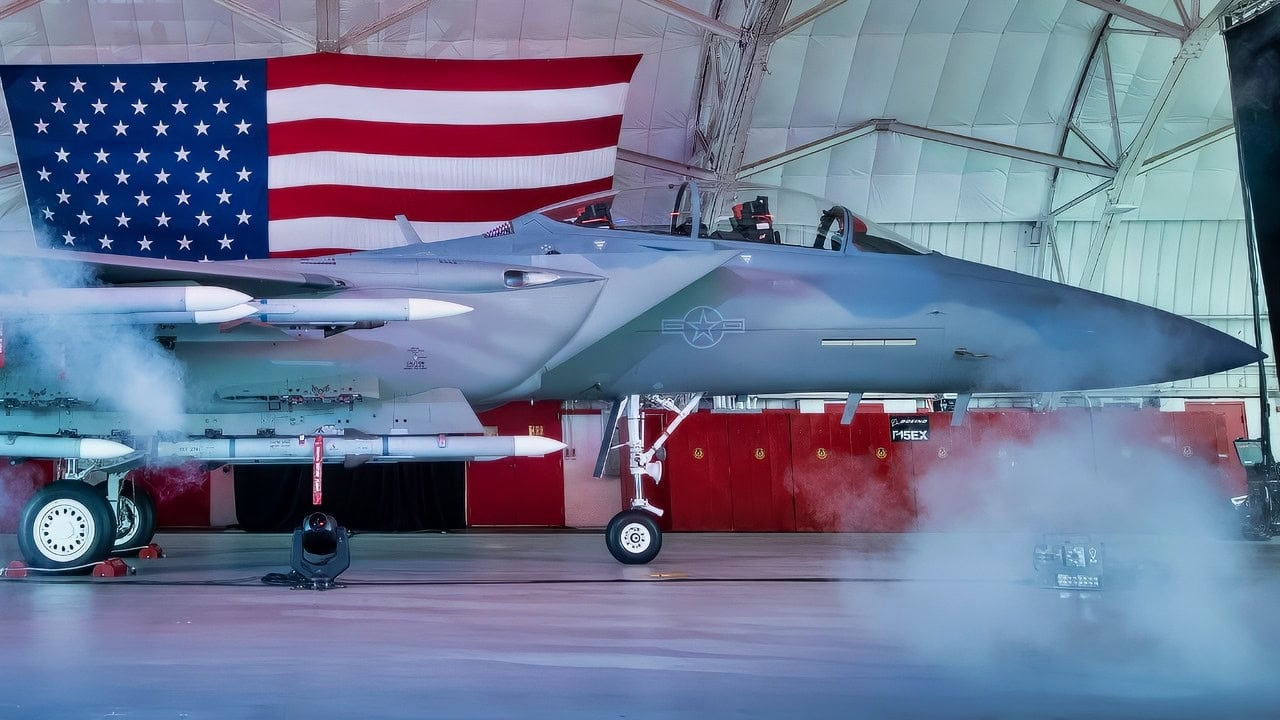
The F-15EX is not a stealth aircraft, but it is a large platform that modernizes speed, range, and payload capacity as an air superiority fighter. According to Boeing's published figures, its maximum takeoff weight is approximately 36.7 tons, payload capacity is about 13.4 tons, maximum speed reaches Mach 2.5, and its service ceiling is 50,000 feet. It is equipped with an AESA radar, EPAWSS electronic warfare system, digital fly-by-wire, and open mission systems, and can carry up to 12 air-to-air missiles.
This capability does not replace low-observable aircraft like the F-35A. Rather, it has the potential to function as an aerial node that receives target information from the F-35 and carries a large number of missiles from long distances or commands manned and unmanned aircraft. The operation of the 44th and 67th Fighter Squadrons at Kadena will integrate the division of labor with fifth-generation aircraft into a permanent structure for the first time.
Significance for the Defense of the Southwestern Islands
Kadena is a critical hub for air operations connecting the Taiwan Strait, East China Sea, and Southwestern Islands. What is important here is not the maximum payload capacity on paper, but the sustainability that includes maintenance personnel, pilots, logistics, and daily training. Before this arrival, the U.S. Air Force sent personnel from the 67th Fighter Squadron to Eglin Air Force Base in Florida and Portland, Oregon, to advance aircraft conversion and qualification training. The maintenance team at Kadena has also accumulated skills in collaboration with Boeing and existing F-15E operational units.
Therefore, the arrival of these two aircraft does not immediately signify a large-scale enhancement of combat power. As the 18th Wing itself explains, "the arrival is just the beginning," with the next challenges being the assessment of operational capabilities, parts inventory, dispersal of runways and parking areas, ammunition resupply, and data connectivity with the Japan Air Self-Defense Force. Particularly considering China's long-range missiles, merely stationing aircraft at Kadena will not provide protection; dispersed operations and rapid regeneration capabilities are essential.
Implications for the U.S.-Japan Alliance
The U.S. Air Force positions this deployment as a strengthening of "the ability to defend Japan alongside its allies." This is not about providing Japan with F-15EXs, but rather a measure to return U.S. forward forces to Japan's base network and to clarify the division of responsibilities for air superiority. When combined with the Japan Air Self-Defense Force's F-35A, F-35B, and upgraded F-15J, different aircraft can share the responsibilities of detection, command, and long-range attack.
In my view, the success of the F-15EX deployment will be determined not by aircraft performance, but by whether Kadena can continue air operations even after being attacked.
The U.S. Air Force has indicated plans to increase its procurement target for the F-15EX from the previous 129 aircraft to 267 in the fiscal year 2027 budget. However, forward bases are vulnerable, and merely increasing the number of aircraft will not serve as a deterrent. Japan must not only strengthen base security but also protect the SLOC (Sea Lines of Communication) and air supply networks, including fuel, ammunition, and maintenance hubs. The blind spot lies not in the speed of deploying fighter aircraft, but in the speed of political and logistical decision-making to continue operations without losing the base.
References
On November 15, 2026, two F-15EX Eagle II aircraft were permanently deployed to Kadena Air Base by the U.S. Air Force's 18th Wing. This marks the first permanent assignment of combat-coded F-15EXs at the base, aimed at enhancing air defense capabilities in the region. The deployment is part of a broader strategy to replace retiring F-15C/D aircraft and improve operational readiness against potential threats.
- Two F-15EX aircraft were permanently deployed to Kadena Air Base on November 15, 2026.
- This is the first permanent deployment of combat-coded F-15EXs at Kadena.
- The F-15EX enhances air superiority capabilities with modernized features.
- The deployment is part of a strategy to fill the gap left by retiring F-15C/D aircraft.
- The U.S. Air Force aims to increase F-15EX procurement from 129 to 267 aircraft by 2027.