
NSA Stirling 2026 Makes AUKUS Real But Not Solvable
 Marcus Chen
NSA Stirling 2026 Makes AUKUS Real But Not Solvable
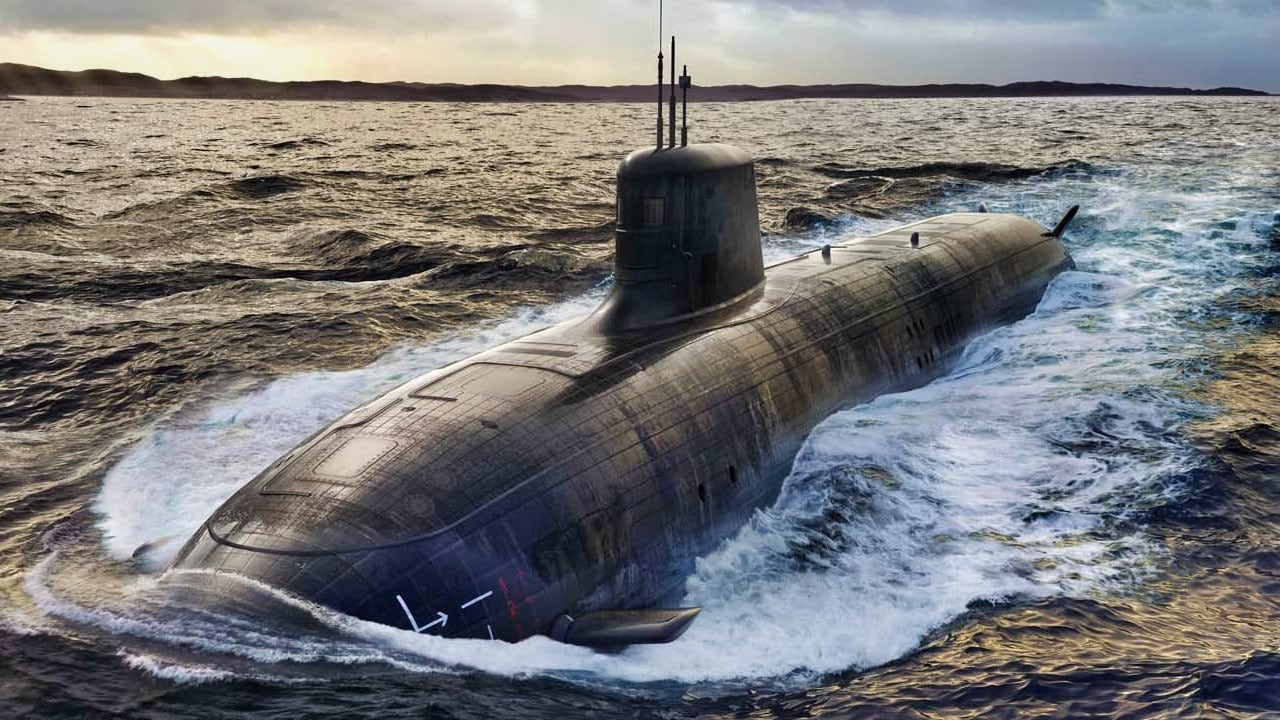
The number that matters is not the opening date. It is five submarines: up to four American boats and one British boat rotating through HMAS Stirling in Western Australia beginning in 2027. Naval Support Activity Stirling, established on May 30 and announced by the U.S. Navy this week, is the shore-side machinery meant to make that rotation livable, maintainable, and politically durable. That is important. It is also not the same thing as solving AUKUS.
Washington, Canberra, and London are now doing the unglamorous work that makes a submarine presence real. Housing, health care, family support, base administration, pass-and-ID, maintenance coordination, and an Australian workforce able to touch nuclear-powered submarines matter more than another communique about Indo-Pacific deterrence. Anyone who has served on a deployed ship knows that readiness is built in these dull layers. A submarine that cannot be maintained, crewed, fed, and turned around is not a forward-deployed combat system. It is a visiting symbol.
The Base Is Finally Catching Up To The Concept
The Navy says NSA Stirling will support U.S. service members, civilians, contractors, and families assigned to Submarine Rotational Force-West, or SRF-West. The activity falls under Navy Region Japan, which was tasked in October 2024 to stand it up. Stars and Stripes reported that first U.S. sailors are already working there, another 80 personnel are expected by the end of 2026, and the American footprint could reach roughly 2,300 people, including families and contractors, by 2030.
That is a real base-building trajectory. It also shows why the 2027 target is tight. A rotational SSN force is not just pier space. It requires nuclear stewardship, parts pipelines, radiological controls, security, dry-side logistics, weapons handling arrangements, and Australian personnel who can work around U.S. and U.K. nuclear-powered boats without pretending Australia already owns that skill base. The DVIDS release on Submarine Squadron 3 is more revealing than the headline about NSA Stirling. CSS-3, previously decommissioned in 2012, is being reestablished at HMAS Stirling to integrate with Royal Australian Navy counterparts and support maintenance, logistics, and operations for rotational U.S. and U.K. submarines.
That is the military heart of the story. NSA Stirling supports people. CSS-3 supports the submarine force. Pearl Harbor Naval Shipyard and Intermediate Maintenance Facility will also stand up a maintenance and logistics detachment in Western Australia in mid-2026. According to the same DVIDS release, about 20 Australian civilian maintainers and 25 Royal Australian Navy divers and support personnel have completed training at Pearl Harbor, with more than 230 others under instruction in Hawaii.
Those numbers are small for an enterprise that eventually has to sustain sovereign Australian nuclear-powered submarines. They are not trivial, though. A maintenance workforce is not produced by a ministerial signature. It is produced by watching experienced yard workers find faults, certify work, and know when a boat is not ready to sail.
AUKUS Has Shifted From Acquisition To Absorption
The May 30 AUKUS defense ministers statement says SRF-West arrangements for 2027 have been finalized, that first U.S. Navy personnel will rotate to HMAS Stirling later this year, and that Australia plans up to AUD 8 billion for infrastructure and logistics at SRF-West. It also confirms a significant change in the Virginia-class purchase path: Australia is now expected to acquire three in-service Virginia-class submarines rather than a mix of new and used boats.
That simplification makes operational sense. If Australia is going to learn on Virginia-class boats, buying one new variant and two older ones would add complexity before the Royal Australian Navy has built the muscle to manage any of them. Three in-service boats reduce training and maintenance variation. The tradeoff is political. A used-boat pathway makes the deal look less like Australia buying new sovereign capability and more like Australia inheriting U.S. Navy hulls when Washington decides it can spare them.
The Virginia-class itself is a formidable platform. The Navy lists the class at roughly 7,800 tons submerged, or 10,200 tons with the Virginia Payload Module, with a 25-plus knot speed, Mk 48 torpedoes, Tomahawk missiles, four torpedo tubes, and either legacy vertical launch tubes or Virginia Payload Tubes depending on the block. Block V adds four payload tubes and 28 additional Tomahawk-capable cells. From Perth, a Virginia-class boat has access to the eastern Indian Ocean, the approaches to Southeast Asia, and routes into the South China Sea without starting from Guam, Yokosuka, or Pearl Harbor.
That geography is why China will care. HMAS Stirling gives allied SSNs a southern arc into the theater and complicates People’s Liberation Army Navy planning. A Chinese commander cannot treat the Western Pacific as the only submarine problem if U.S. and British boats are rotating from Australia with local maintenance support.
The Production Math Still Does Not Work
Here is the catch: rotational presence can improve availability in theater, but it does not create new submarines. Congressional Research Service reporting summarized by USNI News earlier this year said actual Virginia-class production has been limited to about 1.1 to 1.2 boats per year since 2022, despite a procurement plan built around two per year. The target rate needed to execute U.S. procurement, replace boats transferred to Australia, and reduce backlog is 2.33 boats per year.
That gap is the AUKUS problem in one line. The United States is trying to increase forward presence, maintain its own attack-submarine inventory, replace aging Los Angeles-class boats, build Columbia-class ballistic missile submarines, and transfer Virginia-class boats to Australia. NSA Stirling helps with forward operations. It does not make Electric Boat and Newport News deliver 2.33 attack submarines a year.
CSIS warned last month that the United States would struggle in a protracted war with China because of shortages in long-range munitions, air defense, interceptors, and unmanned systems, with several key production timelines running three to four years. Submarines are even less forgiving. You do not surge nuclear welders, reactor-certified suppliers, or submarine-qualified crews in a crisis.
The honest assessment is that NSA Stirling makes AUKUS more credible at the operational level and more exposed at the industrial level. A base with people, maintenance detachments, and a squadron headquarters turns AUKUS from a policy promise into an allied undersea posture. But if the U.S. submarine industrial base remains stuck near 1.2 boats per year, the posture becomes a workaround for scarcity rather than a solution to it.
That may still be worth doing. In a Taiwan or South China Sea crisis, a single additional SSN available from Western Australia could matter more than another squadron of aircraft on a vulnerable runway. But the alliance should stop pretending the base solves the boat problem. NSA Stirling is the first serious proof that AUKUS can operate. It is not proof that AUKUS can deliver.
Sources: U.S. Navy, DVIDS, Department of War AUKUS Defense Ministers statement, Stars and Stripes, Defense News, CSIS.
The U.S. Navy established Naval Support Activity Stirling in Western Australia to support the rotation of up to five submarines, beginning in 2027. This facility will provide essential logistics and maintenance for U.S. and U.K. nuclear-powered submarines. Australia plans to invest AUD 8 billion in infrastructure to support this initiative, while the U.S. faces challenges in submarine production rates that may impact operational readiness.
- NSA Stirling will support up to four American submarines and one British submarine starting in 2027.
- The U.S. Navy is establishing a maintenance and logistics detachment in Western Australia by mid-2026.
- Australia plans to invest up to AUD 8 billion for infrastructure and logistics at SRF-West.
- The Virginia-class submarines will be acquired in-service to simplify training and maintenance.
- The U.S. submarine production rate is currently insufficient to meet operational needs.