
Operation Jailbreak Sends 23,000 Air Defense Pieces to CENTCOM in 30 Days and Reveals the Gulf Predicament After the Iran War 2026
 Ahmed Al-Rashid
Operation Jailbreak sends 23,000 air defense pieces to CENTCOM in 30 days and reveals the Gulf's predicament after the Iran War 2026
On May 29, 2026, Breaking Defense revealed that the U.S. military has indeed begun sending updates for Operation Jailbreak to Central Command, not as a technical showcase in a remote lab, but as a direct response to a field need in the Middle East where Shahed drones, small UAVs, and Iranian missiles are forcing every air defense battery to see faster, decide faster, and fire at a lower cost.
The news may initially seem like an internal U.S. matter about software and open interfaces, but in my view, it concerns the Gulf more than Fort Carson. Countries that purchased Patriot and THAAD and spent billions of dollars on radars and command centers are now discovering that owning defensive layers does not automatically mean having a unified defense network. The difference between valuable assets and a combat system is the difference between a warehouse full of weapons and a unit that knows how to fight with them.
What Washington has sent to Central Command
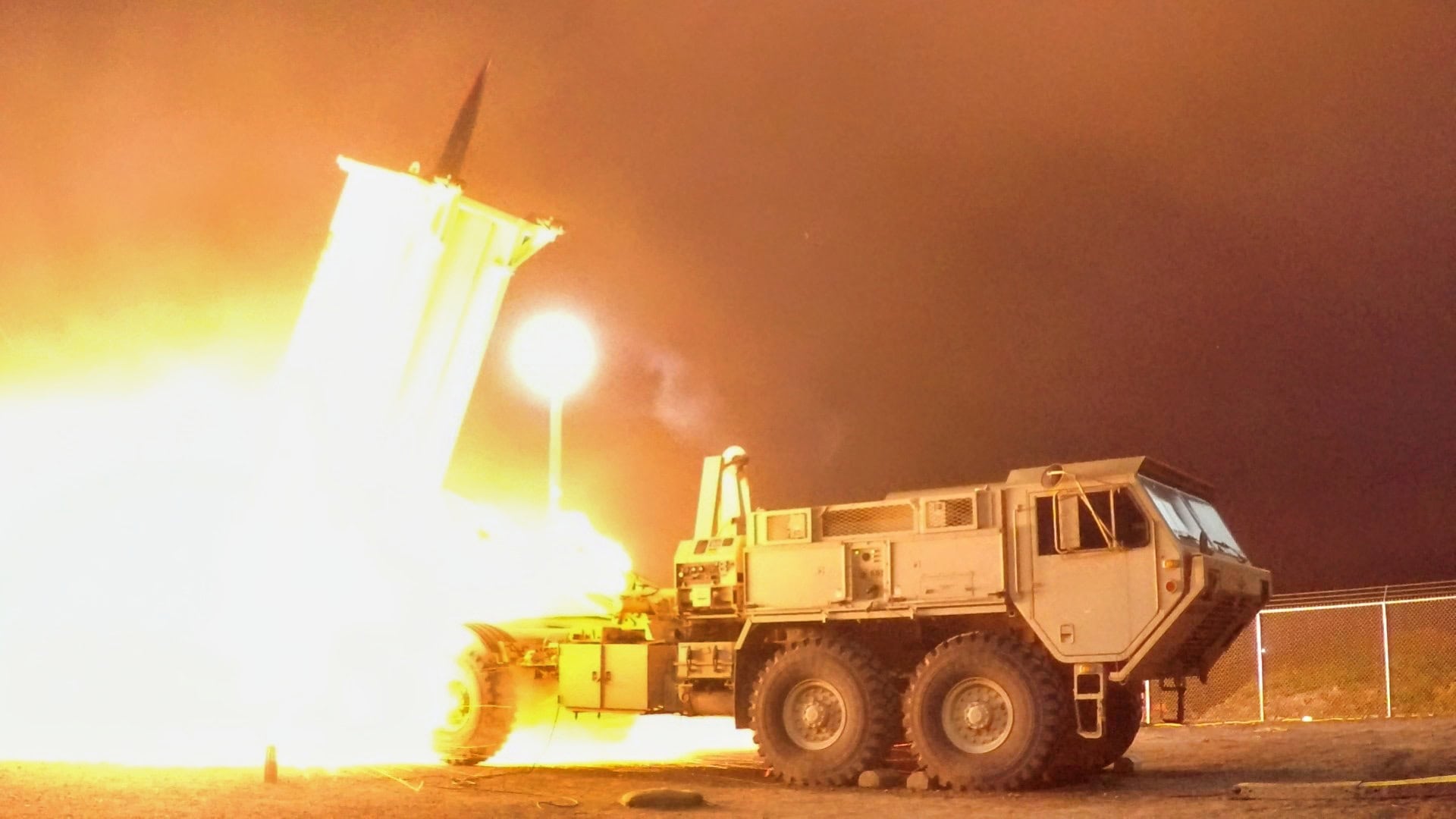
According to Breaking Defense, the Operation Jailbreak project began in early May as a 30-day race to open interfaces between old and new systems to exchange data. U.S. officials stated that the first focus was on the command and control (C2) platform and linking it with counter-UAS systems, radars, cameras, and effects. The stated goal is for the benefits of the project to reach combat within 30 days, and for Central Command to be the top priority before generalizing the model to other theaters.
Importantly, the discussion is no longer about theoretical integration on PowerPoint slides. Officials indicated that some updates have already been sent to CENTCOM, and the rest of the packages are expected to be delivered within the same timeframe. It was also mentioned that 23,000 pieces of equipment in the theater could provide additional protection for soldiers if they become capable of exchanging signals instead of operating as separate islands.
From a military perspective, this sentence alone is enough to understand the problem. When a swarm of drones approaches a base in the Gulf, the question is not just whether we have a PAC-3 or THAAD missile, but which radar spotted the target first, who has the authority to fire, whether a short-range system can use data from a long-range sensor, and whether seconds are wasted translating protocols that do not communicate with each other. Any military personnel who has served in the region knows that the desert does not forgive slow procedures.
The missile crisis necessitates new defense engineering
The CSIS report published on May 27 provided a harsher background. The missiles that were heavily used in the Iran War, particularly THAAD, Patriot, and Tomahawk, will take three years or more to return to pre-war levels, and some THAAD orders will not be completed until near the end of 2029. This is not a financial detail. If a single interception costs millions of dollars and if the stockpile does not replenish quickly, then the way the network operates becomes part of the ammunition itself.
Thus, Operation Jailbreak appears to be an attempt to change the equation of attrition. Washington cannot ask the industry to produce thousands of missiles overnight, but it can try to reduce the number of false interceptions, enable radars to distribute the aerial picture, and connect cheap cameras and sensors with appropriate effects against drones. In a drone war, a system that fires an expensive missile at a cheap target may win the engagement but lose the campaign.
The Gulf understands this equation well. The UAE, Saudi Arabia, Qatar, and Kuwait have multiple layers of air defense, but the experience with Houthi attacks and the subsequent escalation with Iran has shown that defense is not a catalog of equipment. THAAD is excellent against certain ballistic missiles, Patriot is flexible but limited by stock and cost, and C-UAS systems are essential against drones, while the command center is the brain that decides who operates and when. If the brain is slow or locked within systems supplied by different companies, wealth becomes a burden.
The Ukrainian lesson enters the Gulf
Interestingly, U.S. officials linked the idea of Jailbreak to what they observed from Ukraine, particularly the simplicity and speed of systems like Delta in integrating information sources. This is an important lesson for Arab countries. Ukraine did not technologically triumph because it bought the most expensive systems, but because it forced the systems to work together under fire pressure. In contrast, many Gulf armies built their capabilities as separate procurement packages: a radar from one country, a missile from another, an operations center from a third contractor, and then a political hope that integration would happen automatically.
It does not happen automatically. Integration is an institutional decision before it is a technical one. It requires clear authorities, shared data, continuous training, and military engineers capable of modifying the system when the threat changes. Here again, Ahmed's old equation appears: equipment × training × institution. If the equipment is 10 out of 10, training is 5, and the institution is 4, the result is not 10 but a gap that becomes clear on the first night of missiles.
What this means for arms purchasing in the Gulf
The practical message for Gulf countries is not to buy an Arab version of Operation Jailbreak tomorrow. The message is that upcoming defense contracts should start from data and open interface requirements, not just from the number of launchers and missiles. Any Patriot or THAAD deal or new radar should ask: Can this system exchange the picture with other national and Gulf systems, who holds the software keys, and can it be updated in days rather than years?
This question is politically sensitive because suppliers do not like to open black boxes. The United States wants to protect its secrets, companies want to keep the customer within a long maintenance cycle, and Gulf countries want sovereignty without paying the cost of building a real military technology institution. Therefore, integration itself becomes a negotiation arena, like munitions, technology transfer, and training.
In the short term, U.S. Central Command will remain the backbone of this network, which reassures Gulf capitals but weakens the dream of defense independence. In the medium term, those who do not build local capabilities to manage combat data will continue to possess weapons they cannot control. As officers in operations rooms say: a radar that does not reach the shooter is not a radar but a distant lamp.
Conclusion
Operation Jailbreak is not just news about software, but an acknowledgment that the Iran War has made air defense in the Gulf a matter of time, ammunition, and data simultaneously. The region does not suffer from a lack of arms purchases, but from a lack of converting arms into an institution capable of learning under fire. Here lies the paradox: the more valuable the imported equipment, the greater the need for software and institutional independence that cannot be easily imported.
The U.S. Army is sending 23,000 air defense pieces to CENTCOM as part of Operation Jailbreak, initiated on May 29, 2026, to enhance air defense capabilities in the Gulf. This operation addresses the urgent need for improved integration of military systems in response to threats from Iranian drones and missiles. The updates focus on connecting command and control systems with counter-UAS and radar technologies to ensure faster and more effective responses.
- U.S. Army is sending 23000 air defense pieces to CENTCOM as part of Operation Jailbreak.
- The operation aims to enhance air defense capabilities in the Gulf region.
- Updates include integration of C2 systems with counter-UAS and radar systems.
- The report highlights the need for better integration of defense systems in the Gulf.
- The situation in the Gulf is critical following the Iran War.