
PAC-3 and Fedorov's resignation in 2026 change the price of Russian Iskanders for Ukraine
 Dmitri Volkov
PAC-3 and Fedorov's Resignation in 2026 Change the Price of Russian Iskanders for Ukraine
The most important military news on July 16 does not look like a frontline report but rather a personnel scandal in Kyiv. The dismissed Minister of Defense Mikhail Fedorov announced that before his departure, he submitted requests for the purchase of PAC-3 through a European loan, and then admitted that he had proposed to replace Commander-in-Chief Alexander Syrsky and Chief of the General Staff Andrei Gnatov. For Moscow, this may sound like a pleasant internal crisis for the opponent. In reality, it is a more alarming signal: Russia's bet on ballistic missiles has finally produced in the Ukrainian command system the effect that the Kremlin usually fails to assess correctly — not paralysis, but a debate about restructuring.
Ballistic Logic of Moscow
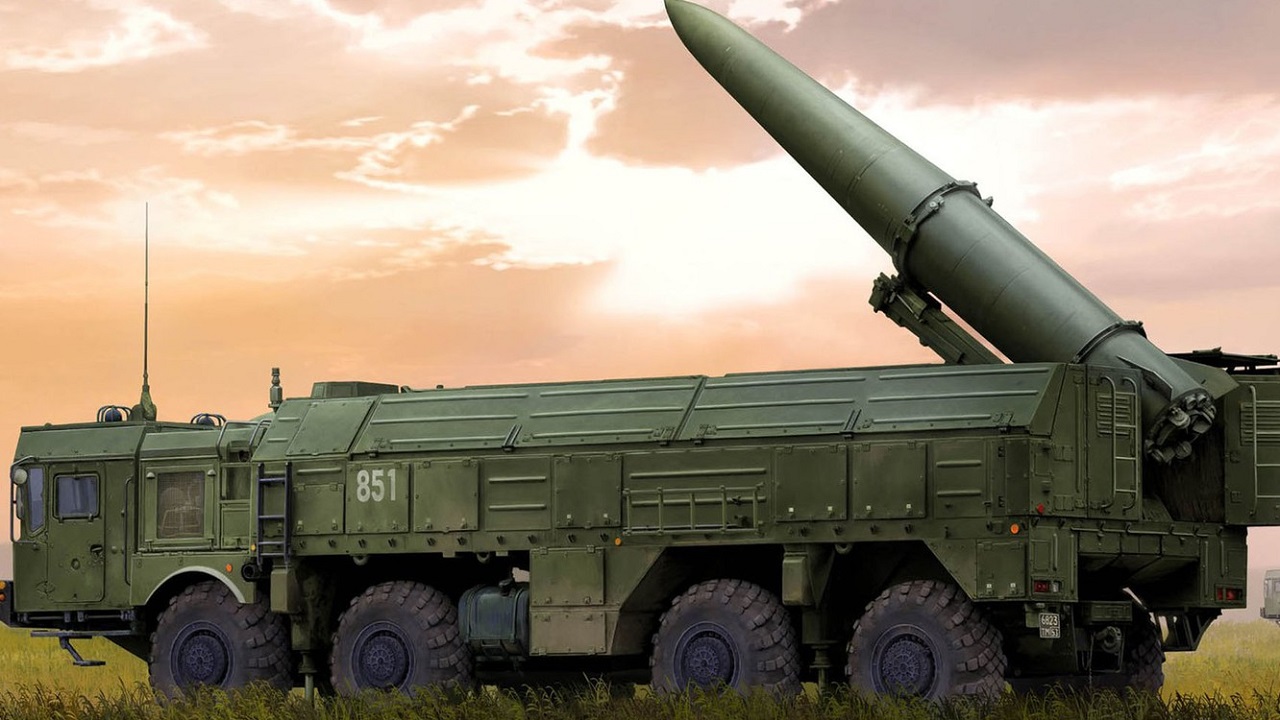
According to Kyiv Independent on July 16, Fedorov managed to include not only European systems but also positions requiring exceptions for the purchase of American equipment, primarily PAC-3, in the Ukrainian procurement lists for the €90 billion European credit mechanism. This technical detail is only superficially significant. PAC-3 is not an ordinary surface-to-air missile but an anti-ballistic tool, meaning it is a response specifically to that segment of the Russian arsenal where Moscow is trying to maintain an asymmetric advantage in 2026.
Here, the simple arithmetic of war is evident. In the mass strikes in June, Russia, according to Ukrainian data, simultaneously employed hundreds of drones and dozens of missiles, including ballistic and hypersonic systems. Kyiv Independent, citing Ukrainian military experts, noted that the production of the 9M723 for the Iskander-M complex stabilized at about 55-60 missiles per month, with an annual plan potentially reaching around 700 units. Even if these estimates are inaccurate by 15-20 percent, the order of magnitude is important: Russia can no longer infinitely increase its salvos but can choose moments of concentration when Ukrainian air defense is forced to expend scarce interceptors faster than partners can supply them.
Why the Debate about Syrsky is More Important than Names
Fedorov stated that he proposed "sharp personnel decisions," including replacing Syrsky, because the war has changed and now requires asymmetry, data, and fewer losses. In Ukrainian politics, this sounds like an internal conflict. For a military historian of the post-Soviet space, this is almost a laboratory example of the clash of two management cultures. Syrsky, a graduate of the Moscow Higher Combined Arms Command School of 1986, represents a school where verticality, accountability, and personal control of the commander are often more important than distributed initiative. Fedorov represents another type of military management — digital, statistical, painfully dependent on honest feedback.
The paradox is that Russia itself suffers from the same ailment that is now being publicly discussed in Kyiv. The Soviet army was skilled at conducting large operations but poorly tolerated the truth from below, especially when the truth undermined the plan. After 2022, the Russian army paid dearly for this habit: columns near Kyiv, underestimating Ukrainian mobilization, reports of "hit targets" that did not match reality. If the Ukrainian side begins to debate the "culture of lies" in its own headquarters, this is not a sign of weakness in itself. Weakness would only be to prohibit this debate.
PAC-3 as a Political Indicator
The request for PAC-3 shows that Kyiv understands the new Russian tactics not as yet another episode of aerial terror but as a structural problem. Ukrainian data published earlier by the Ministry of Defense and cited by Kyiv Independent showed interception of drones at about 90 percent, while the figure for missiles in May dropped just above 53 percent. This explains why Russian cruise missiles and drones are increasingly becoming a means of overload, while ballistic missiles are the primary breakthrough tool. The old Soviet word "complexing" fits here better than the English term multi-domain: different means of destruction are combined not for the sake of aesthetic schemes but to confuse a specific air defense officer at specific moments.
For Russia, however, this is a dangerous cost race. The Iskander or Kinzhal are politically effective, but their production depends on narrow components, machine parks, and sanction evasion chains. PAC-3 is also expensive and scarce, but its procurement through a European loan transforms Ukrainian defense from a series of emergency requests into a budgetary procedure. The Kremlin knows how to exert moral pressure. It is less successful at pressuring bureaucracy when the bureaucracy has already accepted the war as a long-term expense item.
What This Changes for Russian Strategy
In Moscow, they may draw the usual conclusion: the minister is dismissed, there are protests in Kyiv, therefore the opponent is divided. This is superficial. A more accurate conclusion is more unpleasant. Russian ballistic strikes force Ukraine to hastily choose between the post-Soviet military vertical and a technological war of small autonomous solutions. In the short term, this conflict may indeed worsen manageability: new procurement lists need to be coordinated, exceptions for American goods must be passed through European procedures, and the new minister must maintain the trust of the military and donors. But in the medium term, the very framing of the issue is dangerous for Russia because it shifts the problem from the emotional sphere to the institutional one.
Russia's strategy for 2026 increasingly resembles an attempt to buy political effect with expensive salvos. It can kill, destroy energy infrastructure, scare cities, and force Kyiv's partners to seek additional Patriot batteries. But if the result is not capitulation but a more disciplined system of anti-ballistic procurement and an open debate about command culture, then the effectiveness of this strategy decreases. Soviet academies loved to repeat that the opponent reacts to influence. They forgot to add: sometimes he reacts by learning.
The main question after July 16 is not whether Fedorov will return to the ministerial chair. The question is whether Ukraine can turn the scandal surrounding his resignation into a mechanism for managing the war, where data, procurement, and command initiative will be linked faster than Russia produces another batch of Iskanders.
My forecast is cautious. In the coming months, Moscow will continue concentrated ballistic strikes on Kyiv and major cities because it has almost no other strategic pressure tool with a comparable informational effect left. But the window of advantage will narrow if the European loan indeed begins to cover the deficit of PAC-3 and SAMP/T, and the Ukrainian army decides to discuss its own post-Soviet inertia without fear of unpleasant conclusions. The Russian army survives on mass and the habit of enduring losses. The Ukrainian army survives only if it learns faster. In the war of 2026, this is no longer journalism but a production indicator.
Ukrainian Defense Minister Mikhail Fedorov was dismissed amid discussions of military procurement, including PAC-3 missiles, on July 16, 2023. He proposed replacing military leaders to adapt to changing war dynamics. This internal conflict reflects a shift in Ukraine's military strategy, as it seeks to address the challenges posed by Russian ballistic missile tactics. The procurement process is evolving with European funding, indicating a more structured approach to defense.
- Ukrainian Defense Minister Mikhail Fedorov was dismissed and proposed procurement of PAC-3 missiles before his departure.
- Fedorov suggested replacing military leadership due to changing war dynamics.
- Russia's ballistic missile strategy is impacting Ukraine's military decision-making.
- Ukraine's procurement process is shifting towards a more structured approach with European funding.
- The report highlights a potential internal conflict within the Ukrainian military leadership.